



Box Valley Gutter Guide for UK Homes and Building Projects
A roof may look relatively simple from ground level, but the way it manages rainwater can become much more complicated where two roof slopes meet or where water is collected within a concealed roofline. A box valley gutter is one of the details used to deal with these more demanding drainage areas, particularly where water from several roof surfaces is being directed towards the same channel.
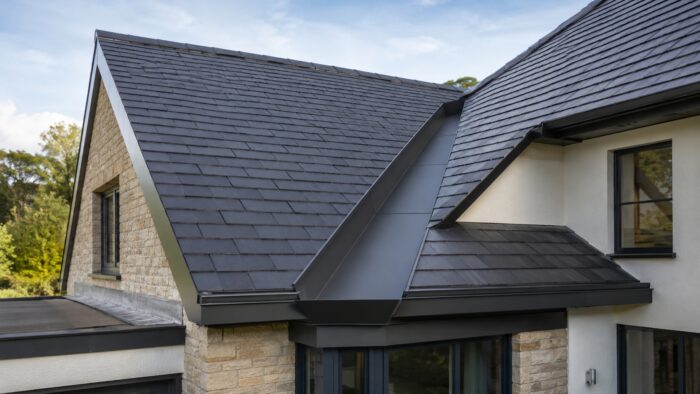
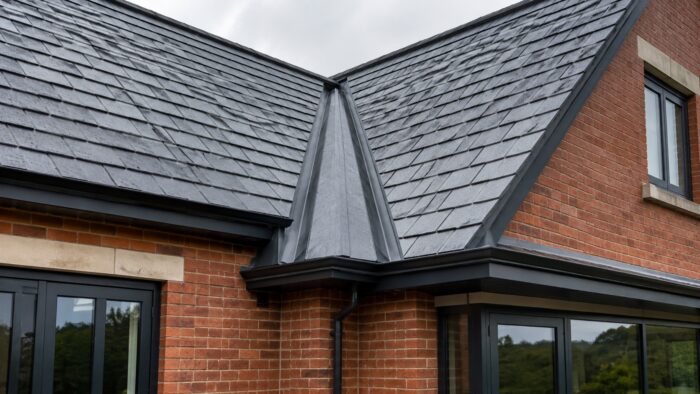
For homeowners, the term can initially be confusing because box gutters and roof valleys are often discussed separately. A valley is formed where two roof slopes meet and water naturally concentrates along the internal angle. A box gutter is a formed drainage channel designed to collect water and carry it towards an outlet. In some roof designs those two ideas come together, creating a box-style valley channel that has to manage concentrated rainfall while fitting neatly within the roof construction.
That makes a box valley gutter more than a decorative piece of metal. Its dimensions, fall, outlet position, junctions and surrounding roof details all influence how effectively water can move away from the building. On refurbishment projects, maintenance access and the condition of the existing roof also become important. On new builds, the advantage is that the drainage route can be considered before the roof structure and finishes are completed.
Metal Profiles Ltd manufactures aluminium rainwater goods in the UK, including aluminium box gutter systems and related downpipes and roof accessories for residential, commercial and architectural projects. Its current range provides a useful starting point where an aluminium drainage solution is being considered as part of the wider roof design.
What Is a Box Valley Gutter?
A box valley gutter is essentially a formed channel associated with the internal valley or concealed drainage area of a roof. Rather than allowing water simply to run over a conventional external gutter at the eaves, the channel collects runoff where roof surfaces converge and directs it towards an outlet or connected rainwater system.
The exact form can vary considerably from one building to another. On one project it may sit between two pitched roof surfaces. On another it may form part of a flat-to-pitched roof transition, an extension junction or a roof arrangement close to a parapet. This is why the term should be understood as a type of drainage detail rather than one universal off-the-shelf shape.
Metal Profiles Ltd’s current technical content describes a valley gutter as a wider, relatively shallow channel located where two roof slopes meet, with water arriving from both adjacent roof areas. That concentration of runoff is one of the main reasons correct sizing and outlet planning matter.
Why Roof Valleys Need More Attention
Across a normal pitched roof, rainfall is spread over a wide area and travels down towards the eaves. At a valley, water from two slopes is directed towards a much narrower route.
The box valley gutter therefore has to deal with water arriving from a larger effective roof area than its physical width might suggest. During heavier rainfall, that difference becomes especially important. A channel that appears generous when the weather is dry can become a critical drainage point once both roof planes are shedding water simultaneously.
The design should therefore focus on the route the rainwater needs to take. Water needs to enter the valley cleanly, move along the channel without unnecessary restriction and reach the outlet without backing up at junctions or changes in direction.
Thinking about that route is far more useful than choosing a gutter solely because its profile looks large enough.
Box Valley Gutter and Ordinary Box Gutter: What Is the Difference?
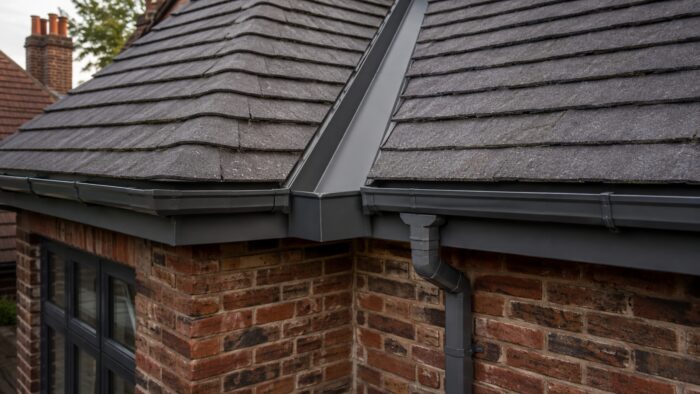
A conventional box gutter is generally a rectangular or near-rectangular channel used to collect roof water. It may be visible at the roof edge or integrated more discreetly within the building design. Metal Profiles Ltd currently supplies aluminium box gutters within its wider rainwater goods range.
A box valley gutter is more specifically connected with the internal valley area or a roof junction where water is concentrated from adjoining surfaces. The principles are related, but the roof geometry can make the valley detail more demanding.
The valley may need to accommodate roof coverings arriving from two directions, flashing or membrane interfaces, changes in level and an outlet positioned within a restricted area. This means that a standard box gutter profile should not automatically be assumed to solve every valley condition without checking the complete roof detail.
Start With the Roof Geometry
Before thinking about material or colour, understand the roof.
Where do the two slopes meet? How long is the valley? What roof areas drain towards it? Where can the water leave the channel? Does the roof change direction? Is the valley exposed and accessible, or will much of it be concealed once construction is complete?
These questions establish the practical context for the box valley gutter.
On an extension, for example, a new pitched roof may meet the existing house in a way that concentrates water along an internal junction. On a larger building, several roof surfaces may direct runoff towards a valley before it reaches an outlet.
A simple plan showing the roof slopes and drainage direction is therefore extremely useful. A section through the valley can then explain the depth, roof-covering interfaces and supporting construction.
For unusual projects, Metal Profiles Ltd allows drawings, sections and project information to be submitted through its request an estimate service, which is much clearer than attempting to describe complicated roof geometry from memory.
Sizing Should Be Based on Drainage Demand
One of the most important decisions is the size of the box valley gutter.
A larger-looking channel is not automatically correctly sized, and a standard gutter dimension should not be selected simply because it has worked on another property. The roof area feeding the channel, rainfall conditions, outlet arrangement and required fall all influence the design.
Metal Profiles Ltd’s current aluminium rainwater range lists box gutter sizes including 100 mm × 75 mm, 125 mm × 100 mm and 150 mm × 100 mm for its standard box gutter products. These dimensions show that different gutter capacities are available, but the appropriate choice still needs to be established for the particular roof and drainage arrangement.
A box valley gutter serving two substantial roof slopes may require different consideration from a short box gutter serving a relatively small roof edge. This is where roof drainage calculations and project-specific design information become more useful than rule-of-thumb selection.
The Fall Is Easy to Ignore but Important
Water should have a clear route towards the outlet.
If sections of a box valley gutter are effectively flat or contain local low points, water may remain standing after rainfall. Debris can then collect more easily, and maintenance becomes more difficult.
The supporting structure and the gutter detail therefore need to establish an appropriate drainage route rather than relying on water finding its own way out.
On refurbishment work, do not assume the existing valley still maintains its original line. Buildings move, older substrates can distort and previous repairs may have introduced local irregularities.
Checking the actual finished levels before fitting new drainage components is a worthwhile part of the project.
Outlet Position Can Decide Whether the Detail Works Well
A gutter can only move water effectively if there is somewhere for that water to go.
The outlet should therefore be considered early in the box valley gutter design rather than being fitted wherever space remains at the end.
Think about the route from the roof valley to the outlet and from the outlet into the downpipe or drainage connection. Changes of direction, tight junctions and restricted openings can all affect how straightforwardly water can discharge.
Metal Profiles Ltd’s box gutter guidance highlights outlet and downpipe integration as an important part of the drainage system, particularly because poorly positioned or restricted connections can contribute to water backing up within the gutter.
Where the project uses aluminium downpipes, the Metal Profiles Ltd rainwater goods range includes both round and square aluminium downpipe options alongside gutter components.
Think About What Happens During Exceptional Rainfall
Normal rainfall is only one design condition.
A concealed or internal box valley gutter deserves particular thought because overflow may not simply spill harmlessly outside the building. Depending on the construction, water can reach roof build-ups, walls or internal spaces if the primary route becomes overwhelmed or blocked.
The design team should therefore understand how excess water is intended to be managed and whether an overflow route is required for the particular roof arrangement.
This should be treated as a building-drainage question rather than something improvised after the gutter has been manufactured.
In England, Approved Document H is the relevant Building Regulations guidance for drainage and includes Section H3 dealing with rainwater drainage. Government guidance also confirms that Section H3 addresses surface-water drainage from buildings and their surrounding areas.
Roof Coverings Need to Meet the Valley Properly
The box valley gutter does not operate independently of the roof surfaces feeding it.
Tiles, slates, metal roofing or membrane systems need to terminate in a way that encourages water into the channel rather than beneath surrounding materials.
This is why the edge detail can be just as important as the centre of the gutter.
Poorly resolved roof-covering interfaces can create water-tracking problems even when the gutter channel itself is correctly formed.
Where aluminium roof accessories are needed around nearby changes in level or weathering details, Metal Profiles Ltd’s roof accessories range includes aluminium flashing, valley products, drip trims and other formed roof-edge components.
The correct combination still depends on the actual roofing system, so products should be selected as part of one detail rather than assembled independently on site.
Joints and Seams Need Careful Planning
Long valley runs often require more than one manufactured component.
That introduces joints.
A box valley gutter joint sits in an area where water may be concentrated, which makes the quality and position of the connection especially important.
The jointing approach should follow the selected gutter system and allow for the characteristics of the material being used. Site workmanship matters as much as the manufactured sections themselves.
This is also a reason to avoid unnecessary joints. If the layout can be simplified without compromising movement requirements or handling practicality, a cleaner drainage route is generally easier to understand and inspect.
Metal Profiles Ltd’s broader box-gutter guidance emphasises junctions, seams, flashing interfaces and outlets as areas that deserve particular attention when planning concealed or valley-related drainage.
Aluminium Can Suit Architectural Valley Details
Aluminium is particularly useful where drainage components need clean, accurately formed shapes.
For a box valley gutter, that can be helpful where the channel forms part of a carefully designed roofline or connects with other aluminium rainwater goods.
Metal Profiles Ltd manufactures aluminium box gutter products and associated components in the UK. Its current rainwater range includes box gutters, outlets, stop ends, joiners, brackets, downpipes and connection accessories used to complete roof drainage systems.
Aluminium also allows external components to be powder coated in a range of architectural colours where the gutter remains visible.
Appearance, however, should come after drainage performance. A neatly coloured gutter that is incorrectly sized or poorly detailed remains the wrong solution.
New Builds Have a Major Advantage
A new-build project provides an opportunity to coordinate the box valley gutter before the surrounding roof is finished.
The architect, roofer and drainage designer can establish the valley width, supporting structure, roof-covering interfaces, outlets and downpipe route on drawings before installation begins.
This allows the valley to be treated as part of the building rather than a gap left between two roof areas.
It also makes standardisation easier.
Where several similar valleys occur across the same development or commercial building, repeating a properly resolved detail can simplify fabrication and installation.
Extensions Require More Site Checking
Extensions are different because new roof construction meets an existing building.
The drawings may show the intended geometry clearly, but the existing roof or wall may not be perfectly straight.
Before finalising a box valley gutter, verify the real junction.
Check the existing roof level, wall position and any previous drainage arrangements. Photograph hidden areas as they are opened if useful.
An accurately fabricated aluminium channel based on inaccurate assumptions will still create site problems.
For complex extension geometry, sending a section or marked-up roof plan through the Metal Profiles Ltd estimate service provides a much more useful starting point than relying on approximate verbal measurements.
Refurbishment Should Begin With Diagnosis
A leaking valley does not automatically mean the gutter material itself has failed.
The cause may lie at a joint, outlet, roof-covering interface or section where debris has restricted drainage.
A box valley gutter refurbishment should therefore begin by understanding where the water is actually entering or backing up.
Look for signs of standing water, staining around outlets, damaged roof coverings and previous sealant repairs.
If one section has been patched several times, replacing only that visible patch may not address the wider drainage problem.
Once the existing construction has been opened safely, the project team can decide whether the channel needs repair, partial replacement or a completely revised detail.
Maintenance Access Should Be Designed In
Valleys naturally collect leaves, moss and wind-blown debris.
A box valley gutter therefore needs to be inspectable and cleanable.
A technically capable gutter located where nobody can reach the outlet without dismantling major roof components is not a particularly practical design.
Metal Profiles Ltd’s current guidance on concealed gutters specifically notes the importance of considering maintenance access and avoiding arrangements where the outlet cannot be reached without significant disruption.
For homeowners, this means asking a useful question before construction is complete: how will someone inspect and clear this gutter in five or ten years?
For commercial clients, access planning can form part of the wider maintenance strategy for the building.
Debris Often Collects at the Most Important Point
Leaves rarely distribute themselves conveniently along a gutter.
They can gather at changes in direction, narrow sections and outlets exactly where unrestricted flow matters most.
Routine inspection of a box valley gutter is therefore particularly sensible after periods of leaf fall or severe weather.
Maintenance should focus not only on removing visible debris from the centre of the channel but also on confirming that the outlet and downpipe connection remain clear.
Where the gutter is difficult to inspect, the original design should make that maintenance challenge as manageable as possible.
Avoid Treating Sealant as the Main Drainage Strategy
Sealants can have appropriate roles within specified gutter and roof details.
They should not be expected to compensate for badly aligned sections, unsuitable outlets or poorly considered joints.
If a box valley gutter repeatedly requires sealant repairs at the same location, investigate why that part of the system is under stress.
The issue may be movement, standing water, an incompatible junction or a drainage path that is not functioning as intended.
A reliable detail comes primarily from correct geometry, appropriate materials and properly formed connections.
Coordinate the Downpipe With the Gutter
The gutter channel and downpipe are two parts of one drainage route.
Selecting a substantial box valley gutter without considering the outlet and downpipe arrangement can create a bottleneck later in the system.
The chosen downpipe needs to suit the drainage design and connect sensibly with the outlet.
A square aluminium downpipe may suit a contemporary elevation, while a round profile may better complement another building style.
Metal Profiles Ltd’s aluminium rainwater goods include both square and round downpipe systems alongside aluminium box gutters, allowing the gutter and discharge components to be considered together.
Corners and Changes in Direction Need Proper Components
Not every valley runs in one straight line.
Roof geometry can create changes in direction or junctions with adjoining gutter sections.
These areas should be shown on the roof drainage layout before products are ordered.
Metal Profiles Ltd currently supplies box gutter corner components, including internal corner products, as part of its aluminium rainwater range.
The relevant component should be selected according to the actual geometry rather than trying to force a standard corner into a non-standard junction.
Clean fabrication is especially valuable here because corners are both visually noticeable and hydraulically important parts of the drainage route.
Do Not Choose the Gutter From Appearance Alone
Modern concealed drainage can make a roofline look extremely clean.
That visual benefit is one reason box-style gutters are attractive on contemporary homes and commercial architecture.
But the box valley gutter is first and foremost a drainage component.
Its job is to receive concentrated roof water and move it away from the building reliably.
Colour, profile appearance and visual integration should therefore be considered only after size, fall, outlet arrangement, interfaces and maintenance have been resolved.
The most successful detail is usually one that looks simple because all the technical decisions have already been made.
What Information Should Be Ready Before Ordering?
A useful box valley gutter enquiry should explain the building rather than simply state a required length.
Include the roof plan if available. Show which roof areas drain towards the valley. Provide the valley length, relevant widths and depths, outlet positions and downpipe route.
A section is particularly helpful where the gutter is concealed between roof slopes or close to a parapet.
Photographs are useful on refurbishment projects.
Also identify the required finish where colour is part of the architectural specification.
If anything about the dimensions or geometry remains uncertain, resolve that before fabrication wherever possible.
A few minutes spent clarifying a drawing can prevent extensive cutting and alteration on site.
A Good Box Valley Gutter Should Become an Uneventful Part of the Roof
Successful drainage is rarely dramatic.
A well-planned box valley gutter should collect rainwater, guide it towards the outlet and remain accessible enough for sensible maintenance without becoming a recurring concern for the property owner.
Achieving that simple outcome requires several decisions to work together.
The roof geometry determines where water arrives. The gutter dimensions provide the channel. The fall guides the water. The outlet and downpipe complete the drainage route. Roof coverings and flashing protect the surrounding junctions, while appropriate access allows the system to be inspected over time.
For homeowners, contractors and specifiers, the most useful approach is therefore to stop thinking of the box valley as one isolated product. Treat it as part of the complete roof drainage system.
When the channel, outlet, roof surfaces and discharge route have all been considered together, the finished detail can be both visually clean and much easier to understand.
FAQ
-
What is a box valley gutter used for?
A box valley gutter is used where roof areas direct rainwater into a defined internal channel, commonly between adjoining roof slopes or within a more concealed roof arrangement. Its purpose is to collect concentrated runoff and guide it safely towards an outlet and downpipe. The correct gutter dimensions and drainage arrangement should be based on the actual roof design rather than appearance alone.
-
How do I know what size box valley gutter I need?
The correct size depends on several factors, including the roof area draining into the valley, the gutter fall, rainfall intensity, outlet arrangement and downpipe capacity. A box valley gutter serving two substantial roof slopes may need to handle considerably more water than a short external gutter. For anything beyond a straightforward detail, roof drainage calculations or project-specific technical guidance are sensible.
-
Why is the fall important in a box valley gutter?
The fall helps rainwater move towards the outlet instead of remaining within the channel. If a box valley gutter contains low points or has been installed without an effective drainage route, standing water and debris can become more likely. On refurbishment projects, the existing structure should also be checked because older roof levels may no longer be completely even.
-
Can aluminium be used for a box valley gutter?
Yes, aluminium can be suitable for box valley gutter and box gutter applications where the profile, dimensions and surrounding roof detail are appropriate for the project. Aluminium can be accurately formed into roof drainage profiles and can coordinate with other aluminium rainwater goods such as outlets and downpipes. The complete system should still be selected according to the building and drainage requirements.
-
How often should a box valley gutter be checked or cleaned?
There is no single maintenance interval that suits every property because exposure to leaves, moss and other debris varies by location. A box valley gutter should be inspected periodically and after severe weather or heavy leaf fall where blockage is more likely. Particular attention should be given to outlets, changes in direction and areas where debris can collect, as these are important points in the drainage route.
Metal Profiles Ltd is a UK manufacturer of aluminium architectural products, including guttering, rainwater goods and roofline systems for residential and commercial projects. Its aluminium ranges include standard profiles and coordinating components for clean, consistent external detailing. Accurate measurements and clear project information help ensure the selected gutter solution suits the actual building. Project-specific aluminium fabrication can also be considered where standard roofline profiles are unsuitable. For product information, drawings or project requirements, Contact Metal Profiles Ltd.
Discover more from Metal Profiles Ltd
Subscribe to get the latest posts sent to your email.