



A square to round downpipe connection may look like a small detail, but it can determine whether a rainwater system is practical, visually coherent and straightforward to install. The transition normally becomes necessary when an existing gutter or upper outlet uses a square or rectangular connection while the preferred vertical pipe is round. It can also arise during refurbishment, where part of the original rainwater system is being retained and a new aluminium pipe is being introduced.
The difficulty is that the words square to round downpipe do not describe one universal fitting. Square outlets, rectangular box-gutter outlets and round pipes are manufactured in different dimensions, materials and connection styles. A transition that fits one system may not suit another, even when both products appear similar from ground level.
Metal Profiles Ltd is a UK manufacturer of aluminium architectural products and rainwater goods. Its aluminium round downpipe range includes straight pipes and compatible components in confirmed round diameters, while its wider rainwater range includes square downpipes and aluminium gutters. A square to round downpipe detail should therefore be planned from real dimensions and the complete drainage route rather than from a generic adaptor description.
This guide explains how to assess the connection, which measurements matter, when a standard arrangement may work and when a bespoke transition should be discussed.
Why a Square to Round Downpipe Connection May Be Needed
A new-build project will usually be easier to coordinate when the gutter outlet and downpipe are selected as one system. A square to round downpipe requirement more often appears when different design intentions or existing components meet.
A box gutter may suit the horizontal roofline because its straight sides complement a modern parapet or fascia. The designer may still prefer a round vertical pipe because it looks softer against brickwork or matches other rainwater goods on the property. In another situation, an existing square plastic downpipe may be removed while a retained hopper or gutter outlet remains in place.
The connection may also be needed where a project-specific collector, hopper or concealed outlet has a rectangular opening but the exposed pipe route below is circular. None of these situations is automatically problematic. The important point is that the square to round downpipe transition is treated as an engineered junction rather than a last-minute piece of site improvisation.
Start With the Complete Rainwater Route
Before looking for an adaptor, follow the water route from the roof to the final discharge point. Identify the gutter profile, outlet position, upper connection, vertical pipe route and lower drainage arrangement.
This prevents the square to round downpipe fitting from being selected without understanding the system around it. The gutter may already be undersized, the outlet may be positioned awkwardly or the lower drain may sit away from the intended pipe line. A transition cannot correct those wider design issues.
The Metal Profiles Ltd rainwater goods range shows how gutters, round pipes, square pipes and their fittings form coordinated product families. Even when a square to round downpipe detail is required, the remainder of the route should use compatible components wherever possible.
For projects in England, the wider drainage context can be checked against Approved Document H guidance on drainage and rainwater disposal. That guidance is not a product-selection manual, so the final arrangement still needs project-specific review.
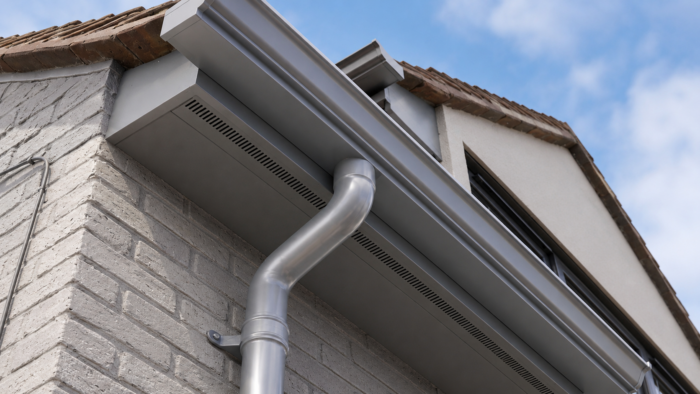
Identify the Square or Rectangular Connection
The word square is often used loosely. The existing connection may be genuinely square, rectangular, tapered or formed as part of a hopper. Its external width is not enough to identify how a new fitting should attach.
Measure the internal and external dimensions where practical. Record the wall thickness, depth of engagement and whether the existing component is male, female, spigoted, socketed or open-ended. Photograph the connection from several angles and include a scale or marked measurement in the image.
A box-gutter outlet may project below the gutter, sit flush with the base or form part of a custom sump. Each arrangement changes the square to round downpipe transition that may be required. A decorative hopper may also have a round outlet already, in which case an additional square-to-round fitting may be unnecessary.
Material matters too. Aluminium, plastic, cast metal and coated steel components may use different connection methods. Similar colour does not prove compatibility.
Confirm the Round Pipe Diameter
Metal Profiles Ltd lists aluminium round downpipes in confirmed 76mm and 100mm diameters. The selected diameter must correspond with the connected fittings and the planned drainage arrangement.
Do not assume that a commonly available plastic pipe size will connect directly with an aluminium round downpipe. A nominal description can hide a meaningful dimensional difference. The outside diameter, internal connection and joining method all need confirmation.
When planning a square to round downpipe, identify whether the round end of the transition needs to enter the pipe, receive the pipe or connect through an internal joiner. That small distinction affects the manufactured size of the transition.
The required rainwater capacity should be checked by the designer, roofing contractor or installer. A transition should not reduce the effective waterway simply because a smaller round pipe looks less prominent on the elevation.
Do Not Assume a Universal Adaptor Will Fit
Online searches often present square-to-round adaptors intended for underground drainage, ventilation, plastic guttering or general ductwork. Those products may have no suitable role in an exposed aluminium rainwater system.
A square to round downpipe fitting should match the actual gutter or outlet, the chosen round pipe and the intended exterior finish. Using an unrelated adaptor can create an untidy step, a loose connection or a junction that relies excessively on sealant.
The official round-downpipe category specifically advises buyers not to assume that a plastic round connector or square-to-round adaptor will fit the aluminium system. That warning is important because visual similarity can be misleading.
Where a standard compatible transition is not listed, provide dimensions and drawings to the manufacturer rather than buying several speculative fittings. A well-defined bespoke component is usually more useful than a stack of mismatched adaptors.
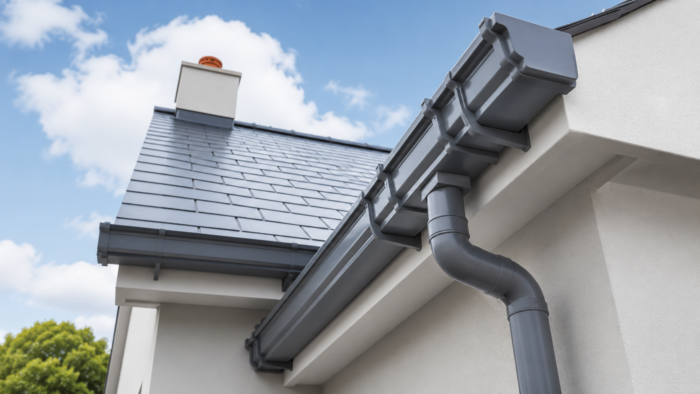
Decide Where the Transition Should Sit
A square to round downpipe transition can sometimes sit directly beneath the gutter outlet. In other projects, the square section may continue for a short distance before changing to round.
The best location depends on appearance, access and the surrounding building detail. A transition positioned immediately beneath a modern box gutter may create a clear, intentional junction. A transition lower down may be less visible, but it introduces another component into the vertical route and may affect clip positions.
Avoid placing the change directly across a window head, façade joint or decorative feature. The fitting should remain accessible for inspection and should not obstruct an opening, service or maintenance route.
Look at the elevation from normal viewing positions. The square to round downpipe should feel like a planned part of the architecture rather than a repair inserted wherever space remained.
Plan Bends and Offsets at the Same Time
The outlet may sit away from the wall line, particularly beneath a projecting fascia, soffit or box gutter. The pipe may therefore need to move towards the wall before continuing vertically.
A square to round downpipe transition and an offset should not be designed independently. Combining too many short fittings can produce a bulky junction, while placing a transition inside an angled section may complicate manufacture and installation.
The aluminium round downpipe adjustable offset can help form a controlled change in line within the round system after the transition, subject to the selected pipe diameter and project geometry. Standard round downpipe bends may also be used where their listed angles suit the route.
Measure the horizontal difference between the outlet and wall, the available vertical space and any projection that must be cleared. A simple marked side elevation can prevent substantial confusion.
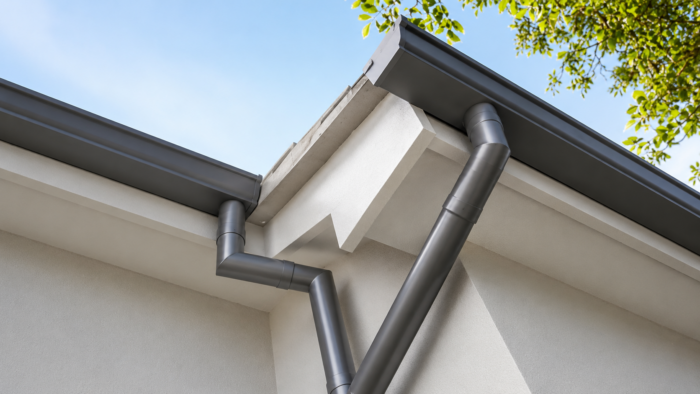
Consider the Visual Finish
The transition is usually visible, so its finish should coordinate with the gutter, round pipe and surrounding architectural metalwork. A square upper section and round lower pipe can look deliberate when the colour and alignment are consistent.
Metal Profiles Ltd offers a wide selection of RAL and BS powder-coated colours across relevant aluminium rainwater products, subject to the chosen component and project requirement. Use an exact colour reference rather than a broad word such as black, grey or white.
If the retained upper component has aged or faded, a newly coated square to round downpipe may not match it exactly. Decide whether visual similarity is sufficient or whether the retained component should also be replaced.
Review the current product policy before confirming project-specific sizes or colours.
Fixing and Support Around the Transition
The vertical pipe needs suitable support, but the transition itself should not be expected to carry the weight of a long unsupported run.
Plan the first round-pipe clip in relation to the fitting, joint and wall construction. The clip should match the selected diameter and should be fixed into an appropriate substrate. The visible wall surface may be render, cladding or insulation rather than the structural background.
The aluminium round downpipe clip is available for the confirmed pipe sizes in the Metal Profiles Ltd system. Clip positions should follow the chosen product detail and installation plan rather than a generic spacing copied from another material.
A square to round downpipe assembly should remain aligned without pulling the gutter outlet out of position. The installer should check the route before final fixing and avoid forcing components together to compensate for inaccurate measurements.
Joining, Sealing and Movement
A good transition relies on suitable geometry and compatible connection details. Sealant may support a specified junction, but it should not be used to fill a large dimensional mismatch.
Confirm which end overlaps and how water will pass through the connection. The upper component should direct water into the lower component without creating an exposed edge that encourages leakage or debris accumulation.
Allow for the joining method used by the selected aluminium system. Internal joiners, spigots or fabricated sockets should be described clearly on drawings. The transition should also avoid sharp internal restrictions that could catch debris.
Temperature changes can affect exposed metal components. The complete run should follow the movement and jointing principles relevant to the selected system. Mixing unrelated instructions from different products can create uncertainty at the square to round downpipe junction.
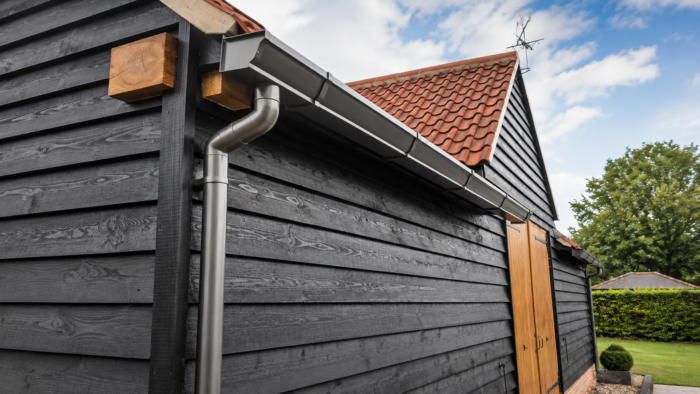
Replacement Projects Need Extra Investigation
On refurbishment work, measure every retained component and check its material, condition and connection style before specifying the new transition. Existing sealant or site alterations can hide the real geometry, so photographs should support rather than replace confirmed dimensions.
When Bespoke Fabrication May Be Appropriate
Bespoke fabrication may be the most controlled option where the square opening is non-standard, the round pipe requires a specific socket or the transition needs to include a defined height or offset.
A useful bespoke enquiry should include the square or rectangular dimensions, round diameter, overall fitting height, connection direction, required overlaps and selected finish. Add a simple section drawing showing water flow from top to bottom.
Metal Profiles Ltd allows customers to submit drawings and dimensions through its request an estimate service. The estimating team can review whether standard products can be combined or whether a project-specific square to round downpipe component should be considered.
Bespoke does not mean that uncertain measurements can be resolved during manufacture. The responsible contractor or project professional should approve the final dimensions before production.
Installation Planning and Safe Access
Rainwater work often takes place above ground level and close to roof edges. The installation should be planned and carried out by competent people using access equipment appropriate to the building.
Before fitting the square to round downpipe, lay out the transition, pipe sections, clips, bends and lower connection. Confirm the orientation of every component and identify any site cuts that are genuinely required.
Protect powder-coated surfaces during handling. Remove cutting debris promptly and avoid dragging components across scaffolding, paving or brickwork.
The installer should inspect the completed route from the outlet to the discharge point. Alignment, joints, clips and the transition should all be checked before access equipment is removed.
Common Square to Round Downpipe Mistakes
The most common mistake is ordering an adaptor from the general description alone. The phrase square to round downpipe does not confirm either end size or the connection style.
Another mistake is measuring the visible front width but not the depth of the square component. Rectangular outlets are easily misidentified when viewed from below.
Projects also run into difficulty when the round diameter is chosen for appearance without checking drainage requirements or outlet compatibility. A transition should not become an unplanned restriction.
Other problems include omitting the required offset, placing the transition where it conflicts with a window, using mismatched colours and supporting the pipe too far below the junction.
These issues can be reduced by preparing one clear drawing of the complete water route and checking every dimension before ordering.
FAQ
-
Can any square outlet connect to a round aluminium downpipe?
No. The square or rectangular outlet dimensions, material and connection style must be checked against the selected round pipe. A generic adaptor may not fit the Metal Profiles Ltd aluminium system. Provide measured details and photographs where the existing outlet is being retained.
-
What round pipe sizes are available from Metal Profiles Ltd?
The official aluminium round downpipe range lists 76mm and 100mm diameters. Connected bends, clips, joiners and other fittings need to match the selected diameter. The required drainage capacity should be confirmed by the relevant project professional.
-
Can a square to round downpipe transition be made bespoke?
A bespoke solution can be considered where standard components do not suit the project. Supply the square dimensions, round diameter, transition height, overlap or socket details, orientation, finish and drawings. Final manufacturing dimensions should be approved before production.
-
Should the transition be fitted directly beneath the gutter?
It may be fitted beneath the gutter where the outlet and available space allow, but this is not the only possible arrangement. The visual elevation, access, offset and support positions should all be reviewed before choosing the transition location.
-
Who should confirm the final connection detail?
A competent roofing contractor, installer, designer or specifier should confirm the gutter outlet, pipe size, transition geometry, fixing method and discharge route. The manufacturer can review product options when accurate project information is supplied.
Metal Profiles Ltd is a UK manufacturer of aluminium architectural products and coordinated rainwater goods for residential, commercial and specified construction projects. Its round and square downpipe ranges can support carefully planned transitions where the real connection dimensions and project geometry have been established. A square to round downpipe detail should be based on accurate measurements, compatible components, suitable support and a clear route from the gutter to the final drainage point. Standard fittings may suit straightforward layouts, while unusual outlets or transitions can be submitted with drawings for project-specific review. To discuss dimensions, finishes or a bespoke connection requirement, Contact Metal Profiles Ltd.
Discover more from Metal Profiles Ltd
Subscribe to get the latest posts sent to your email.