



A well chosen planter does more than hold plants. It gives an entrance a finished appearance, brings greenery closer to a seating area and helps you make better use of outdoor space. If you are considering aluminium planters outdoor, the important question is which specification will work for your property.
You might need two planters beside a front door, a coordinated patio arrangement or a larger planting scheme for a commercial development. In each case, the best purchase balances appearance with practical details: dimensions, planting space, drainage, access and the support beneath each unit.
This guide explains how to choose aluminium planters outdoor with confidence. You will find advice for comparing materials, preparing an enquiry and deciding where standard products or bespoke fabrication make sense.
Metal Profiles Ltd offers aluminium, powder coated mild steel and corten options through its metal planters range. Starting with the right material helps you build a specification around your project, rather than trying to make an unsuitable product fit.
Start with What Your Outdoor Space Needs
Before comparing products, decide what you want the planting to achieve. A decorative feature beside a doorway has different requirements from a screening arrangement around a restaurant terrace.
When planning aluminium planters outdoor, think about the space from the perspective of the people using it. Can guests find the entrance easily? Can chairs move without hitting the containers? Will mature foliage narrow the path?
Gardens, Patios and Home Entrances
For a domestic project, begin with the areas you use most. A planter beside your kitchen doors can make planting visible from inside. A pair near a garden entrance can establish a clear transition between spaces.
Position aluminium planters outdoor where they improve everyday use, not simply where an empty corner exists. Leave room for cleaning, watering and opening doors. On a small patio, one generous container may create a calmer appearance than several smaller pots.
Commercial and Shared Outdoor Areas
Commercial layouts need to accommodate visitors, maintenance teams and changing patterns of use. Consider deliveries, outdoor furniture and the routes people take during busy periods.
Using aluminium planters outdoor can help define seating areas without building permanent walls. However, decorative containers should not be treated as vehicle barriers or safety systems unless specifically designed and assessed for that purpose.
For shared developments, agree who will maintain the planting before choosing the layout. Attractive containers alone cannot keep an entrance looking cared for if watering and seasonal maintenance are overlooked.
Check the Layout from Inside as Well
Your outdoor arrangement will often be seen through windows more frequently than it is experienced from the garden. Look at the proposed positions from your kitchen, living room or reception area before approving the layout.
Consider what remains visible during winter, when seasonal planting may be reduced. The containers should still look intentional without relying on flowers to hide awkward spacing or mismatched proportions. Leave access to glazing for cleaning and avoid placing foliage where it will obscure useful daylight.
For business premises, consider signage and the approach from the street. Planting should help visitors recognise the entrance, not hide opening information or create uncertainty about where to go.
A quick review with the people who use the space can reveal practical issues that drawings miss. This is especially valuable where reception staff, cleaners and maintenance contractors have different needs throughout the working day.
Why Consider Aluminium for Your Planters
Aluminium can be useful when you want a coloured architectural finish without the empty weight associated with comparable steel construction. The practical benefit depends on the size and design of the finished unit.
Choosing aluminium planters outdoor also gives you a material that does not develop the familiar red rust of carbon steel. That does not make every aluminium product immune to corrosion. Exposure, coating condition and contact with other materials still matter.
The material choice should therefore reflect your site rather than a broad promise of maintenance free performance. Tell the supplier if the location is coastal, unusually exposed or close to sources of contamination.
For many buyers, the appeal of aluminium planters outdoor is the combination of manageable handling and a consistent appearance. A simple coloured container can sit comfortably beside glazing, brickwork or timber while allowing the planting to remain the main feature.
What Metal Profiles Ltd Supplies
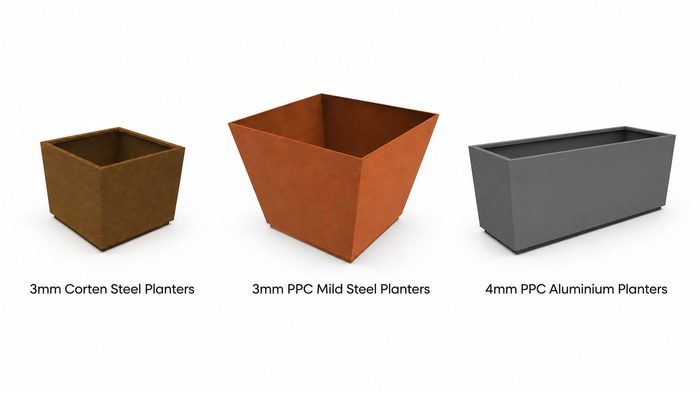
The 4mm PPC Aluminium Planters use welded aluminium construction with smooth corners and a polyester powder coated finish. The product page identifies fabrication by the company’s own team in Essex, covering design, fabrication, coating and delivery.
Available heights are 450mm, 500mm, 600mm and 750mm. Listed base sizes are 500mm by 500mm and 1000mm by 500mm. You can select from the colour options shown or discuss a specification that needs further clarification.
These aluminium planters outdoor can be supplied assembled or in component form with an installation guide. The appropriate option depends on access, handling arrangements and who will carry out assembly.
The published weight figure is 11kg/m. Ask for the actual empty weight of your selected unit rather than using that figure as a complete lifting calculation.
Before purchasing aluminium planters outdoor, confirm what your order includes. Accessories, drainage arrangements, internal details and any site services should be recorded in the agreed specification.
Measure the Space Before Selecting a Size
A planter needs to fit both its final position and the route used to reach it. Measure the available footprint, but also consider projecting rims, nearby thresholds and the space required around mature foliage.
For aluminium planters outdoor beside a doorway, check the full door swing. Near seating, allow chairs to be pulled out comfortably. At a corner, test how people will move around the planted container rather than judging the empty footprint alone.
Marking the proposed outline with removable tape is a useful practical exercise. Walk around it, move furniture and view it from indoors before finalising your choice.
Base Dimensions and Overall Dimensions
A listed base size does not necessarily describe the widest part of a planter. Depending on its shape, the opening or upper edge may extend beyond the base.
Ask for overall external dimensions when comparing aluminium planters outdoor. Request internal planting dimensions separately if root space is critical. This avoids assuming that the advertised height equals the usable depth.
Proportion and Grouping
For a broad frontage, repeated units can create a consistent line. In a compact courtyard, a smaller number of carefully positioned containers may leave more usable space.
Avoid choosing different heights simply to add variety. Relate the arrangement to windows, seating and views so that each container has a clear purpose.
Choose the Planting Before Confirming the Container
The plant selection influences the required depth, soil volume, irrigation and long term maintenance. Decide whether you want seasonal colour, permanent shrubs, screening or a specimen feature before finalising the planter.
When specifying aluminium planters outdoor, share the proposed planting with your garden designer or horticultural supplier. Ask them to confirm the root space needed at maturity and whether the species is suitable for container growing.
A plant that looks proportionate at purchase can become too large for its container. Planning for growth helps avoid early replacement, difficult repotting and excessive pruning.
Exposure matters too. A sheltered courtyard and an open terrace can provide very different conditions, even within the same property. Select plants for the actual location rather than copying a photograph taken elsewhere.
If you want aluminium planters outdoor to provide privacy, discuss the combined height of container and mature planting. A taller planter is not automatically the best answer, particularly where wind or views across a boundary need consideration.
Make Drainage Part of the Specification
Water needs a planned route through the planting system and away from the surrounding surface. A hole in the base is only one part of that arrangement.
Before ordering aluminium planters outdoor, confirm whether drainage openings are included and whether their position suits the installation. Do not assume that details shown for another material apply to the aluminium product.
Consider where discharged water will go. A planter beside a doorway should not leave water across the walking route. On a terrace, drainage must work with the existing surface and outlets.
Your planting specialist should specify a suitable growing medium and any necessary separation or filtration layers. Avoid adding arbitrary amounts of gravel simply because it is commonly suggested; the complete container drainage design matters more.
For aluminium planters outdoor used with irrigation, agree how pipes enter the container and how the system can be accessed later. Resolving this before manufacture may prevent awkward modifications after the finish has been applied.
Check Loading and Stability on Elevated Areas
A lightweight empty container can become a substantial load when filled. Growing medium, retained water, mature plants and internal components all contribute to the final weight.
Do not assume aluminium planters outdoor are automatically suitable for every balcony or roof terrace. Have the proposed position and completed load reviewed by the professional responsible for the structure.
The support arrangement matters as much as total weight. Loads may be concentrated through feet or a small base area. Waterproofing, insulation and paving supports can also require protection or specific detailing.
Wind exposure deserves separate consideration. Tall planting can catch wind, while a narrow container may require a different stability arrangement from a broad, low unit.
For exposed aluminium planters outdoor, ask the project designer to review stability and any restraint requirements. Never drill into a roof or balcony surface without an approved detail. Keep inspection points and drainage outlets accessible after installation.
Select a Finish That Belongs to the Building
Colour should connect the planter with its surroundings. You might coordinate with window frames, choose a softer shade beside brickwork or introduce contrast against pale paving.
When choosing aluminium planters outdoor, use an exact colour reference rather than a description such as dark grey. The aluminium product page lists RAL options, including Anthracite Grey RAL7016 and other neutral and stronger colours.
Check the coating specification as well as the colour. A matching reference does not necessarily guarantee an identical appearance across different textures, gloss levels or suppliers.
Review Samples in Their Intended Setting
If colour matching is important, ask whether a suitable sample can be provided. View it beside the actual paving, facade and neighbouring metalwork in daylight.
The appearance of aluminium planters outdoor will also change with the planting. Silvery foliage, dark evergreens and seasonal flowers can make the same finish feel quite different.
Choose a palette you will still be comfortable with after the planting matures. A restrained container colour often gives you more flexibility when refreshing flowers or adjusting the garden later.
Compare Aluminium with the Steel Alternatives
Material comparisons are most useful when they address your priorities. Consider appearance, handling, exposure and maintenance together rather than judging thickness or price in isolation.
Powder Coated Mild Steel
The 3mm PPC Mild Steel Planters provide a painted appearance using a different base metal. Their published specification includes welded construction, smooth corners and a prepared, primed, polyester powder coated finish.
If you are comparing these with aluminium planters outdoor, ask for the weight of each proposed unit and the required handling arrangements. Mild steel is the heavier option within this range.
This alternative may suit a scheme where the additional weight is acceptable and you prefer its specification. Inspecting and maintaining the coating remains important, particularly if the surface is damaged.
Corten Steel
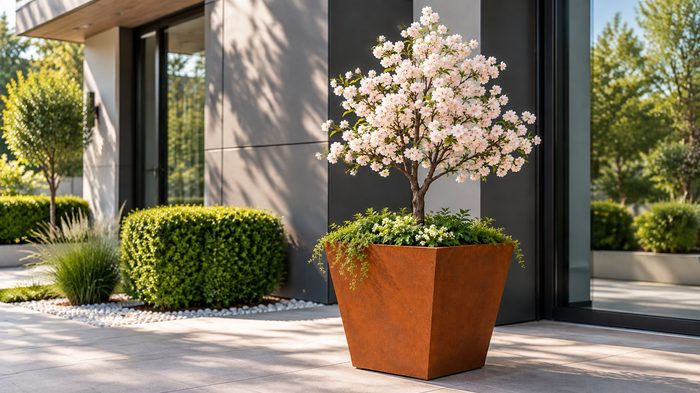
The 3mm Corten Steel Planters use weathering steel that develops a rust coloured patina. This gives a different character from a uniform powder coated finish.
The product page warns that early weathering runoff may mark porous paving. Discuss placement before choosing corten beside pale stone or other sensitive surfaces.
Choose aluminium planters outdoor when a controlled colour finish better suits your design. Consider corten when the changing weathered appearance is intentional. Neither material should be selected solely because it looks attractive in someone else’s garden.
Decide Between Standard and Bespoke Manufacture
Standard options are worth checking first. They can simplify selection when your layout accommodates the available sizes and you do not need unusual details.
Bespoke aluminium planters outdoor become relevant when exact dimensions matter. You may need a particular clearance, a coordinated arrangement across several locations or a container that fits an architectural feature.
Prepare a simple drawing showing length, width, height and orientation. Label which measurements are internal and which are external. Photographs can explain context, but they should not replace confirmed dimensions.
Discuss unusual shapes, internal bases or special connections with the manufacturer before assuming they are achievable. A bespoke enquiry is a request for review, not confirmation that every design can be produced unchanged.
For a larger order of aluminium planters outdoor, give each unit a reference number. Use the same references on your drawings, quotation and delivery schedule so that everyone can identify the correct components.
Understand the Project Support You Are Buying
Buying from a manufacturer gives you a direct route for discussing fabrication requirements. Metal Profiles Ltd describes work with homeowners, builders and architects, including bespoke requirements, on its company information page.
For your project, distinguish product manufacture from site installation. Supply in component form with an installation guide does not automatically mean an installation team is included.
If you need aluminium planters outdoor delivered, assembled, positioned and planted, explain that scope at the enquiry stage. Ask which services can be provided and which need a separate contractor.
You can also review the Metal Profiles Ltd case studies when considering the company’s wider architectural work. Ask for examples relevant to your own requirements rather than assuming every previous project involved planters.
A clear division of responsibilities helps avoid gaps between manufacture, delivery and landscape completion. It also gives you a more useful basis for comparing quotations.
Plan Delivery Around the Actual Site
Access is easy to overlook when ordering from a drawing. Check gates, passageways, stairs, lifts and turning spaces along the entire route.
For aluminium planters outdoor going behind a terraced house, the narrowest passage may determine whether assembled supply is practical. On a commercial site, delivery bookings and unloading arrangements may be equally important.
Confirm packaging dimensions where relevant. A product may fit through an opening after unpacking but still need a safe area for removing protective materials.
Arrange for someone to receive the delivery and check the units against the order. Report concerns using the supplier’s stated process and keep identification information until the installation is complete.
Position aluminium planters outdoor before filling them, following the agreed handling method. Protect finished surfaces and avoid dragging containers across paving. Component form can help with access, but assembly still needs appropriate space, instructions and labour.
Compare the Complete Cost Before Ordering
The product price is only part of the budget. Delivery, unloading, assembly, positioning, growing medium, plants and irrigation can all affect the completed cost.
When comparing aluminium planters outdoor, ask for quotations based on the same dimensions and scope. Check whether VAT is included and whether any postcode or access conditions affect delivery.
A lower initial price may not represent better value if important items are excluded. Equally, an elaborate bespoke specification may add little benefit where a standard size already works.
Confirm the current production and delivery programme directly before booking dependent work. If your opening date or landscaping programme is fixed, explain that early rather than assuming the required date is available.
For aluminium planters outdoor across several project phases, discuss quantities and sequencing together. Keeping an agreed specification on record can make later orders easier to coordinate.
Keep Maintenance Straightforward
Ask for the care instructions that apply to your selected coating. Follow them when choosing cleaning products, equipment and cleaning frequency.
Remove surface dirt gently and avoid abrasive tools that could scratch the finish. If the coating is damaged during other works, seek advice on the appropriate repair rather than applying an unrelated paint.
Maintenance for aluminium planters outdoor also includes keeping outlets clear and checking that irrigation works as intended. Make sure staff or contractors know where connections and access points are located.
Agree who will care for the plants, especially at offices, rental properties or shared developments. A realistic maintenance arrangement protects the appearance of the complete scheme, not just the containers.
FAQ
Can I order a small quantity?
Start with the available product options or discuss your intended quantity with the company. A domestic enquiry should describe the same essential details as a larger commercial order: dimensions, finish, location and access.
Are planters supplied ready for planting?
Confirm the complete specification before ordering. Assembled supply does not necessarily include growing medium, plants, irrigation or every internal component your planting design requires.
Can I match existing exterior metalwork?
Provide the exact colour reference and ask about the available finish. If appearance is critical, compare an appropriate sample with the existing metalwork before approving manufacture.
Does manufacture include installation?
Do not assume that it does. Ask for written confirmation of the agreed services, including assembly, positioning and any site work. Arrange other contractors where those services are outside the supplier’s scope.
What should I send for a quotation?
Send dimensions, quantity, finish, delivery postcode and photographs or drawings. Add your required date and any unusual drainage, loading or access conditions so the enquiry can be assessed properly.
Discuss Your Planter Project with Metal Profiles Ltd
The right purchase begins with a clear picture of your space and what the planting needs to achieve. Once those decisions are made, it becomes easier to compare sizes, finishes and supply arrangements without unnecessary changes later.
Metal Profiles Ltd offers a route to standard products and discussions about bespoke architectural metalwork. Whether you are planning a domestic patio or coordinating a commercial scheme, explain your requirements and ask for a quotation covering the agreed scope.
To discuss aluminium planters outdoor for your property, prepare your measurements and preferred finish, then Contact Metal Profiles Ltd with your project details.
Discover more from Metal Profiles Ltd
Subscribe to get the latest posts sent to your email.