



A galvanised steel angle is a practical L-shaped metal section used across roofing, construction, fabrication and building maintenance. Its straightforward 90-degree profile makes it useful for creating protected edges, providing local support and forming neat junctions between adjoining surfaces.
The combination of a steel base and galvanised finish makes this type of angle suitable for a range of applications where a durable metal section is required. However, selecting the right angle is not simply a matter of choosing a piece of steel that fits a corner. Dimensions, thickness, length, fixing method and the surrounding construction all need to be considered.
For architects, contractors, roofers, fabricators and property owners, understanding how galvanised steel angle works and where it can be used can make product selection much easier.
What Is Galvanised Steel Angle?
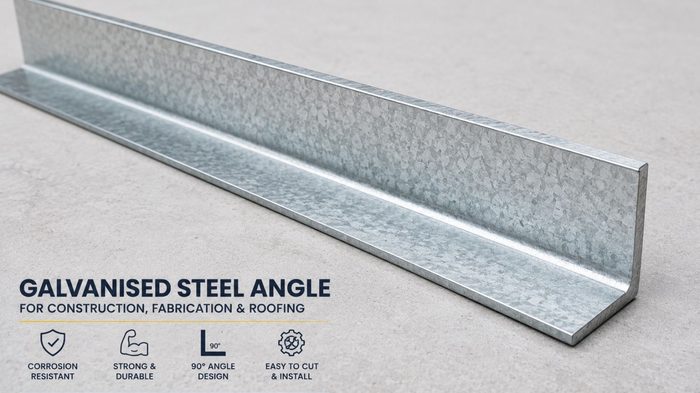
Galvanised steel angle is a steel section formed into an L-shaped profile, normally with two faces meeting at 90 degrees. The galvanised finish provides a zinc coating over the steel, helping protect the underlying material against corrosion in suitable environments.
The two faces of the angle create a useful fixing arrangement. Depending on the design, one face can sit against a wall, frame or other surface while the second face provides a return, edge or supporting surface.
This makes angle sections useful for many practical applications.
They can be incorporated into:
- Edge protection
- General fabrication
- Building support details
- Roofing applications
- Reinforcement
- Metalwork junctions
- Protective construction details
- Architectural metalwork
The appropriate application depends on the dimensions and specification of the section, as well as the requirements of the individual project.
Why Is Galvanised Steel Used?
Steel is widely used in construction because it provides a strong and versatile metal base. Galvanising adds a protective zinc coating that helps reduce exposure of the underlying steel to environmental conditions.
This can be particularly useful where a steel component is used in an environment where moisture is present.
However, galvanising should not be regarded as a substitute for good design and installation. The surrounding construction still needs to be considered carefully. Water should not be allowed to collect unnecessarily around the component, and the fixing and detailing should be appropriate for the location.
The expected environment also matters. An angle used internally may experience very different conditions from one installed externally on a roof or building facade.
The Galvanised Steel Angle Available from Metal Profiles Ltd
Metal Profiles Ltd currently supplies a dedicated Galvanised Steel Angle – 2400mm Length for building and fabrication applications.
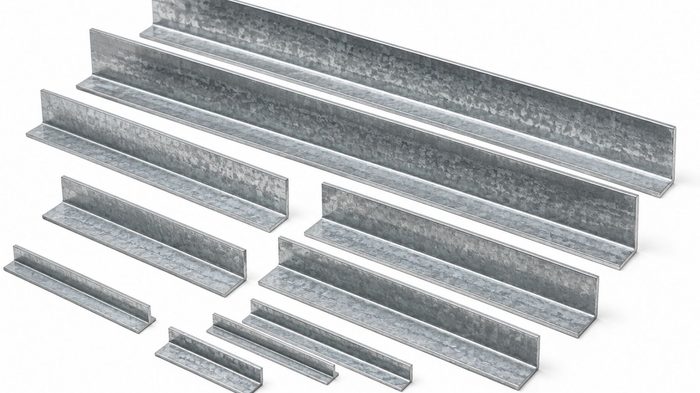
The product is supplied in a 2400mm length and is available in 1mm and 2mm thicknesses. Width options include 100mm x 100mm, 100mm x 75mm, 25mm x 50mm, 50mm x 50mm, 75mm x 50mm and 75mm x 75mm. The product is folded to 90 degrees and is described by Metal Profiles Ltd as suitable for edge protection, structural support and architectural purposes.
Having several width and thickness options is useful because not every construction detail requires the same amount of coverage.
A narrow angle can be more appropriate where space is restricted, while a wider section may be useful where greater coverage is required across an edge or junction.
Choosing the Correct Angle Size
The dimensions of a galvanised steel angle should be selected according to the actual installation.
The first consideration is usually the width of each leg. If the angle is being installed over an edge, both faces need to provide sufficient coverage without creating an unnecessary projection.
For example, an equal 50mm x 50mm angle provides similar coverage on both sides of the corner. An unequal 75mm x 50mm angle provides more coverage on one side and a narrower return on the other.
The correct choice depends on the construction detail.
Metal Profiles Ltd currently provides several width configurations for its galvanised steel angle, including equal and unequal options.
Before ordering, measure the actual surfaces the angle will cover. On refurbishment projects, it is particularly important not to rely entirely on old drawings because existing construction can vary from the original specification.
Equal Angle and Unequal Angle
Equal and unequal angles each have their own practical uses.
An equal angle has two legs of the same width. This can be useful where the angle needs to provide similar coverage on both sides of a junction.
An unequal angle has different leg widths. This allows one side to provide greater coverage while the other remains relatively compact.
For a corner where both surfaces require similar protection, an equal section may be suitable. Where one surface requires a larger fixing area or greater coverage, an unequal section may provide a better solution.
The decision should therefore be based on the installation rather than simply selecting the largest available profile.
Selecting the Right Thickness
Thickness is another important part of product selection.
Metal Profiles Ltd currently lists the galvanised steel angle in both 1mm and 2mm thicknesses.
A thinner section may be appropriate for certain lighter-duty applications, while a thicker section may provide a more substantial profile where greater rigidity is required.
However, thickness alone does not determine whether an angle is suitable for a structural application.
The intended load, span, fixing arrangement, supporting material and overall design all need to be considered when an angle is intended to perform a structural role.
Where an angle is being specified as part of an engineered load-bearing arrangement, the appropriate specification should come from the relevant project engineer or designer.
Galvanised Steel Angle for Edge Protection
Edge protection is one of the most straightforward applications for an angle section.
Building edges can be exposed to impact, movement and general wear. An L-shaped metal profile can cover an exposed corner and create a more durable finished edge.
The dimensions need to be suitable for the edge being protected.
If the legs are too short, they may not provide sufficient coverage. If they are unnecessarily wide, the finished section could project further than required and interfere with adjacent construction.
This is why accurate measurement should take place before ordering.
The galvanised finish can also be useful where the angle is exposed to normal environmental moisture, subject to the conditions of the particular installation.
Galvanised Steel Angle for Support
The two faces of an angle section can also make it useful for certain support and reinforcement details.
The section can provide two surfaces for fixing and can therefore be incorporated into fabricated assemblies or construction details where an L-shaped support is appropriate.
Metal Profiles Ltd specifically describes its galvanised steel angle as a practical option for structural support as well as edge protection.
It is important, however, to distinguish between general support and engineered structural loading.
If an angle is expected to carry a specific load, its suitability should be established through the project design. The correct section cannot be determined from appearance alone.
Galvanised Steel Angle in Roofing
Roofing projects often require several different types of metal profiles.
Roof edges, junctions, valleys, penetrations and membrane details can each require their own components. A galvanised steel angle may be useful within an appropriate support or edge-detailing arrangement, but it should not automatically be treated as a replacement for a dedicated roofing product.
Metal Profiles Ltd lists its galvanised steel angle within its Roof Accessories range, alongside aluminium roof edge drip trims, roof flashing, aluminium valleys, termination bars, roof soakers and other roof products.
Understanding the role of each component is important when preparing a roof specification.
Galvanised Steel Angle and Roof Edge Trims
A roof edge may need both structural support and controlled water management.
These are separate functions.
A galvanised steel angle can be used where an L-shaped support or protective section is required. A dedicated roof edge drip trim, on the other hand, is designed around the requirements of the roof perimeter and water run-off.
Metal Profiles Ltd supplies an aluminium roof edge drip trim as part of its roof accessories range. The current category lists the 3m length alongside internal and external corner components and an internal joiner.
When designing a roof edge, the required function should determine which component is specified.
Galvanised Steel Angle and Roof Flashing
Roof flashing is another product that may be considered alongside galvanised steel angle.
Flashing is generally used at roof junctions and other areas where weather protection is required. It can help form a weather-resistant transition between different parts of a roof or building.
Metal Profiles Ltd currently lists aluminium roof flashing in its roof accessories range, including a 3000mm length as well as internal and external corner options.
The distinction between flashing and angle is important. A galvanised steel angle may provide support, protection or reinforcement, while flashing is selected for a weathering function.
The two products may form part of the same overall roof project without performing the same job.
Considering Roof Valleys
Roof valleys require particularly careful water management because rainfall from two roof slopes can converge in one location.
A general-purpose angle should not be selected as a substitute for a purpose-designed valley component when the roof requires a dedicated water channel.
Metal Profiles Ltd lists an Aluminium Valley – 2.4m Length within its roof accessories range.
This illustrates the importance of selecting products according to their intended purpose. A galvanised steel angle and an aluminium valley may both be metal profiles, but their roles within the roof construction can be completely different.
Galvanised Steel Angle for General Fabrication
Beyond roofing, galvanised steel angle can be useful in general fabrication.
Its L-shaped profile can be incorporated into frames, brackets, supports and protective assemblies where two fixing faces are beneficial.
The 2400mm length supplied by Metal Profiles Ltd can be useful where longer sections are required. The product is available with multiple width and thickness combinations, allowing the specification to be adapted to different fabrication requirements.
Where shorter pieces are required, a cutting plan can be prepared before installation. This helps establish where joints will occur and can reduce unnecessary material waste.
Measuring for a Galvanised Steel Angle
Accurate measurement is one of the simplest ways to avoid installation problems.
Start with the total length required.
Next, measure the width of the surfaces that each leg needs to cover. If the section is being fitted around an existing edge, check the dimensions at several points.
Existing walls and roof edges are not always perfectly straight, particularly on older properties.
Also check surrounding components.
The finished angle may sit close to:
- Roofing membranes
- Flashing
- Fascia
- Soffits
- Cladding
- Windows
- Doors
- Gutters
- Structural framing
The angle should fit into the detail without creating an unwanted obstruction.
Fixing Considerations
The correct fixing method depends on the material to which the angle is being attached.
Timber, masonry, steel and other substrates have different fixing requirements. The fixing should provide adequate support while remaining suitable for the surrounding construction.
Fixing positions should also be planned before installation.
Where the angle is exposed externally, avoid creating unnecessary locations where water can remain trapped around the fixing or joint.
The finished section should sit securely and align properly with adjoining components.
Using Galvanised Steel with Aluminium
Construction projects often involve several different metals.
A galvanised steel angle may be used alongside aluminium roof flashing, aluminium valleys, aluminium rainwater goods or other architectural metalwork.
Where different metals meet, the project should consider the specific environmental conditions and the way the materials are connected.
Moisture management is also important.
The interface should be detailed appropriately for the application, particularly where the connection is exposed to rain.
This is one reason why the complete construction detail should be considered rather than specifying individual components in isolation.
Galvanised Steel Angle for New Build Projects
New-build projects offer an opportunity to establish the required metalwork details before construction reaches the installation stage.
Architects and contractors can specify the angle from drawings and coordinate it with the roof, wall, cladding and supporting structure.
The required length and dimensions can be established in advance, while the fixing arrangement can be incorporated into the construction detail.
This can reduce site cutting and modification.
It can also help ensure that the angle does not conflict with other components installed later in the build.
Galvanised Steel Angle for Refurbishment
Refurbishment projects can require additional care because existing buildings often contain irregularities.
A wall may not be perfectly straight. A roof edge may have been altered during previous work. Existing fixings may not be positioned where a new component would ideally be installed.
For this reason, site measurements are particularly valuable.
Photographs can also help when discussing a project with a manufacturer, especially where the angle forms part of a complicated roof or building junction.
A clear sketch showing dimensions and surrounding components can make the requirement easier to understand.
Galvanised Steel Angle and Roof Accessories
A galvanised steel angle is only one of several metal products that may be required during a roofing or building project.
Metal Profiles Ltd’s current roof accessories category contains 18 products, including roof edge drip trims, aluminium roof flashing, galvanised steel angle, aluminium valley, termination bar, roof soakers, pipe sleeves, fasteners, sealant, spray can and touch-up paint.
This range can be useful when planning several related details from one product category.
However, each item should still be selected according to its intended application.
Choosing Related Products
A project may require more than the steel angle itself.
For example, where a roof edge requires water management, an aluminium drip trim may be relevant. Where a membrane or roof junction requires weathering, aluminium flashing may be more appropriate.
Where a fastening or sealing product is needed, the relevant accessory should be selected according to the substrate and installation detail.
Metal Profiles Ltd also lists Colour Coded Sealant – 300ml among the related products for its galvanised steel angle.
The product page also lists Colour Coded Fastener (Metal) – Pack of 25 as a related product.
These products should be considered according to the requirements of the particular installation rather than automatically included with every steel angle order.
What Should Be Checked Before Ordering?
Before ordering galvanised steel angle, check the following details:
Length
Confirm the total length required and whether the standard 2400mm length is suitable.
Width
Check the required leg dimensions carefully. This is particularly important where the angle needs to cover an existing edge.
Thickness
Select the appropriate thickness according to the application and required rigidity.
Quantity
Calculate the total number of lengths required, taking account of cuts and joints.
Substrate
Identify what the angle will be fixed to so that the installation method can be planned correctly.
Surrounding Components
Check whether the angle needs to meet flashing, roof trims, cladding, gutters or other components.
Project Conditions
Consider whether the angle will be installed internally or externally and what environmental conditions it will experience.
Product Information and Purchasing
Product information should be checked before placing an order, particularly where the component is being incorporated into a larger construction detail.
The current Metal Profiles Ltd listing provides the galvanised steel angle in a 2400mm length with 1mm and 2mm thickness options and six listed width configurations.
Customers can also review the Product Policy before ordering to understand the relevant product and purchasing information.
For project-specific requirements, providing accurate measurements, photographs and drawings can help ensure that the intended application is understood clearly.
Looking at Completed Metalwork Projects
Product specifications provide important information, but completed projects can also offer useful context.
A case study can show how metalwork has been incorporated into a wider building design and how different components work together.
The Metal Profiles case studies provide examples of completed projects and practical applications involving the company’s metal products.
For architects and contractors, this type of information can be useful when considering how roofing, rainwater, facade and other metal components may be integrated into a project.
Maintenance and Inspection
The maintenance requirements for galvanised steel angle depend on where and how it has been installed.
External applications should be inspected periodically for visible damage, movement, loose fixings or signs of corrosion.
The surrounding area should also be checked.
If water is collecting around the angle, the issue may relate to the wider construction detail rather than the steel itself.
Where the angle forms part of a roof assembly, inspection can be carried out alongside checks of roof edges, flashing, drainage components and other exposed metalwork.
Early identification of physical damage or installation problems can make corrective work easier.
When Should a Different Product Be Used?
One of the most important aspects of metal specification is understanding when a general-purpose angle is not the correct product.
If the primary requirement is water management at a roof edge, a dedicated drip trim may be more appropriate.
If the requirement is to weather a roof junction, flashing may be required.
If the roof has a valley, a dedicated valley profile should be considered.
If a component needs to carry a defined structural load, its suitability should be established through the engineering design.
This approach prevents a galvanised steel angle from being used simply because it appears to fit the physical shape of a detail.
How to Choose the Right Galvanised Steel Angle
Choosing the right section begins with the application.
Consider what the angle needs to do, how much surface it needs to cover, how it will be fixed and what other products it needs to connect with.
Then select the appropriate leg dimensions, thickness and length.
Metal Profiles Ltd’s current galvanised steel angle range provides several combinations, giving contractors and fabricators flexibility when specifying the section.
For straightforward applications, the standard 2400mm length may provide a practical solution. More detailed projects may require additional planning to ensure that the angle works correctly with the surrounding construction.
A Practical Choice for UK Construction
Galvanised steel angle remains a useful metal section because its design is simple, adaptable and suitable for many different applications.
Its L-shaped profile can provide edge protection, support, reinforcement and a defined metal junction, while the galvanised finish provides additional protection against corrosion in suitable environments.
For UK construction and refurbishment work, the most important consideration is not simply finding an angle that fits. The product needs to be specified according to its intended function, dimensions, installation method and relationship with the surrounding building.
When these factors are considered from the beginning, galvanised steel angle can become a practical part of a well-coordinated roofing, construction or fabrication detail.
FAQ
-
What is galvanised steel angle used for?
Galvanised steel angle is commonly used for edge protection, support, reinforcement, roofing details and general fabrication applications.
-
What sizes of galvanised steel angle are available?
Metal Profiles Ltd offers a 2400mm length with 1mm and 2mm thickness options and several width configurations.
-
Is galvanised steel angle suitable for roofing?
It can be used for suitable roofing support, reinforcement and edge-detailing applications, depending on the project specification.
-
What is the difference between equal and unequal steel angle?
An equal angle has two legs of the same width, while an unequal angle has different leg widths.
-
How do I choose the right galvanised steel angle?
Consider the required length, leg dimensions, thickness, fixing method, application and surrounding construction before selecting the appropriate section.
Metal Profiles Ltd supplies galvanised steel angle alongside aluminium roofing, rainwater and architectural metalwork products for residential, commercial and construction projects. Its galvanised steel angle is available in a 2400mm length with different thickness and width options for suitable applications. For project requirements, dimensions or product enquiries, Contact Metal Profiles Ltd for further information.
Discover more from Metal Profiles Ltd
Subscribe to get the latest posts sent to your email.