



Metal outdoor planters can bring structure, planting and architectural interest to spaces where conventional garden beds are unavailable or unsuitable. They can define the edge of a patio, frame an entrance, soften a courtyard, organise a roof terrace or introduce greenery beside a commercial building.
Choosing the right planter involves more than selecting a shape that looks attractive in a photograph. The material, dimensions, finish, drainage approach, supporting surface and intended planting should all respond to the location in which the planter will be used.
A small planter beside a domestic doorway has very different requirements from a long trough positioned across a hospitality terrace. In the same way, metal outdoor planters intended for an exposed roof terrace require different planning from those placed in a sheltered rear garden.
Metal Profiles Ltd is a UK manufacturer of architectural metal products and metal planters for residential, commercial and landscape projects. Its current metal planter range includes Corten steel, polyester powder-coated mild steel and polyester powder-coated aluminium options manufactured for outdoor use.
This guide explains how to compare those materials, select an appropriate size and prepare the information needed before discussing a standard or project-specific planter requirement.
Why Metal Outdoor Planters Work Well in Designed Spaces
Outdoor planting often needs to relate to hard surfaces such as paving, brickwork, render, glazing, timber and architectural metalwork. Traditional plant pots may look too small or visually disconnected when used against these larger building elements.
Metal outdoor planters can provide a stronger and more deliberate form. Straight edges, controlled proportions and repeated units can help planting feel integrated with the wider layout rather than added after the building or garden has been completed.
Long planters can guide the eye along a terrace or boundary. Taller units may frame an entrance, create separation between seating areas or introduce planting where privacy is required. Square or rectangular planters can also bring balance to spaces dominated by straight architectural lines.
The planter should still support the planting rather than becoming the only feature. A successful arrangement considers the form of the planter, the scale of the plants and the surrounding space together.
Start With the Outdoor Location
The best metal outdoor planters are selected around a real location rather than an isolated product image.
Begin by deciding exactly where each planter will be positioned. Consider nearby doors, windows, steps, paths, seating, drainage channels and service access. A planter that fits the available width may still cause a problem if it narrows a walkway or prevents a door from opening fully.
The location also affects exposure. A south-facing paved area may receive stronger sunlight, while a shaded courtyard may remain damp for longer. Roof terraces and open commercial spaces can be exposed to more wind than sheltered domestic gardens.
These conditions influence plant selection, watering and maintenance. They may also affect the most suitable planter dimensions and finish direction.
Photographs taken from several angles can help when discussing metal outdoor planters with a manufacturer. For more involved schemes, a simple plan showing dimensions and planter positions can provide far clearer information than a written description alone.
Choosing the Right Planter Size
Planter size should reflect both the space and the planting requirement.
A long wall does not always need one extremely large planter. A controlled sequence of units may create a more balanced rhythm and make access or future maintenance easier. Conversely, several small planters can appear fragmented where the setting requires one clear architectural feature.
Length and width affect how the planter sits within the layout, while height influences its visual presence and the planting depth available. A tall planter can make an entrance feel more formal, but it may interrupt sightlines if placed beside a window, path or seating area.
Metal outdoor planters positioned near circulation routes should leave comfortable room for people to move around them. Where the planter is intended to divide spaces, the layout should create separation without making the area feel restricted.
The internal planting space also matters. The chosen plants need appropriate room for roots, growing media and the intended drainage build-up. Planting requirements should therefore be considered before the external dimensions are finalised.
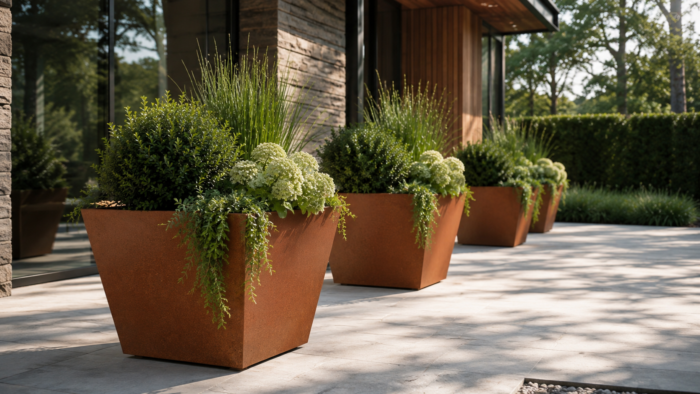
Corten Steel for a Weathered Character
Corten steel is often selected where a naturally changing weathered appearance suits the landscape or architectural setting.
The surface develops a distinctive patina as it is exposed outdoors. This can complement brick, timber, gravel, natural stone and informal planting schemes particularly well. It may also provide a strong contrast beside contemporary glazing or pale render.
Metal Profiles Ltd manufactures 3mm Corten steel planters as part of its metal planter range. The weathering character makes this option visually different from powder-coated mild steel or aluminium.
Placement should be considered carefully during the early weathering period. Water passing over a developing Corten surface may carry residue onto nearby materials, particularly light-coloured or porous paving.
For that reason, metal outdoor planters in Corten steel should not be positioned without reviewing drainage and the surrounding surface. The desired patina may look entirely appropriate on the planter while unwanted marks on paving or walls may be much less welcome.
Corten is therefore best treated as an intentional material choice rather than simply a brown or rust-coloured finish.
PPC Mild Steel for Controlled Colour
Polyester powder-coated mild steel may suit projects where a controlled colour and consistent external appearance are important.
The powder-coated surface allows the planter to coordinate with windows, doors, fencing, cladding, rainwater goods or other metal details. Dark greys and blacks can produce a restrained architectural appearance, while lighter or more distinctive colours can make the planter a stronger feature.
The Metal Profiles Ltd 3mm PPC mild steel planter is manufactured from mild steel with a polyester powder-coated finish. It is available in a selection of sizes and colour options shown on the product page.
Mild steel is a substantial material, so handling and access should be considered before larger metal outdoor planters are ordered. A finished planter that fits the final location may still be difficult to move through a narrow side passage, gateway, corridor or service entrance.
Confirm whether the product will arrive fully assembled or whether a component arrangement is more practical for the site. This decision should be made before delivery rather than after access difficulties have been discovered.
PPC Aluminium for Lighter Handling
Aluminium may be considered where cleaner folded forms, coordinated powder-coated finishes and more manageable handling are important to the project.
The Metal Profiles Ltd 4mm PPC aluminium planter is produced from aluminium with a polyester powder-coated finish. The official product range presents aluminium as the lighter option among the company’s principal metal planter materials.
This can be particularly useful where metal outdoor planters need to be positioned through restricted access or coordinated carefully during installation. However, lighter handling does not mean that a filled planter can be moved casually after planting.
Growing media, drainage material, water and mature planting can add considerable weight. The supporting surface and final position should therefore be agreed before filling begins.
Powder-coated aluminium can also be used where the planter colour needs to align with other architectural aluminium products. The exact colour reference should be recorded rather than relying on informal descriptions such as dark grey or black.
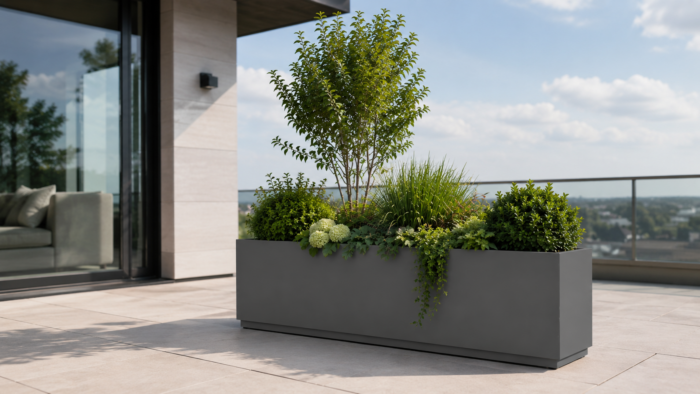
Matching the Finish to the Building
Colour should be selected as part of the complete outdoor palette.
A planter may sit beside brick, render, paving, decking, fencing, window frames or cladding. Looking at each material together helps prevent a finish that appears attractive on a sample but disconnected when installed.
Metal outdoor planters can either blend with surrounding finishes or create deliberate contrast. A planter matching the colour of the windows may appear integrated and restrained. A contrasting planter can draw greater attention to the planting and establish a stronger focal point.
Light conditions also influence colour. A deep grey can appear softer in direct sunlight and much darker in a shaded courtyard. Large coated surfaces may also look different from a small colour sample.
Where several planters are being used, record one agreed finish reference across the project. This is particularly important when products are ordered at different stages or coordinated with other powder-coated metalwork.
Customers considering a project-specific colour or manufactured size should review the current product policy before confirming the order.
Drainage Must Be Planned Before Planting
Drainage is one of the most important practical considerations for metal outdoor planters.
Rainwater and irrigation water need a suitable route through the planting build-up and away from the planter. Without an appropriate approach, water may remain around plant roots or discharge onto areas where staining, saturation or slippery surfaces could become a concern.
The planter should not be placed directly over a drainage channel, roof outlet or inspection point that needs to remain accessible. On roof terraces and balconies, coordination with the existing surface falls and waterproofing detail is particularly important.
A liner may be suitable for some planting arrangements, but it should not be assumed to solve every drainage issue. The planter, liner, growing medium and outlet arrangement need to work together.
Plan where water will go after it leaves the planter. This is especially important beside rendered walls, shopfronts, entrance routes and pale paving.
Metal outdoor planters should be considered as part of the wider outdoor drainage plan, not as self-contained objects with no effect on the surrounding surface.
Plan the Planting Before Finalising the Planter
The planter and planting scheme should be developed together.
Seasonal bedding, ornamental grasses, shrubs, herbs and small trees all have different requirements. The plant type influences the depth and width of the growing space, ongoing irrigation, pruning and long-term maintenance.
A narrow trough may suit lower planting but be unsuitable for plants expected to develop a larger root system. A deep planter may provide greater planting capacity, but it also increases the amount of material and weight being supported.
Consider the mature form of the planting rather than only its appearance on installation day. Plants placed too closely may quickly overcrowd the planter, while planting that is too small can leave a large architectural container looking empty.
For commercial metal outdoor planters, the maintenance team should be considered during design. The arrangement should allow safe access for watering, pruning, replacing plants and clearing drainage openings.
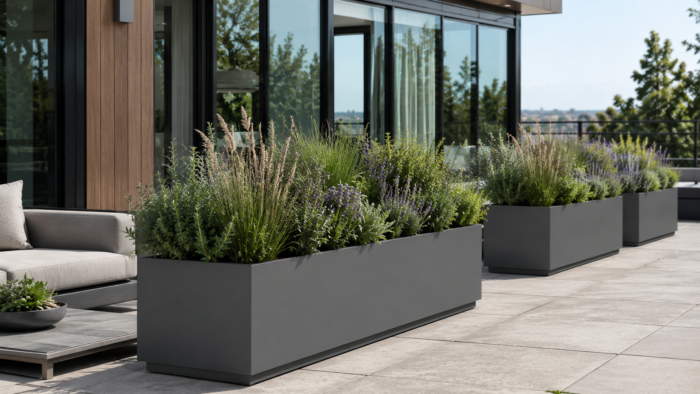
Gardens, Patios and Domestic Entrances
In domestic settings, metal outdoor planters can help organise spaces that feel open, unfinished or dominated by hard landscaping.
Long troughs can create a planting edge beside a patio without requiring excavation. A pair of taller planters can frame an entrance, while lower rectangular units can soften a wall or establish separation between dining and circulation areas.
The planter should remain proportionate to the property. A very tall design can overwhelm a compact front garden, while a small decorative pot may have little visual effect beside a broad modern extension.
Think about how the planter will appear from inside the house as well as from the garden. A well-positioned planting feature can improve views through glazing, but an overly high planter may block light or sightlines.
Access for delivery is often overlooked in domestic projects. Gates, side passages, steps and changes in ground level should be measured before the planter size is confirmed.
Commercial Entrances and Hospitality Spaces
Commercial metal outdoor planters often need to perform several functions at once.
They may frame an entrance, soften a paved frontage, separate outdoor seating or help guide visitors through a space. The design needs to support the appearance of the building while preserving circulation and access.
At hospitality sites, planters can create definition around terraces without introducing permanent solid barriers. At offices or residential developments, repeated units may help establish a consistent arrival experience.
Metal outdoor planters positioned in busy locations should not obstruct accessibility routes, signage, doors or visibility. Their placement should also consider maintenance equipment, deliveries and cleaning routines.
A finish that coordinates with the façade can make the planter feel part of the original architectural scheme. Bespoke dimensions may be useful where units need to align with paving joints, glazing bays or a particular frontage width.
Roof Terraces and Elevated Areas
Metal outdoor planters can add structure and planting to roof terraces, balconies and other elevated outdoor spaces, but these locations require careful project review.
The planter shell may appear manageable when empty, yet the complete planted assembly can be much heavier. The supporting surface and permitted loading should be reviewed by the relevant project professional where necessary.
Planters should not obstruct roof outlets, drainage paths, inspection points or access needed for building maintenance. Their bases should also be coordinated with the finished roof or terrace surface.
Wind exposure can influence both planting and stability. Tall, dense planting may behave differently in an exposed location than in a sheltered garden.
Delivery access can also be more complex. Lifts, stairs, doorways and lifting arrangements may influence whether the planter should arrive fully assembled or in another agreed format.
These matters should be resolved before manufacturing metal outdoor planters for elevated locations.
Standard Sizes or Bespoke Manufacture
Standard planters can be suitable where the available dimensions and project layout match the existing product range.
They provide a clearer starting point for straightforward domestic and commercial requirements. However, standard sizes should not be selected merely because they are immediately available if they leave awkward gaps or disrupt the intended layout.
Bespoke metal outdoor planters can respond more closely to a particular wall length, entrance, courtyard or terrace. They may also help coordinate multiple units where consistent spacing and alignment are important.
A bespoke enquiry should include the required length, width, height, quantity, material and finish. Photographs or drawings should show the final location and any relevant access restrictions.
The Metal Profiles Ltd request an estimate service allows customers to provide sketches, drawings and project details for review.
Dimensions should be checked carefully before project-specific products are approved for manufacture.
Preparing a Clear Planter Enquiry
A clear enquiry helps the manufacturer understand what the project actually requires.
Provide the overall dimensions of each planter and the quantity needed. Explain whether the units will be used in a domestic garden, entrance, courtyard, hospitality terrace, roof terrace or another outdoor location.
State whether you prefer Corten steel, PPC mild steel or PPC aluminium. Where a powder-coated finish is required, include the preferred RAL or BS colour reference if it is already known.
Add photographs of the proposed position and the route through which the planters will need to travel. Include drawings where the planter must coordinate with paving, walls, facade bays or another architectural feature.
Explain the intended planting and whether drainage holes, liners or other planting components form part of the plan. The manufacturer does not need to design the planting scheme, but understanding the intended use can help identify gaps in the project information.
The more complete the brief, the easier it is to discuss whether standard or bespoke metal outdoor planters are appropriate.
FAQ
-
Which material is best for metal outdoor planters?
There is no single material that is best for every setting. Corten steel may suit a changing weathered appearance, PPC mild steel may suit a colour-led and substantial design, while PPC aluminium may be useful where lighter handling and a powder-coated finish are important. The surrounding materials, exposure, access and design intention should guide the decision.
-
Do metal outdoor planters need drainage holes?
The drainage arrangement should always be considered before planting. The suitable approach depends on the planter, liner, growing medium, plant selection and final location. Water should have a planned route that does not create problems for plant roots or nearby surfaces.
-
Can metal outdoor planters be made to bespoke dimensions?
Yes, project-specific planters can be considered where standard sizes do not suit the available space or architectural layout. Accurate length, width and height measurements are essential. Drawings and photographs can also help explain corners, access restrictions and the relationship with surrounding features.
-
Are metal outdoor planters suitable for roof terraces?
They may be suitable where support, loading, drainage, access, waterproofing and wind exposure have been reviewed by the relevant project team. A planter should not obstruct roof outlets or maintenance access. The complete planted weight should be considered rather than the empty planter alone.
-
Can powder-coated planters match other exterior metalwork?
A defined RAL or BS colour can help coordinate planters with windows, doors, cladding, copings, gutters or other coated metal details. The finish reference should be confirmed before manufacture. Colour should also be reviewed against actual site materials and daylight conditions.
Metal Profiles Ltd is a UK manufacturer of metal planters and architectural metal products for domestic, commercial and landscape projects. Its metal planter range includes Corten steel, PPC mild steel and PPC aluminium options for gardens, patios, entrances, courtyards and roof terraces. Careful planning of material, dimensions, drainage, finish and access helps ensure the selected planter suits the intended location. Customers requesting bespoke products should provide accurate measurements, photographs, drawings and the preferred colour or material direction. For support with a standard or project-specific requirement, Contact Metal Profiles Ltd.
Discover more from Metal Profiles Ltd
Subscribe to get the latest posts sent to your email.