



Understanding Metal Rain Gutters
Metal rain gutters are an important part of a building’s rainwater management system. They collect rainfall from the roof and direct it towards outlets and downpipes, helping prevent uncontrolled water from running over roof edges, walls and other vulnerable areas.
For UK properties, a reliable gutter system is particularly important because buildings are regularly exposed to rain throughout the year. A well-planned system needs to collect water effectively and transfer it away from the building without creating unnecessary maintenance problems.
Metal guttering can also provide an attractive architectural finish. Unlike drainage products that are treated as purely functional components, modern metal systems can be selected to complement the roofline, facade and overall appearance of a property.
The right choice depends on the roof design, building size, drainage requirements, gutter profile, downpipe arrangement and finish. Considering these elements together can help create a more effective and visually consistent rainwater system.
Why Metal Rain Gutters Are Important
Rainwater needs a controlled route away from the roof. When a building does not have an effective gutter system, water can run directly down external walls and collect around the base of the property.
Over time, uncontrolled water can contribute to staining, damp areas and deterioration of external finishes. In more serious situations, persistent moisture can create additional problems around roof and wall junctions.
A properly installed gutter system helps prevent this by collecting rainfall at roof level and directing it into a planned drainage route.
The gutter therefore forms an important connection between the roof and downpipe system. Its performance depends not only on the gutter itself but also on the way the complete rainwater arrangement has been designed and installed.
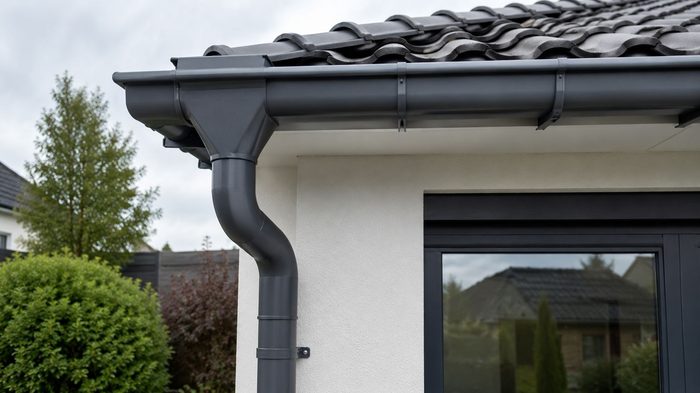
Choosing the Right Metal Gutter Profile
Different buildings can require different gutter profiles. The most suitable option depends on both functional requirements and the appearance of the property.
A traditional building may benefit from a rounded profile, while a contemporary project may suit a more structured box-style gutter. The choice should also take account of the available outlets and downpipes so that the components can work together correctly.
Roof size is another important consideration. Larger roof surfaces can collect significant quantities of rainfall, particularly during periods of heavy weather. The drainage system therefore needs to be appropriate for the amount of water it is expected to manage.
It is useful to consider the complete system rather than choosing individual components separately. This approach can help avoid compatibility problems during installation.
Aluminium Metal Rain Gutters
Aluminium is widely used for external rainwater systems because it combines durability with relatively low weight. It is also resistant to corrosion, making it suitable for exposed outdoor applications.
For UK projects, aluminium can provide a practical material choice for gutters, outlets and downpipes that need to remain functional through changing weather conditions.
Metal Profiles Ltd currently offers aluminium rainwater products covering gutters and downpipes for residential, commercial and architectural projects. The company’s range includes box gutter, half round gutter and round or square downpipe systems.
The finish can also form part of the design decision. According to the current rainwater goods range, aluminium products are available in mill finish and external polyester powder-coated finishes with a wide selection of RAL/BS colours.
Box Gutters for Modern Rainwater Management
Box gutters have a structured profile that can work particularly well with contemporary roof designs. They can also form part of larger rainwater systems where the gutter needs to connect with suitable outlets and downpipes.
For projects considering this type of profile, aluminium box gutters are available as part of the Metal Profiles Ltd rainwater range.
The current product range includes aluminium box gutter components and associated fittings. The listed 3m box gutter is available in several profile configurations, including 100mm gutter sole with 75mm upstand, 125mm gutter sole with 100mm upstand and 150mm gutter sole with 100mm upstand.
These options allow the drainage arrangement to be considered according to the requirements of the particular roof rather than relying on one universal profile.
Half Round Gutters for Traditional Properties
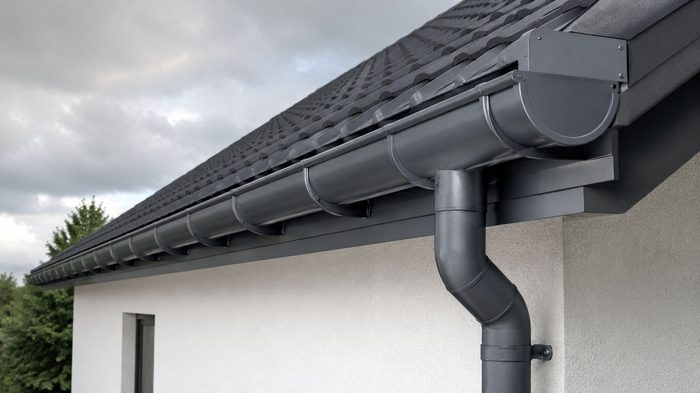
Half round gutters remain a popular option where a curved gutter profile suits the building.
Their rounded appearance can work well with traditional residential properties, extensions and other projects where the rainwater system needs to complement the existing architectural style.
The profile also provides a straightforward route for collecting water along the roof edge and directing it towards outlets.
For projects requiring this style, half round gutters are available in the Metal Profiles Ltd rainwater range.
The current 3m aluminium half round gutter is listed at 123mm x 51mm and is manufactured from corrosion-resistant aluminium. The product page also notes that the 3m length can reduce the number of joints required along a gutter run.
Selecting the Right Downpipe
The gutter is only one part of an effective rainwater system. Once water has been collected, it needs to be transferred safely through a suitable downpipe.
The downpipe profile should be compatible with the gutter outlet and should also suit the architectural appearance of the building.
The route of the downpipe is important as well. Designers and installers need to consider the vertical drop, wall position, bends, offsets and final drainage connection.
Choosing the downpipe at the same time as the gutter can make the overall installation easier to plan.
Square Downpipes for Contemporary Buildings
Square downpipes can provide a clean and structured appearance that suits contemporary architecture.
Their straight-sided form can complement box-style gutters and modern roofline details, particularly where the building uses strong geometric lines.
Metal Profiles Ltd currently offers square downpipes in three listed dimensions: 76mm x 76mm, 100mm x 76mm and 100mm x 100mm. The range also includes compatible components such as bends, offsets, branches, joiners, access panels and shoes.
When specifying a square downpipe, it is important to select matching fittings rather than assuming that visually similar components from another drainage system will connect correctly.
Round Downpipes for Established Gutter Designs
Round downpipes provide an alternative profile and can work particularly well with half round gutter systems and traditional architectural designs.
The rounded shape creates a familiar appearance and can provide a visually softer alternative to square or rectangular drainage components.
The current Metal Profiles Ltd round downpipe range includes 3m plain and flush-joint pipes in listed 76mm and 100mm diameters, together with fittings such as clips, bends, offsets, branches, joiners, access panels, shoes and hopper heads.
Selecting the correct diameter and matching fittings is important when planning a complete system.
Coordinating Gutters and Downpipes
A successful rainwater installation depends on the relationship between all of its components.
The gutter needs to collect water effectively, the outlet needs to transfer it into the downpipe and the downpipe needs to carry it towards the final discharge point.
This means the gutter profile, outlet size, downpipe dimensions and fittings should be considered together.
A mismatch between components can make installation more difficult and may affect the performance of the finished system. Careful planning before ordering can help prevent these issues.
Metal Rain Gutters for Residential Properties
Residential buildings can benefit from metal gutter systems where durability and appearance are both important.
A replacement gutter system can be used to update an older drainage arrangement, while a new installation can be specified as part of a wider roofing project.
The architectural character of the property should be considered when selecting the profile. Traditional buildings may suit half round guttering, while modern homes can accommodate box-style or more angular solutions.
Colour can also be considered where the rainwater system is visible from the ground. A coordinated finish can help the gutter and downpipes sit more naturally against the building exterior.
Metal Rain Gutters for Commercial Buildings
Commercial and industrial properties can have larger roof areas and more demanding drainage requirements.
Offices, retail premises, educational buildings and other larger developments may require carefully planned gutter and downpipe arrangements to manage the volume of water generated across the roof.
The visual appearance of the system can also matter, particularly around prominent elevations and entrances.
A professionally specified metal rainwater system can therefore support both practical drainage requirements and the architectural appearance of the building.
Installation Considerations
Correct installation is essential for achieving reliable performance from metal rain gutters.
The gutter needs to be positioned appropriately to allow collected water to move towards the outlet. Connections must also be completed carefully to reduce the risk of leakage.
Downpipes should follow a suitable route and be securely supported. Where bends or offsets are required, the correct fittings should be selected for the system.
It is also important to consider how the drainage components connect with the roof and surrounding building materials. A carefully planned installation helps create a cleaner finished appearance and reduces avoidable maintenance issues.
Maintaining Metal Rain Gutters
Regular inspection is an important part of looking after a rainwater system.
Leaves, dirt, moss and other debris can collect in gutters, particularly on properties surrounded by trees. If accumulated material restricts water flow, the system may not perform as intended during heavy rainfall.
Checking gutters and outlets periodically can help identify blockages before they become more serious.
Downpipes should also be checked where practical. Signs of restricted flow, damaged fittings or water escaping from joints may indicate that maintenance is required.
A simple maintenance routine can help keep the drainage system functioning effectively.
The UK Government provides guidance on protecting buildings from moisture-related issues through Approved Document C: Site preparation and resistance to contaminants and moisture.
Choosing the Right Finish
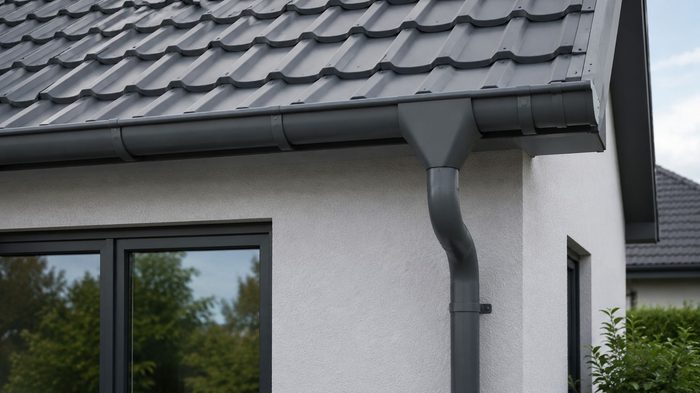
The finish of a metal rainwater system can influence both appearance and long-term presentation.
For visible external components, the gutter and downpipe colour can be selected to complement the roof, windows, facade or other architectural details.
Aluminium systems can provide flexibility in this area. The current Metal Profiles Ltd rainwater range states that products can be finished in mill finish or polyester powder coating with a broad selection of RAL/BS colours.
The choice of finish should be considered before ordering, particularly where the system needs to coordinate with existing building elements.
Considering Product Information Before Ordering
Rainwater products should be selected carefully because the wrong dimensions or fittings can create problems during installation.
Before placing an order, it is sensible to check the relevant product information, dimensions, finishes and system compatibility.
Customers can also review the product policy before making a purchase so that important ordering information is understood in advance.
This is particularly useful for projects involving multiple components or specific finish requirements, where accurate product selection is important.
Learning from Real Building Projects
Real installations can provide useful context when comparing different rainwater solutions.
A completed project can show how gutters, downpipes and other architectural metal components are incorporated into an actual building rather than being considered individually.
The Metal Profiles Ltd case study collection currently includes a Bespoke Aluminium Box Gutter Installation in Educational Facility, demonstrating the use of a bespoke aluminium box gutter system alongside 102mm x 102mm aluminium square downpipes at an educational facility in London.
You can explore the wider Metal Profiles case studies to see other examples of the company’s work across different building applications.
Why Manufacturer Experience Matters
The quality of a rainwater system depends on more than simply selecting a metal gutter.
Accurate fabrication, suitable materials, appropriate finishing and compatible components all contribute to the finished installation.
Manufacturer experience can be particularly valuable where a project has unusual dimensions, complex roof geometry or specific aesthetic requirements.
Metal Profiles Ltd states that it manufactures aluminium products in Chelmsford and provides rainwater goods alongside fascia, soffit, coping and other architectural metal solutions. Its company information also describes collaboration with architects, builders and homeowners on new construction, refurbishment and bespoke projects.
For projects that require more than standard components, discussing the requirements with an experienced manufacturer can help identify a suitable approach before fabrication begins.
FAQ
-
What are metal rain gutters?
Metal rain gutters collect rainwater from the roof and direct it safely towards downpipes and drainage points.
-
Are aluminium gutters suitable for UK buildings?
Yes, aluminium gutters are a durable option for residential, commercial and architectural buildings in the UK.
-
Which gutter profile should I choose?
The right profile depends on the roof design, drainage requirements and the desired appearance of the building.
-
What types of metal downpipes are available?
Common options include round and square downpipes, which can be selected to suit the gutter system and building design.
-
How should metal rain gutters be maintained?
Regularly inspect and clean the gutters to remove leaves, dirt and debris that could restrict water flow.
Metal Profiles Ltd is a UK manufacturer specialising in aluminium rainwater goods, roofing components and bespoke metal solutions for residential, commercial and architectural projects. With expertise in aluminium fabrication and precision manufacturing, the company provides durable products designed for long-term performance. Customers can learn more about its capabilities through the website and Contact Metal Profiles Ltd for project enquiries or technical support.
Discover more from Metal Profiles Ltd
Subscribe to get the latest posts sent to your email.