



Standing beside a flat roof, terrace, balcony edge or parapet wall, it is usually the exposed top of the wall that draws attention first. That top edge may look like a small element, but it sits at the meeting point between wall surfaces, roof construction and weather exposure, so it deserves careful thought. In many projects, parapet wall aluminium coping may be considered as the finished cover to that exposed line, but the right choice depends on the wider roof-edge arrangement as much as on the visible profile.
Flat coping, sloping coping, roof membranes, flashings, corners, finish coordination and rainwater behaviour all need to be considered together. A coping that suits one wall may not suit another if the parapet width, roof build-up or adjoining materials differ. That is why the coping detail should be assessed alongside the wall construction and project drawings, rather than treated as a standalone accessory.
This guide is written for homeowners, builders, roofing contractors, architects, specifiers, developers and property managers who need a practical and specification-aware UK overview of parapet wall aluminium coping. It explains what the product does, how different profiles are typically used, and what information is useful before selecting or ordering a coping solution for a particular project.
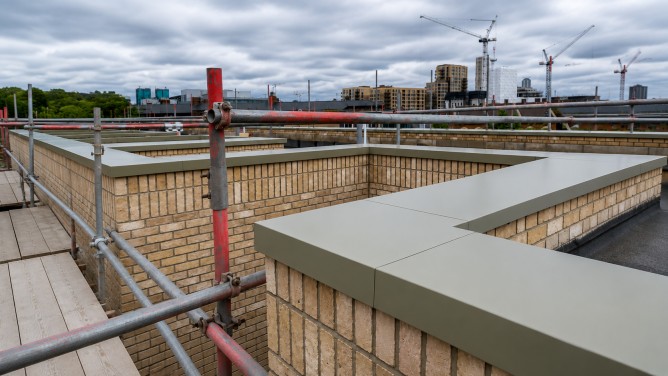
What Is Parapet Wall Aluminium Coping?
Parapet wall aluminium coping is a shaped aluminium cover fitted to the top of a parapet wall, boundary wall or other exposed wall head. It is commonly used where a neat external finish is needed and where the wall top is vulnerable to weather exposure, staining or an unfinished appearance. The profile may be simple, more expressive or tailored to a particular parapet coping detail, depending on the project.
The term parapet wall coping covers a wide range of arrangements, from straight lengths on simple wall heads to bespoke aluminium coping where the geometry is more complex. The exact profile usually depends on the wall width, the desired overhang, the visual style of the building and the way the coping relates to the roof-edge construction below. In that sense, aluminium coping for parapet walls is both a design choice and a coordination choice.
Metal Profiles Ltd is based in Chelmsford, Essex, and supplies and fabricates aluminium roofline and architectural metalwork products, including aluminium copings and related flashings. For many schemes, the main question is not whether to use aluminium wall coping, but how to align the coping with the parapet, adjacent materials and project specification.
Where Aluminium Coping Sits on a Parapet Wall
A parapet wall usually rises above the main roof plane and forms a visible perimeter edge around a flat roof, terrace, balcony or exposed low-slope roofline. Aluminium coping sits on the wall head and can provide a neat transition between the top of the masonry or supporting construction and the open weathered face above. On some buildings it becomes a strong architectural line, while on others it is intended to blend quietly into the elevation.
The parapet top is often more complicated than it first appears. Even where the external finish looks simple, there may be concealed roof membranes, cavity trays, flashings, insulation build-ups, drainage falls or façade returns to consider. That is why roof parapet coping should be viewed as part of the broader envelope detail rather than as a separate item chosen only for appearance.
The exposed top edge between wall and roof detail
The exposed top edge of a parapet wall is a junction between several building elements, including wall construction, roof covering and external weathering. If the coping is too narrow, too dominant or poorly proportioned, the edge can look unresolved. If the surrounding detail is not coordinated, the coping may appear fine on its own but still sit awkwardly within the wider façade.
Why Parapet Wall Coping Should Be Considered as Part of the Whole Detail
Parapet wall coping should be assessed in the context of the full roof-edge and wall arrangement. Wall build-up, parapet width, roof membrane or flashing interface, insulation line, external finish and visible edge proportions all influence the most suitable profile. A coping that is technically plausible but visually awkward can weaken the overall appearance of the building, especially where the parapet is visible from the street or neighbouring properties.
To compare profile choices with parapet dimensions and surrounding roof-edge conditions, aluminium coping systems for parapet walls provide a useful starting point before the final detail is confirmed. That does not mean a standard product will suit every situation. Instead, it helps establish the types of coping profiles available before the project-specific requirements are reviewed in detail.
The coping should also be considered against the rest of the external metalwork package. Fascia, soffits, gutters, downpipes, window surrounds and adjacent flashings can all affect how the parapet top is read. In larger schemes, consistency between these elements is often just as important as the coping itself.
Roof membranes, flashings and wall-top junctions
The junction between the parapet wall and the roof membrane or flashing is a critical part of the overall assembly. The visible coping may finish the top line, but the concealed interfaces beneath it are part of the same technical conversation. For that reason, the selected aluminium coping should always be assessed alongside the drawings for the roof-edge build-up and adjoining wall construction.
What Aluminium Coping Can Contribute to a Parapet Wall
Aluminium coping can contribute a clean, defined top edge to a parapet wall and help give the building a more complete architectural finish. On some projects, it is selected because it creates a neat straight line above masonry, render or cladding. On others, it is chosen to help coordinate the parapet with the overall roof-edge treatment and the rest of the external metalwork.
It can also support visual consistency across different parts of a project. Where the parapet, balcony and boundary walls all appear within the same visual field, using a similar coping language can help the building read as one coherent envelope. In that sense, parapet wall aluminium coping is often about proportion, rhythm and material coordination as much as about the individual wall head.
Profile selection can influence how rainwater behaves across the coping surface. Rainwater movement should be considered alongside the wider roof-edge and wall detail. Suitability depends on the parapet geometry, roof construction, finish and project specification, so a coping should never be selected on profile alone.
Flat and Sloping Aluminium Coping Profiles
Flat aluminium coping and sloping aluminium coping are the two main profile types commonly discussed for parapet wall applications. Flat coping provides a straight top profile that suits many clean-lined elevations and simpler wall heads. Sloping coping may be considered where the design brief calls for a profile that encourages rainwater movement across the coping surface and creates a more visibly weathering-led top edge.
Each profile has a different visual effect and a different relationship to the building edge. Flat profiles are often associated with crisp horizontal lines, while sloping profiles introduce a more obvious top surface fall. The best option depends on the parapet width, the desired appearance, the roof-edge build-up and the project context.
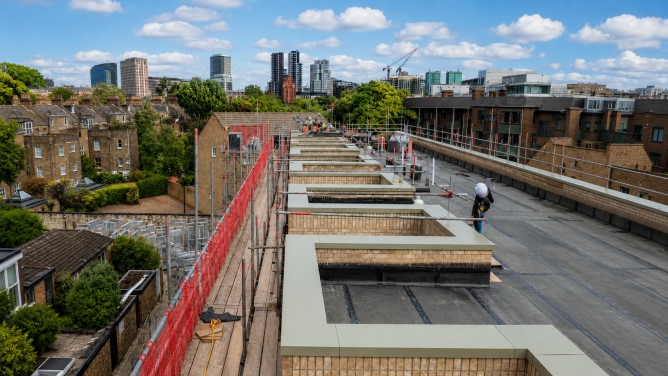
When a sloping profile may be considered
Where an angled coping surface is being assessed, aluminium sloping coping for parapet walls illustrates a profile route that should still be checked against the full wall and roof arrangement. It may be considered where a more pronounced weathering profile is wanted or where the design requires a visible fall across the coping surface.
When a flat coping profile may be considered
On straight wall heads with a level visual line, flat aluminium coping options show the type of profile that may be considered alongside the wider rainwater-management detail. Flat coping can suit contemporary extensions, simple parapet runs and schemes where a restrained top edge is preferred.
Coping Width, Wall Width and Profile Proportion
One of the most important specification issues is the relationship between coping width and wall width. The coping should be proportionate to the parapet beneath it, with enough visible presence to finish the wall neatly but not so much that it overwhelms the building edge. Overhang, edge visibility and the thickness of the wall all affect the final appearance.
The wall width is not the only factor. The surrounding façade materials, the roof line, nearby cladding or brickwork, and the intended shadow line can all alter how a coping is perceived. A narrow wall may call for a compact profile, while a wider parapet may need a more substantial coping form to look balanced. The correct relationship is usually best established from drawings rather than from a nominal wall measurement alone.
Coping for flat roof parapets often needs to respond to the roof build-up as well as the visible wall width. The relationship between the coping and the roof edge below can influence how tidy the finished line appears, especially where upstands, trims and insulation layers are all part of the same detail.
Parapet Corners, Returns, Stop Ends and Junctions
Corners, returns, stop ends and junctions are often the most project-specific parts of parapet wall coping. Straight lengths can make a coping system look simple, but changes in direction or termination points usually require more careful thought. The coping must not only suit the straight run but also resolve neatly at every transition.
Bespoke aluminium coping may be relevant where the wall geometry does not suit a standard pattern. That can include stepped parapets, offset walls, awkward terminations or a sequence of junctions where the profile needs to be coordinated with adjoining materials. In those cases, the visual continuity of the coping line often depends on the accuracy of the design information.
Why non-standard parapet geometry needs careful review
Non-standard parapet geometry can affect how the coping is described, fabricated and coordinated. Curves, offsets, changes in wall width and irregular corners can all alter the final detail. For that reason, it is sensible to review site photographs, drawings and dimensions early so that any project-specific coping requirement is identified before the order is placed.
Moisture Resistance and Parapet Wall Planning
For broader England-specific context on resistance to moisture in roofs and walls, the Approved Document C guidance on resistance to moisture can be read alongside the project drawings and applicable requirements. The exact coping profile, parapet top, roof membrane or flashing interface, wall construction and drainage arrangement must still be reviewed against the project detail.
Moisture resistance should be understood as part of the wider wall and roof design, not as something that a coping alone can guarantee. A parapet coping may help complete the exposed wall top, but its suitability depends on the whole assembly beneath and around it. That is especially true where the parapet is highly exposed or forms part of a complex roof edge.
Rainwater behaviour across exposed wall tops
Rainwater behaviour can vary according to parapet height, exposure, roof fall and the way the coping surface is shaped. Profile selection can influence how rainwater behaves across the coping surface, but it should always be considered alongside the wall and roof detail as a whole. The aim is not to rely on one component, but to coordinate the top edge sensibly with the surrounding envelope.
Aluminium Coping Finishes and Colour Coordination
Finish choice is often a major part of the specification for parapet wall aluminium coping. A mill finish may be suitable in some technical or understated contexts, while a powder-coated finish may be preferred where the coping needs to coordinate with windows, fascias, gutters, cladding or other metalwork. The right finish usually depends on the building’s wider colour palette and the level of visual prominence the parapet will have.
Colour coordination can make a significant difference to how the coping reads from street level. Dark tones often suit contemporary brickwork, modern extensions and commercial façades, while lighter or more neutral finishes may be used where the coping should sit more quietly against render or masonry. In either case, the finish should be checked against the external materials surrounding the roof edge.
Mill finish, powder-coated finishes and wider exterior palettes
Mill finish and powder-coated finish options may be available, subject to the selected product and project requirement. A wide range of RAL or BS colour options may be available, subject to the selected finish and project requirement. That flexibility can be useful where the coping needs to align with a broader exterior metalwork strategy rather than stand apart from it.
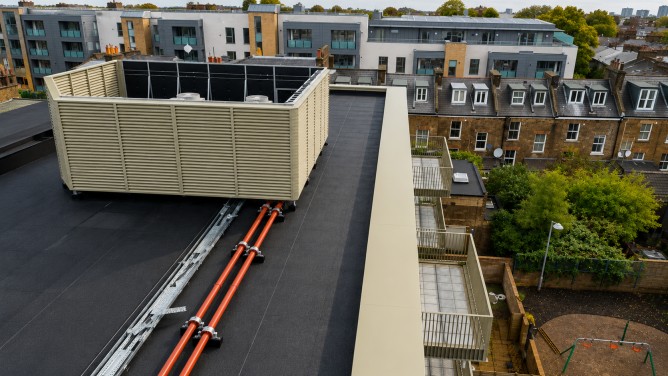
Aluminium Coping for Flat Roof Parapets, Terraces and Balconies
Flat roof parapets, terraces and balconies often require close coordination between the wall top, the roof finish and adjacent edge details. Aluminium coping may be considered in these settings because it offers a neat visible line and can be fabricated to suit a range of wall-top conditions. However, the coping should still be viewed as one part of the broader roof-edge design.
Terraces and balconies can add further complexity because the parapet may interact with balustrades, drainage zones, door thresholds or a more exposed public-facing elevation. In those cases, the coping profile, wall construction and interface details all matter. The same product may not be suitable across every parapet wall, even within the same development.
Residential Parapet Walls and Modern Extensions
Residential parapet walls often appear on modern rear extensions, side returns, garage roofs and contemporary terrace additions. In those settings, parapet wall capping can help create a sharper, more deliberate finish at the roof line. It can also help the extension feel visually integrated with the rest of the house when the profile and colour are matched carefully.
For homeowners and builders, the key is usually to keep the detail simple but well coordinated. A straightforward coping may suit a clean rectangular wall head, while a slightly more developed profile may be appropriate where the wall sits alongside other architectural metalwork. The best result comes from looking at the complete edge, not just the visible cap.
Commercial Buildings, Apartment Blocks and Specification-Led Projects
Commercial buildings, apartment blocks and larger mixed-use projects often require a more formal specification approach. The coping may need to work with façade grids, rainwater goods, fire-stopping interfaces, roof upstands and multiple adjoining materials. In those situations, aluminium coping systems need clear descriptions so that the selected profile can be coordinated with the rest of the project package.
These projects often benefit from early discussion of profile type, finish, dimensions and junction conditions. That is especially true where several parapet lengths repeat across the building but the corners, stops or terminations differ. Consistent documentation can make the roof-edge detail easier to understand for the project team.
Documentation and coordinated architectural metalwork
For architect-led or commercial projects, NBS specification support can help connect the coping description with the broader project documentation. This is useful when parapet coping profiles need to be referenced clearly alongside flashings, fascia, soffits, guttering, downpipes and window surrounds.
What to Confirm Before Ordering Parapet Wall Aluminium Coping
Before ordering parapet wall aluminium coping, it helps to confirm the wall dimensions, coping width, profile type and finish preference. Accurate drawings and photographs are particularly useful where the parapet has corners, offsets, returns or changes in direction. The aim is to make sure the coping described in the enquiry matches the geometry on site.
It is also helpful to identify the roof-edge conditions and the surrounding construction. That might include the roof membrane or flashing interface, the wall build-up, the adjacent façade materials and any exposed junctions that need to be coordinated. For a project-specific coping requirement, these details often matter more than the basic linear length alone.
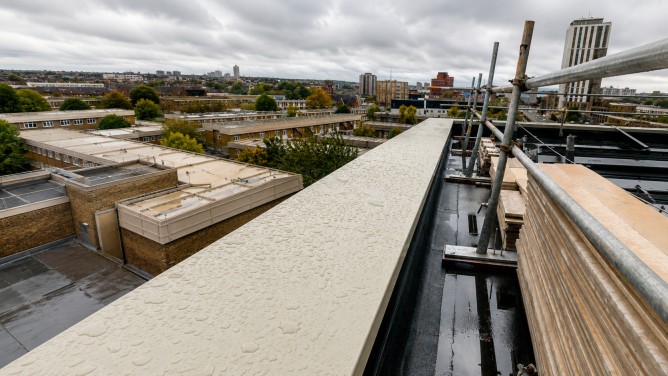
Measurements, drawings, photographs and finish information
Before placing an order for made-to-order items or a selected finish, the Product Policy for made-to-order and powder-coating considerations should be reviewed alongside the confirmed project information. Wall width, coping width, corner details, photographs, drawings and finish preferences all help define the practical scope of the enquiry.
FAQ
-
What is parapet wall aluminium coping?
Parapet wall aluminium coping is an aluminium cover fitted to the top of a parapet or exposed wall head. It provides a neat finished line and can be considered for parapet walls, boundary walls, balcony edges and roof-edge details on a wide range of projects.
-
What does aluminium coping do on a parapet wall?
It finishes the wall top and helps create a clean external edge where the wall meets the roof zone. Depending on the detail, it may also contribute to the wider weathering strategy, but it should always be assessed with the wall and roof construction.
-
What is the difference between flat and sloping aluminium coping?
Flat aluminium coping creates a straight level top line, while sloping aluminium coping has an angled surface that may encourage rainwater movement across the profile. The most suitable option depends on the parapet geometry, visual intent and roof-edge detail.
-
How should coping width relate to parapet wall width?
The coping should be proportionate to the wall beneath it so the exposed edge looks balanced. Wall width, overhang and neighbouring materials all affect the final appearance, so the selected profile should be reviewed against the actual parapet dimensions and project drawings.
-
Are corners and stop ends important when specifying parapet coping?
Yes, corners, returns, stop ends and junctions are often the most important parts of the parapet coping detail. They can affect both appearance and fabrication, especially where the parapet has offsets, changes in direction or other non-standard geometry.
-
Can aluminium coping be considered for flat roof parapets and balcony walls?
Yes, aluminium coping can be considered for flat roof parapets, terraces and balcony walls. The profile should still be checked against the full roof-edge arrangement, including the wall build-up, membrane or flashing interface, and any adjacent architectural metalwork.
-
What finish options may be available for aluminium coping?
Mill finish and powder-coated finishes may be available, subject to the selected product and project requirement. A wide range of RAL or BS colour options may be available too, which can help coordinate the coping with other exterior materials and metalwork.
-
What information should I provide for a parapet coping enquiry?
Provide wall dimensions, coping widths, photographs, drawings, corner details, finish preferences and project context. It also helps to identify any roof membrane, flashing or wall-top interface details so the coping can be assessed as part of the wider arrangement.
Provide wall dimensions, coping widths, photographs, drawings, corner details, finish preferences and project context. It also helps to identify any roof membrane, flashing or wall-top interface details so the coping can be assessed as part of the wider arrangement.
Metal Profiles Ltd supplies and fabricates aluminium coping, roofline and architectural metalwork products. Parapet coping, wall-top details, flashings and related exterior metalwork can be considered for domestic and commercial requirements. Please share wall dimensions, coping widths, photographs, drawings, corner details, finish preferences and project context. A wide range of RAL or BS colour options may be available, subject to the selected finish and project requirement. For product or project support, Contact Metal Profiles Ltd today.
Discover more from Metal Profiles Ltd
Subscribe to get the latest posts sent to your email.