



A parapet wall, balcony edge or low roof perimeter can look like one simple horizontal line from the ground. In practice, the top of that wall is where several important exterior details meet. The wall finish, coping profile, roof membrane or flashing arrangement, drainage route, corners and visible colour all need to work together.
That is why an aluminium coping detail should be considered as more than a finishing strip placed on top of masonry. It is part of a wider wall-top and roof-edge arrangement. The profile needs to suit the wall width, the form of the parapet, the surrounding roof or terrace detail and the way rainwater is expected to move across the exposed surface. This guide explains what makes up a well-considered aluminium coping detail, when flat or sloping profiles may be relevant, and what should be checked before a project moves towards specification or ordering.
Start with the Wall Top: What an Aluminium Coping Detail Does
An aluminium coping sits across the top of a parapet wall, boundary wall, balcony wall or exposed roof edge. Its visible role is easy to understand. It gives the wall top a crisp, completed appearance and can help the exterior elevation feel more deliberate. Its practical role is more closely connected to the wider weathering and rainwater detail around that exposed upper surface.
The best coping detail is therefore not selected in isolation. It should relate to the wall construction, wall-top width, nearby roof covering or flashing, corners, adjacent finishes and the intended route of water. A profile that looks right on a simple straight parapet may not suit a wall with returns, changes in level, rooflights or connecting terrace details.
The aluminium coping systems supplied by Metal Profiles Ltd cover both flat and sloping profile directions for parapet tops, balcony and boundary walls, and exposed roof-edge details. The final profile choice should still reflect the actual wall geometry, project drawings and surrounding roofline arrangement.
More Than a Visual Cap
A coping creates a visible break between the top of a wall and the materials around it. On a contemporary extension, it may form a clean dark line above brickwork or render. On a commercial building, it may continue around several elevations and become part of the broader architectural language.
Its appearance matters because wall tops are often viewed from gardens, terraces, upper windows, neighbouring properties and approach routes. However, a neat visual line should not be the only reason for choosing a coping profile. The width, direction of fall, edge relationship and junctions all need to support the wider detail.
Where an Aluminium Coping Detail May Be Used
Aluminium coping details may be considered for parapet walls, balcony walls, boundary walls and exposed flat or low-slope roof edges. In each setting, the surrounding construction can be different. A garden boundary wall may need a simple, visually coordinated finish. A flat roof parapet may need closer consideration of membranes, roof falls, flashings and water movement.
This is why copied dimensions or generic product assumptions can create problems. The same coping form does not automatically suit every wall top. It is better to start with the actual setting, then work out which profile direction and dimensions make sense for that particular detail.
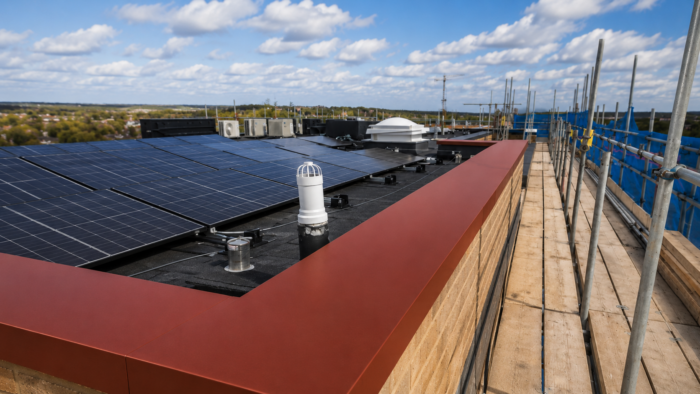
Build the Coping Detail Around the Actual Wall
A clear aluminium coping detail starts with understanding the wall itself. Wall width is important, but it is not the only measurement that matters. The finished wall top, coping width, returns, corners, offsets and adjacent roof or terrace details should all be considered before a final profile is selected.
For readers comparing wider product groups and related architectural metalwork, the Metal Profiles Ltd shop provides a useful starting point. It can help place coping products within the wider context of roofline, rainwater and aluminium exterior components.
Wall Width, Capping Width and Visible Proportion
The coping needs to sit comfortably across the wall top and relate well to the visible face of the wall below. A profile that appears too narrow may not create the intended finished edge. One that projects too far can look visually heavy against a smaller parapet or boundary wall.
This is particularly noticeable on contemporary extensions where brickwork, glazing, rooflines and coping details are all visible in the same elevation. The coping should support those lines rather than compete with them. Consider the wall top from ground level, from inside the property and from any terrace or upper-floor viewpoint.
Why Measuring the Wall Alone Is Not Enough
A simple wall-width measurement does not always show the full picture. Corners, returns, roof membrane upstands, flashing zones, parapet transitions and surrounding finishes can all affect the detail. Photographs and drawings can reveal information that a single dimension cannot.
For a straightforward run, the measurement process may be relatively simple. For a roof edge with several junctions or changes in direction, it becomes more important to understand the full geometry before deciding on the coping arrangement.
Straight Runs, Corners and Junctions
Long straight coping runs can create a strong continuous line across a roof or wall. That continuity can be interrupted by corners, T-junctions, stop ends, changes in level and returns around other building elements. These should be planned from the outset rather than treated as small additions after the main coping length has been selected.
A clear drawing or marked-up photograph can help show where the wall line changes direction. It also makes it easier to identify whether the coping needs to relate to adjoining flashing, roofing, glazing or other architectural metalwork.
Flat or Sloping: Choosing the Right Coping Direction
One of the most important decisions in an aluminium coping detail is whether the project calls for a flat or sloping profile. The difference is not only visual. It relates to how water behaves across the wall top and how the coping sits within the wider roof-edge or parapet arrangement.
There is no universal answer. A flat profile may suit a design where the parapet is intended to have a clean, straight top line and the wider detail supports water management. A sloping profile may be more relevant where encouraging runoff from the coping surface is a priority.
When a Flat Coping May Suit the Detail
Flat coping can create a restrained architectural line across parapet walls and straight wall-top profiles. It may suit projects where a level top appearance is part of the design and the surrounding wall, roof and drainage arrangement have been considered together.
The flat aluminium coping range provides useful context for this type of profile direction. The final choice should still be based on wall width, capping requirement, corner details, finish preference and the wider weathering strategy for the project.
Flat does not mean that the wider drainage arrangement can be ignored. The coping should always be considered as part of the complete wall-top detail rather than as an isolated visible surface.
When a Sloping Coping May Be Relevant
Sloping coping may be considered where the detail needs a profile that encourages water to run from the coping surface. This can be especially relevant on exposed parapet tops, balcony walls and roof-edge details where rainwater movement needs to be reviewed carefully.
The sloping aluminium coping range shows the type of profile direction available for projects where the water route across the coping surface is a key consideration. The selected slope, width and surrounding components should still be reviewed against the project drawings and actual site conditions.
A sloping profile can look particularly natural on contemporary parapets where the coping line needs to feel crisp but not excessively heavy. The visual effect should remain balanced with the height of the wall, the exterior material palette and the scale of the building.
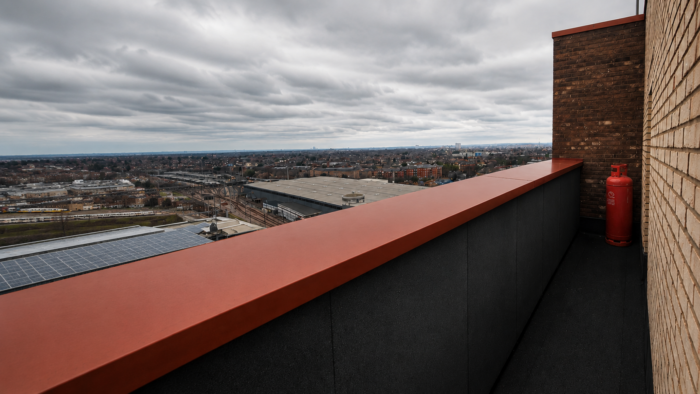
Connect the Coping with Roof, Wall and Terrace Details
A coping does not usually sit alone. On many projects it meets a roof membrane, flashing detail, parapet return, balcony edge, boundary wall or other external junction. The strength of the finished result often comes from making these relationships clear before any product direction is finalised.
A roof-edge detail can involve several materials that perform different roles. The coping forms the visible wall-top cover. Flashings may deal with adjacent junctions. Roof coverings and membranes form part of the broader weathering arrangement. Fascia, guttering or rainwater goods may also be visible nearby, depending on the project.
Consider the Rainwater Route Early
Rainwater movement should be considered alongside the wall top, coping form, roof falls and surrounding drainage route. A coping profile can influence how water moves away from the exposed upper surface, but it does not replace the need for a properly considered roof, wall and drainage detail.
This is particularly important where a parapet meets a flat roof, terrace or balcony. The final arrangement should reflect the roof geometry, membrane or flashing detail, outlet positions and the full project specification. It is better to resolve these points early than to rely on a coping profile to solve wider construction issues.
Coping, Flashing and Adjacent Materials
An aluminium coping may need to work alongside brick, render, cladding, glazing frames and exterior metalwork. The finish should relate to these materials without forcing an exact match where one is not needed.
For example, a dark powder-coated coping can provide a clear line above pale brickwork or render. A lighter finish may create a softer, more discreet result. The right approach depends on whether the coping is intended to stand out as a deliberate architectural edge or blend quietly into the wider elevation.
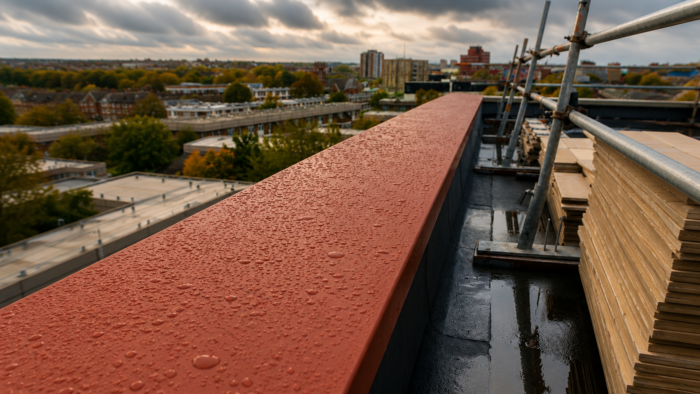
Finish, Colour and the Wider Exterior Design
The coping finish can have a significant impact on the completed appearance of a building. A mill finish may suit some project requirements, while powder-coated aluminium can provide a more coordinated direction where the coping needs to relate to doors, windows, fascias, gutters, soffits or architectural trims.
Colour should be discussed early. It is much easier to make a consistent choice while the wider exterior palette is being agreed than after windows, cladding, paving and roofline components have already been selected.
A wide range of RAL or BS colour options may be available, subject to the selected finish and project requirement. The final colour should be reviewed against real samples, surrounding materials and the visual scale of the coping line, especially where it extends across several elevations.
Aluminium Coping as Part of a Coordinated Scheme
A coping line can become a subtle connecting element across a project. On a modern extension, it may relate to black-framed glazing and dark roofline components. On a commercial elevation, it may continue the same finish direction used on fascia, cladding trims or rainwater goods.
For more background on the company’s wider fabrication work and architectural metalwork focus, readers can visitMetal Profiles Ltd. The specific coping requirement should still be based on the actual wall detail, project drawings and finish specification.
Moisture Resistance and Wider Wall-Top Planning
An aluminium coping detail should be considered within the wider context of how exposed wall tops, roofs and adjoining surfaces manage rain and moisture. For broader England-specific context, the Approved Document C guidance on resistance to moisture explains wider requirements relating to moisture resistance in roofs and walls. It is not a direct guide to selecting or fitting aluminium coping, so the final coping profile, wall-top dimensions, roof membrane or flashing interface and drainage route should always be reviewed against the individual project detail.
What to Confirm Before Ordering an Aluminium Coping Detail
A useful project discussion begins with accurate and relevant information. Before selecting a coping profile or asking for a quotation, gather the main details that define the wall-top arrangement.
This may include the wall width, required capping width, flat or sloping profile direction, total run length, corners, returns, stop ends, junctions, finish preference and colour requirement. Photos and drawings are particularly helpful when the coping needs to work around rooflights, stepped parapets, terrace transitions or complex wall geometry.
It is also useful to identify any related materials, such as roof membrane, flashing, cladding, fascia or glazing. These details help ensure the coping is discussed as part of the complete exterior arrangement rather than as a separate item.
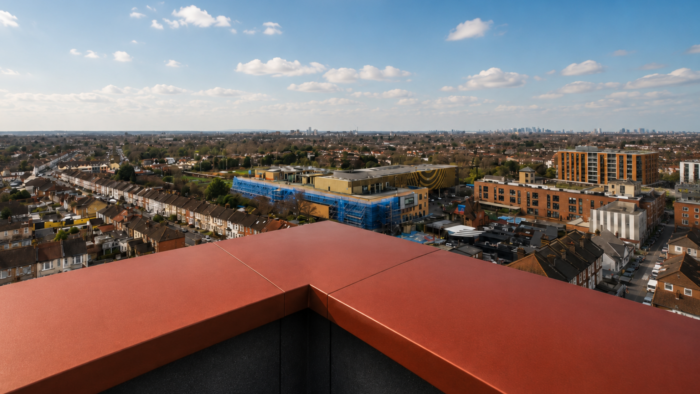
FAQ
-
What is an aluminium coping detail?
An aluminium coping detail is the complete arrangement used to finish and protect the top of a parapet wall, balcony wall, boundary wall or exposed roof edge. It includes the coping profile, dimensions, corners, finish and relationship with adjacent roof and wall details.
-
What is the difference between flat and sloping aluminium coping?
Flat coping provides a clean, straight top profile where the wider parapet and drainage detail supports that arrangement. Sloping coping is designed to encourage water to move from the coping surface, making it relevant where runoff direction needs closer consideration.
-
How do I choose the right coping width?
Start with the actual wall-top dimensions, then consider the required capping width, visible proportion, wall finish, corners and any adjacent roof or flashing details. Drawings and photographs can help clarify the full detail before a profile is selected.
-
Can aluminium coping be colour matched with other exterior details?
Powder-coated aluminium coping may be available in RAL or BS colour directions, subject to the selected finish and project requirement. This can help coordinate the coping with windows, doors, fascias, gutters, soffits and other exterior metalwork.
-
When is a bespoke aluminium coping detail useful?
Bespoke coping may be useful where the parapet geometry is non-standard, the wall includes unusual corners or offsets, or the project requires a profile that relates to specific roofline, cladding or architectural metalwork details.
Metal Profiles Ltd supplies aluminium copings, roofline products and architectural metalwork for UK projects. An aluminium coping detail may be considered for parapet walls, balcony walls, boundary walls, flat roof edges and project-specific exterior requirements. Share wall dimensions, capping width, photos, drawings, corner details, preferred finish and the wider roof or wall context when discussing a coping requirement. A wide range of RAL or BS colour options may be available, subject to the selected finish and project requirement. For product or project support, Contact Metal Profiles Ltd today.
Discover more from Metal Profiles Ltd
Subscribe to get the latest posts sent to your email.