



A house with black-framed doors, dark window trims or a rear extension with a crisp edge often draws the eye straight to the roofline. The same happens on garages and porches, where the junction between the roof edge and the walls becomes much more visible once darker exterior details are introduced. In that setting, black fascia boards and soffits can create a sharper roof-edge finish, but colour is only one part of the decision. Fascia, soffits, guttering, downpipes, roof overhangs, surrounding materials and visible proportions all affect whether the result feels deliberate. This guide explains how to plan a black roofline so it looks coordinated rather than forced, and why the wider elevation matters as much as the finish itself.
Why Black Fascia Boards and Soffits Change the Roofline
Black roofline details can make the eaves read as a defined architectural line rather than a background junction. That is one reason they are often considered on detached houses, rear extensions, commercial entrances and apartment buildings where the roof edge needs to look visually controlled. They can work particularly well where the building already uses dark glazing, metal trims or strong horizontal lines.
A black roofline should be reviewed as part of the complete exterior rather than as a colour choice made in isolation. Readers can browse aluminium roofline and rainwater products in the Metal Profiles Ltd shop to understand how fascia, soffits, gutters and related components may be considered together. The final colour and profile direction should still reflect the building style, roof geometry and surrounding finishes.
A stronger eaves line that frames the building
The aluminium fascia and soffit range provides a useful overview of roofline components that may be considered where a black fascia and soffit direction is being planned. The selected profile should still suit the roof edge, gutter arrangement, eaves depth and the visual scale of the elevation. On a long rear extension, for example, a darker fascia line may feel neat and contemporary, while on a compact porch it may need more restraint so the roof does not appear visually heavy.
A black fascia can also help to separate the roof from lighter wall finishes. Where render, pale brick or timber cladding is used, the contrast can sharpen the top of the elevation and make the roofline feel more intentional. The effect is not only about colour depth. It is also about how much of the fascia is visible, how the soffit is read from below and whether the gutter sits neatly within the overall profile.
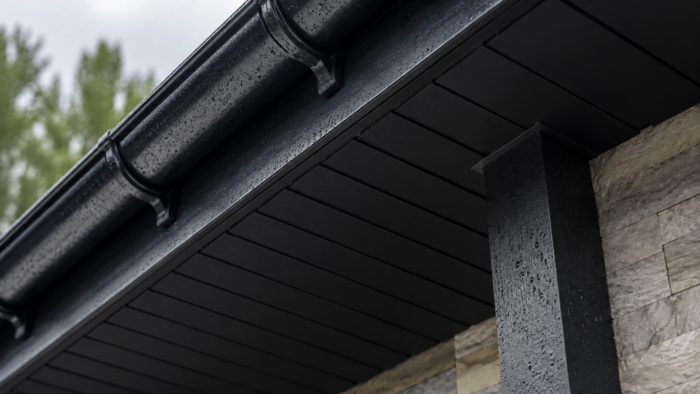
The underside of the eaves remains part of the visible design
Black soffits are often overlooked because they are viewed from beneath, but they still change the feel of the building. On houses with open eaves, long overhangs or deep roof edges, the underside becomes part of the architectural expression. A dark soffit can reduce visual clutter and make the eaves read as a clean, continuous band.
That said, black soffits are not automatically the right answer for every roof. Where the eaves are shallow, the underside may appear limited, and a very dark finish can make the projection look more compressed. This is why proportions should be checked carefully before any colour direction is chosen. The roof edge, gutter size and visible underside all influence whether the finish feels balanced in daylight.
Start with the Roles of Fascia, Soffits and Gutters
Before selecting a black scheme, it helps to separate the visible functions of each roofline element. Fascia sits at the outer edge of the roof and forms the front-facing line where guttering may be fixed. Soffits finish the underside beneath a roof overhang or eaves line. Guttering and downpipes then carry rainwater away from the roof edge and down the building.
Those roles are connected visually, even when they are specified differently. A black fascia board may be used to sharpen the roof edge, while black soffits can help the underside disappear into the shadow of the eaves. Guttering and downpipes may follow the same colour family, but they do not always need to match exactly. Their suitability depends on roof geometry, outlet positions, discharge arrangements and project-specific requirements.
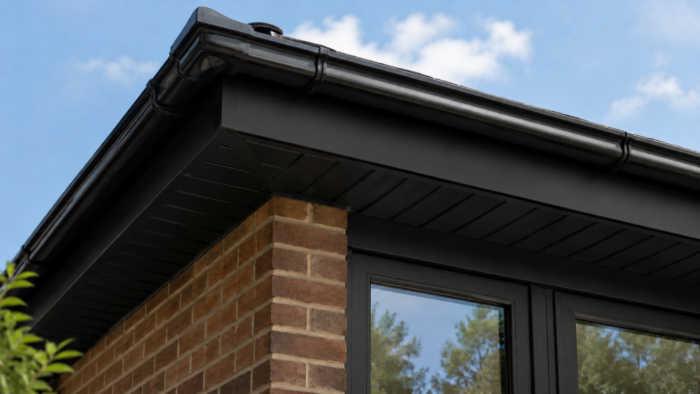
Different roofline components with connected purposes
Readers who want a wider explanation of the roof-edge arrangement can review what soffits and fascia are and how they differ before deciding how a black finish should work across the wider roofline. Fascia, soffits, gutters and downpipes each have different roles, but their visible relationship should be planned together.
That planning is especially relevant on roofs with stepped elevations, returning corners or mixed roof pitches. A garage attached to a detached house may need a different visual approach from the main dwelling, even where both use the same colour family. Likewise, a porch canopy or side extension can look more refined if the roofline details echo the main building without copying them too rigidly.
Roof overhangs and changing elevations need careful consideration
The depth of the eaves affects how much of the roofline is seen from the ground. On long eaves lines, a darker profile can create a strong horizontal emphasis that looks elegant if the proportions are right. On shallower roof edges, the same colour may feel denser, so profile depth and visible face size become more important.
Changing elevations also deserve attention. A rear extension with one side wall higher than the other, or a property with varied roof forms, may need a more tailored approach to black fascia and soffit selection. The eye reads continuity across the whole elevation, not only at one corner. That is why black roofline planning should always account for how each eaves section meets the next.
Coordinating Black Fascia Boards and Soffits with the Exterior
Black fascia boards and soffits work best when they sit comfortably within the broader palette of the building. Brickwork, render, glazing, cladding and metal trims all affect how dark roofline details are perceived. A black finish against warm buff brick may feel very different from the same finish against pale render or a timber-clad garden building.
A black fascia board can create a strong visual frame around the roof edge, but its effect should be considered against the exterior materials around it. The guide to choosing an aluminium fascia board provides useful product context when profile direction, visible face depth and wider colour coordination need early consideration. The final choice should still reflect the individual property and project detail.
Brickwork, render, glazing and cladding all influence the finish choice
Different surfaces change the tone of black roofline details in different ways. On modern brickwork, black fascia boards may reinforce the straight lines of the elevation and make the roof look more defined. On rendered properties, they can create a sharper contrast that helps the roof edge stand apart from the wall finish. With black-framed glazing, the roofline may feel visually connected to the windows, especially where the roof edge is seen from a rear garden or driveway.
Contrast should suit the complete elevation, not only a colour sample
A colour swatch can be useful, but it does not show scale, reflection or daylight conditions. Black aluminium fascia boards may appear crisp in shade, yet more reflective when sunlight reaches the eaves. That is why samples should be assessed alongside photographs of the property and, where possible, against the actual materials already specified for the façade. A coordinated result depends on the whole elevation, not just the fascia itself.
Black gutters and downpipes as connected roofline details
Guttering and downpipes sit directly beneath and beside the fascia line, so their finish should be considered as part of the same visible roofline arrangement. The aluminium rainwater goods range provides a useful reference for gutter and downpipe components that may coordinate with a black fascia and soffit scheme. The final arrangement should still be based on roof falls, outlet positions, rainwater routes and project-specific requirements.
Black gutters and downpipes can help reduce visual interruption where the intention is to keep attention on the building form rather than on rainwater hardware. That can suit commercial entrances, apartment blocks and contemporary extensions where the roof edge is meant to read as a neat line. In some projects, however, a slightly different tone or finish may be more suitable depending on the elevation and surrounding material palette.
Wider Roofline and Moisture Planning
Black fascia boards and soffits should be considered within the wider context of how roof edges, walls and rainwater details manage exposure to moisture. For broader England-specific context, the Approved Document C guidance on resistance to moisture explains wider requirements relating to moisture resistance in roofs and walls. It is not a direct guide to selecting or fitting black fascia or soffits, so the final roofline detail should always reflect the roof construction, wall finish, gutter arrangement and individual project requirements.
That broader context matters because the visual decision and the technical arrangement should support each other. A black finish may look well resolved on a new build with crisp detailing, but the same approach on an older property with complex eaves may need more careful coordination. Roof edges, wall finishes and rainwater routes all influence how the black line reads in practice.
Where rooflines change across a building, moisture planning and visual planning should be discussed together from the start. This is particularly useful for developers, architects and property managers working across multiple plots or elevations. The aim is not to treat the black finish as a separate decorative layer, but to align it with the geometry and exposure of the building.
What to Check Before Selecting Black Fascia Boards and Soffits
Before a black roofline direction is confirmed, it helps to gather the information that shapes the final appearance. Roof-edge lengths, fascia dimensions, soffit depth and gutter runs all affect how much of each component will be visible. Outlet locations and downpipe positions matter too, because they can shift the rhythm of the elevation.
A useful review should also include corners, photographs, drawings, preferred finish and wider project context. On a rear extension or garage, for example, the relationship between the new roof edge and the existing building may influence whether a fully dark scheme feels coherent. On a commercial frontage, the same decisions may need to support branding, entrances and surrounding materials.
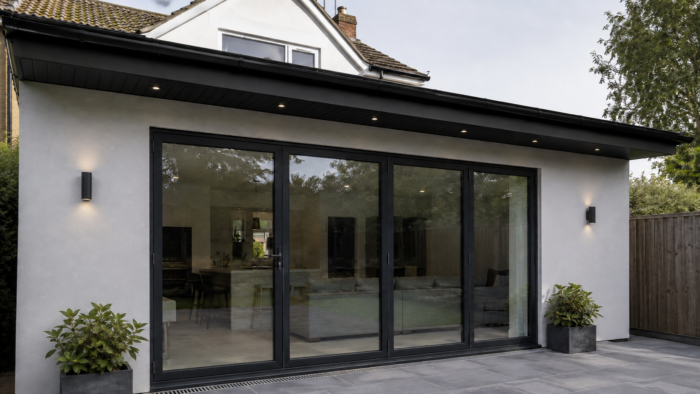
Why corners, gutter runs and downpipe positions should be identified early
Corners and intersections often decide whether a black roofline feels clean or visually cluttered. If a gutter changes direction near a return wall, or if a downpipe has to sit close to a doorway or glazing line, the balance of the elevation can change quickly. Early review of these details helps the selected fascia, soffit and rainwater arrangement feel coordinated with the architecture rather than added afterwards.
- Roof-edge lengths
- Fascia dimensions
- Soffit depth
- Gutter runs
- Outlet locations
- Downpipe positions
- Corners
- Photos
- Drawings
- Preferred finish
- Wider project context
FAQ
-
Are black fascia boards and soffits suitable for every property?
No single colour direction suits every building. Black fascia boards and soffits may work well on modern homes, extensions and commercial entrances, but the result depends on roof proportions, wall colour, glazing, overhang depth and the wider architectural style.
-
Should black gutters and downpipes match black fascia boards?
They do not always need to match exactly, but they should be considered together. Matching black gutters and downpipes can create a more unified roofline, while a different finish may suit some elevations better depending on materials, scale and design intent.
-
What should I prepare before discussing a black roofline project?
Have roof-edge measurements, photographs, drawings, preferred colours and notes on surrounding materials ready. It also helps to identify gutter runs, outlet points and downpipe positions so the proposed black fascia and soffit arrangement can be assessed in context.
-
Can black fascia boards and soffits be coordinated with windows and doors?
Yes. Black fascia boards and soffits may be considered alongside black-framed windows, doors, gutters and exterior metalwork for a more connected finish. The final colour direction should still be reviewed against brickwork, render, cladding and the overall scale of the elevation.
-
Do black fascia boards and soffits suit extensions as well as existing homes?
They may suit both, particularly where the roofline needs a clearer visual edge. The final result depends on eaves depth, roof proportions, wall colour, glazing style, guttering and how the new roofline relates to the existing property.
Metal Profiles Ltd supplies aluminium fascia, soffits, rainwater goods and architectural metalwork for UK projects. Black fascia boards and soffits may be considered as part of a coordinated domestic or commercial roofline requirement, depending on the selected profile and project detail. Share roof-edge lengths, fascia dimensions, soffit depth, gutter runs, outlet locations, downpipe positions, photographs, drawings, finish preferences and wider project context to help shape the right direction. A wide range of RAL or BS colour options may be available, subject to the selected finish and project requirement. For product or project support, Contact Metal Profiles Ltd today.
Discover more from Metal Profiles Ltd
Subscribe to get the latest posts sent to your email.