



A person standing outside a house, rear extension or garage often notices the roof edge first. There is the fascia across the front, the soffit beneath the eaves and the gutter running below them, all working as one visible line. That small area affects how the building is finished and how rainwater is carried away from the roof edge. It also helps shape the way the property looks from the street, the garden or the driveway. Because of that, fascia soffits and guttering should be understood as one connected roofline arrangement rather than three separate items. This guide starts by explaining each part in plain English, then shows how the elements work together, what to think about when choosing aluminium options, how guttering and downpipes fit into the plan, how finishes can be coordinated, and what information is useful before asking for an estimate.
Start at the Roof Edge: What Each Part Does
For a clear starting point, readers can browse roofline and rainwater products in the Metal Profiles Ltd shop before comparing the individual fascia, soffit and gutter components needed for their project.
The roof edge is a practical junction as well as a visual one. It is where the roof structure meets the outside face of the building, and it is often the first area people notice when they look up. In many homes, this edge also frames extensions, garages and porches, so the condition and proportion of the roofline can affect the whole appearance of the property. Understanding what each component does makes it much easier to compare products sensibly.
This is also the point where people often start asking the right questions. Is the line crisp and straight? Does the underside look finished? How will rainwater be guided away from the roof? Those questions matter because the roof edge is where appearance, drainage and building detail meet. Once the role of each component is clear, it becomes easier to plan fascia boards and soffits as part of a complete roofline system.
Fascia: the visible line at the edge of the roof
The aluminium fascia and soffit range provides a useful overview of roofline components that may be considered together around a building edge.
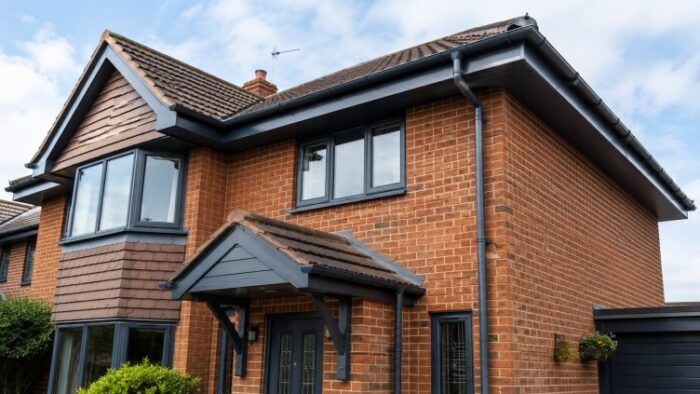
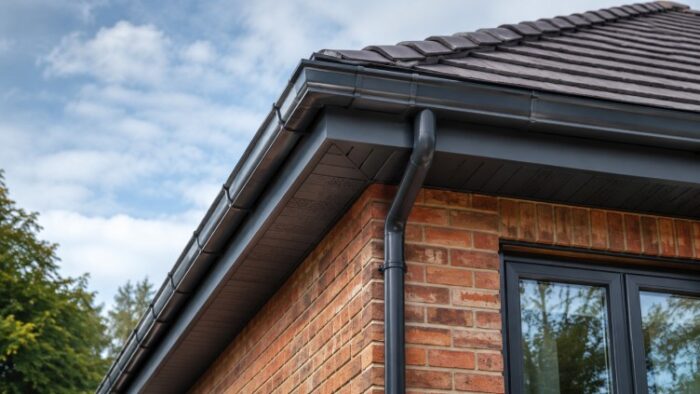
Fascia sits at the roof edge and creates the visible band that runs along the eaves. It is the part many people see first from ground level, so it affects the look of the whole roofline as well as the practical arrangement for fixing guttering. In plain terms, it helps define the edge of the roof and gives the line under the tiles or slates a neater finish.
For homeowners, builders and specifiers, fascia is often the place where size, proportion and finish need to be considered carefully. A narrow fascia can look different from a deeper board, especially on a detached house, a rear extension or a larger building elevation. The right choice depends on the roof geometry, the desired appearance and the way the surrounding materials sit together.
Soffits: the finished underside beneath the eaves
Readers who want a simpler explanation of this roofline component can also read what a soffit is and how it differs from fascia before comparing profile and layout options.
Soffits form the underside of the roof overhang. They close off the space beneath the eaves so the edge of the roof looks complete rather than exposed. On many properties, this underside is visible from the front path, the garden or a neighbouring driveway, which is why soffits are part of the visual finish as well as the roofline arrangement.
They also need to be considered in relation to the roof structure, the eaves depth and any surrounding details. A porch roof, for example, may have a different soffit depth from a long eaves line on a detached house. A garage or rear extension may also create a different visual relationship between the wall, the fascia and the underside beneath the roof edge.
Guttering and downpipes: the route rainwater follows
Guttering and downpipes are part of the rainwater path, taking water from the roof edge down to a planned discharge point. They do not do the same job as fascia or soffits. Instead, they complete the drainage side of the roofline by guiding rainwater away from the building in a controlled way, subject to the roof geometry and the intended arrangement.
Because the roof edge, fascia line, gutter position and downpipe route all affect one another, it is sensible to think about rainwater movement early. An awkward outlet position or a downpipe in the wrong place can influence how the whole elevation looks and how the system is arranged. For that reason, guttering and downpipes should be reviewed alongside the roofline, not after the rest of the detail has been settled.
Why Fascia, Soffits and Guttering Need to Work Together
Once each part has a clear purpose, the next step is to see how the whole roofline behaves as one arrangement. That wider view is useful because a fascia choice affects gutter fixing, soffit depth affects the underside finish, and the planned rainwater route influences where downpipes can sit. In other words, the roof edge is a connected detail, not a set of unrelated products.
Looking at the complete roofline instead of separate products
A roofline project often looks simpler when treated as a full sequence from edge to ground. Fascia creates the visible line at the roof edge, soffits finish the underside beneath the eaves and guttering carries water away. If one part is considered without the others, the result may not suit the property’s shape, the drainage route or the desired exterior appearance.
A simple way to follow water from roof edge to ground level
A useful way to think about a roofline is to trace the path of rainwater. It starts at the roof surface, reaches the gutter line at the edge, then moves through the planned guttering and downpipes before discharge at ground level or another agreed point. That sequence helps homeowners and professionals judge whether the arrangement suits the building, the outlet positions and the wider exterior layout.
Roof overhangs, eaves and the shape of the property
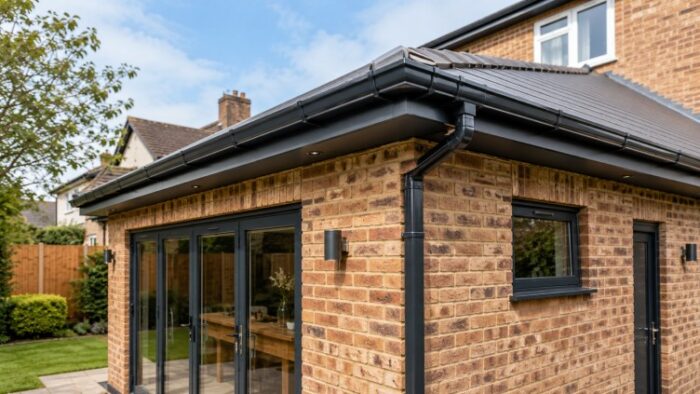
The depth of the eaves, the pitch of the roof and the size of the overhang all influence roofline decisions. A shallow eaves detail may need a different fascia and soffit arrangement from a deeper overhang on a larger house. On extensions and outbuildings, the relationship between the new roof edge and the existing property is especially important because the new work should sit naturally within the whole elevation.
Choosing Aluminium Fascia for a Roofline Project
Once the roofline arrangement has been understood as a whole, it becomes easier to look at fascia in detail. Aluminium fascia may be suitable where a clean, durable and well-proportioned edge is needed, but the exact profile should be considered in relation to the building shape, surrounding materials and the way the gutter line is intended to sit.
Fascia profile, face depth and the visual proportion of the roof edge
One product example is the 2mm Type 3 aluminium fascia board in a 3m length, which can be reviewed when considering fascia profile direction, visible face depth and project dimensions.
The visible face depth of a fascia can change how heavy or light the roof edge appears. On a small porch, the right proportion may be quite different from that of a long eaves line on a detached house. The profile should suit the scale of the building rather than being chosen in isolation, because the fascia is one of the most noticeable lines on the exterior.
Face depth also matters where guttering needs to align with the roof edge. The fascia forms the fixing area, so its size and shape should work with the chosen gutter profile and the intended gutter position. That is why project dimensions, eaves detail and visible appearance all need to be thought through before a final selection is made.
Why the surrounding brickwork, cladding and glazing also matter
Roofline products are seen in context, not in isolation. Brickwork, cladding, render and windows can all affect the visual balance of a fascia line. A crisp aluminium finish may suit a modern rear extension, while a different proportion may be more appropriate beside traditional masonry or large glazed openings. The wider exterior design should therefore guide the choice as much as the roof edge itself.
Straight runs, corners and roofline changes in direction
A simple straight run is only one part of roofline planning. Many buildings include corners, returns, changes in roof height or junctions where the fascia line turns. Those details can alter the appearance and may influence the type of profile that is suitable. A careful review of the whole edge helps ensure the roofline feels consistent from one side of the building to another.
Understanding Aluminium Soffits in More Detail
After fascia, the next part of the roof edge to consider is the underside. Soffits often receive less attention than the visible fascia line, yet they make a major difference to how finished the eaves look. They are especially important where the roof overhang is visible from the ground or where the underside needs to suit an extension or outbuilding design.
Soffit depth and the visible underside of the eaves
Soffit depth is closely tied to the shape of the roof overhang. On some properties, the underside is narrow and discreet. On others, especially where the eaves are deeper, the soffit becomes a more noticeable design feature. In both cases, the width and finish should feel deliberate, because the underside of the roof edge frames the whole line.
The right soffit choice can help the building look complete rather than patched together. It should sit comfortably with the fascia and with nearby materials such as brick, render or cladding. That is why soffits are best selected with the fascia and gutter line in mind, not as a separate afterthought once the front edge has already been decided.
Ventilation and roof design should be considered as part of the wider detail
Roof design is more than what can be seen from the pavement. The soffit area often forms part of the wider roof edge arrangement, so ventilation and eaves detail may need to be considered alongside the visual finish. Suitability depends on the specific building, the roof construction and the wider project requirement, rather than on a single product description.
Soffit returns, corners and junctions around extensions
Extensions often create neat but complex roof edges. A rear extension may meet the main property at a return, while a porch may include multiple short junctions and small directional changes. In those situations, the soffit detail needs to support a clean transition around the edge so the overall roofline looks intentional and consistent. That is where accurate dimensions and careful coordination become especially useful.
Planning Guttering and Downpipes with the Roofline
Once the fascia and soffit arrangement is clear, the rainwater route becomes the next priority. This is where guttering and downpipes need to be considered as part of the same system, because the line of the gutter, the outlet position and the downpipe route all affect the overall result. Metal Profiles Ltd supplies aluminium rainwater goods, and the right selection depends on how the roof edge needs to perform within the wider project.
The aluminium rainwater goods range provides a useful point of reference for gutter and downpipe components that may need to coordinate with the fascia line.
The relationship between fascia, gutter position and roof falls
Gutter position is closely linked to the fascia line. The gutter must sit where it can collect rainwater effectively, while also fitting the visual proportions of the roof edge. Roof falls, outlet placement and the shape of the elevation all influence how the gutter should be arranged. For that reason, gutter selection should be considered alongside fascia depth and the overall roofline design.
Why outlet positions should be considered before selecting components
Outlet positions determine where rainwater leaves the gutter and enters the downpipe route. If they are considered early, it becomes easier to coordinate the façade, the edge detail and the discharge path. If they are left too late, the system may feel awkward against windows, corners, doors or other visible elements. Early planning helps avoid unnecessary compromise.
Gutter profiles and a coordinated exterior appearance
Different gutter profiles can create different visual effects, even when they perform the same general rainwater task. Some may read as slim and restrained, while others may appear more prominent. The best option depends on the roof edge, the elevation style and the wider exterior appearance, especially on properties where the roofline is a noticeable design feature.
Downpipe routes and lower-level building details
Downpipes should be planned with the whole elevation in mind. Their positions can affect how the building reads at ground level, especially around entrance areas, side returns, garages and commercial frontages. Suitability depends on roof geometry, outlet positions, discharge arrangements and project-specific requirements, so the rainwater route should be reviewed as part of the complete roofline arrangement.
Fascia, Soffits and Guttering for Houses and Extensions
Different property types create different roofline challenges. A detached house may have long runs and several corners. A rear extension may need a detail that ties neatly into an older building. A garage or porch may be small in scale but still require a balanced look and a sensible rainwater path. The same principles apply, but the proportions and connections will vary.
Rear extensions, garages, porches and garden buildings
Smaller additions often bring roof edge details into close view. On a porch or garden building, the fascia and soffit may be seen at eye level, while a rear extension may connect to the main house in a way that needs careful visual alignment. In each case, the roofline should feel like part of the property rather than a separate attachment.
Creating a roofline that sits naturally with the existing property
A successful roofline for an extension usually respects the existing building’s lines, materials and proportions. That does not mean matching every detail exactly, but it does mean thinking about how fascia, soffits and guttering relate to the house next door to them. The result should appear deliberate, tidy and suitable for the wider exterior composition.
Fascia, Soffits and Guttering for Larger and Commercial Projects
Bigger projects place more emphasis on consistency, documentation and coordination. Apartment buildings, commercial properties and public-facing entrances often require the roofline to perform as part of a broader exterior specification, where appearance, dimensions and rainwater movement all need to be clearly recorded.
Apartment buildings, commercial properties and public-facing entrances
On larger buildings, the roofline may run across several elevations or around a prominent entrance. That makes proportion and repeatability important. Fascia boards and soffits may need to align with adjacent details, while guttering and downpipes must support the planned rainwater route without disrupting the appearance of the building. The same logic applies whether the project is residential or commercial.
Drawings, schedules and clear product information
For specification-led work, NBS specification support may help architects, contractors and specifiers coordinate roofline information with wider project documentation.
Clear drawings and schedules help everyone involved understand what is required before product selection is finalised. That can include roof edge lengths, fascia depths, soffit details, downpipe positions and the intended finish. On a larger project, this level of coordination can reduce confusion and make it easier to compare options across different elevations or building phases.
Aluminium Finishes and Colour Coordination
Once the technical arrangement is understood, the finish becomes the final layer of decision-making. Roofline products are not only about performance and profile, but also about how the exterior looks as a whole. Aluminium options may be available in different finishes, and the appearance should be coordinated with the rest of the building rather than treated as an isolated choice.
Mill finish and powder-coated roofline options
Mill finish and powder-coated colour options may be available, subject to the selected product and project requirement. That flexibility can be useful where a simple metal appearance is desired or where a more closely coordinated colour is needed. The right finish depends on the design intent, the location of the building and the visual relationship with nearby materials.
Coordinating fascia, soffits, gutters, downpipes and exterior joinery
A coordinated roofline often looks calmer and more resolved. Fascia, soffits, guttering and downpipes can be selected to sit alongside windows, doors, cladding and render in a balanced way. On a contemporary extension, a restrained colour may help the roof edge recede, while on a more traditional property the roofline may need to sit quietly against brickwork and joinery without drawing too much attention.
Ordering and Delivery Planning for Roofline Products
After the product type and finish have been narrowed down, practical planning becomes important. Ordering roofline products is not only about choosing the right components. It is also about making sure quantities, lengths, access and site arrangements have been checked in advance so the project can move forward smoothly.
Confirming quantities, lengths, finishes and delivery access
Before placing an order, it is sensible to review delivery information for roofline products alongside product quantities, finish choices, handling arrangements and site-access conditions.
The practical details matter because roofline components need to suit the measured runs, the available lengths and the way the building can be accessed. On a long eaves line, for example, the number of sections and the handling route may be more significant than on a small porch. The clearer the order information, the easier it is to match supply to the project plan.
Why delivery timing and site access need early attention
Delivery planning should be considered before the final order is placed, particularly where there are restricted access points, shared drives, busy commercial entrances or staged building work. Timing, storage space and unloading arrangements can all affect how efficiently the products are received and prepared for use. Early attention to these points helps avoid unnecessary disruption.
When a Bespoke Aluminium Roofline Detail May Be Useful
Standard profiles suit many projects, but not every roof edge is straightforward. Unusual dimensions, a complex junction or a non-standard detail may call for a more tailored approach. In those situations, bespoke aluminium roofline products may be relevant, subject to the selected product and project detail.
Non-standard roof edges, unusual dimensions and complex junctions
Bespoke aluminium roofline may be worth considering where a building has special eaves dimensions, an awkward return, a mixed roof shape or a junction that does not suit a standard profile. It can also be useful on architectural projects where the exterior design expects a more exact visual match. Metal Profiles Ltd can manufacture project-specific roofline products where a bespoke requirement is appropriate.
What to Prepare Before Requesting an Estimate
Once roofline dimensions and practical details are available, readers can request an estimate for a fascia, soffit and guttering project with measurements, photographs, drawings and finish preferences.
A good estimate begins with clear information. It is easier to review suitable fascia boards and soffits, guttering and downpipes, and any related rainwater goods when the project details are accurate. That preparation also helps identify whether a standard product is likely to suit or whether a bespoke aluminium roofline detail should be discussed.
A clear roofline checklist before making an enquiry
Before contacting a supplier, it helps to gather the details that describe the roof edge as it is today and the finish you want to achieve. Useful information usually includes the length of each run, the fascia dimensions, the soffit depth, the gutter route and the downpipe positions. If available, photographs and drawings can make the enquiry easier to assess.
Fascias and Soffits Within a Wider Roofline Detail
Fascias and soffits form part of a wider roof-edge arrangement, so they should be considered alongside the roof covering, eaves, gutter line, downpipes and adjoining wall finishes. For broader England-specific context, the Approved Document C guidance on resistance to moisture explains the wider requirement for roofs and walls to resist moisture. It is not a direct guide to selecting or fitting fascia and soffit products, and the final roofline detail should always reflect the individual project requirement.
Measurements, photographs, drawings and practical project details
The best roofline enquiries are usually the ones that explain the building clearly. For a domestic project, that might mean the front and rear elevations, extension details and visible finishes. For a commercial or specification-led requirement, it may also include schedules, phased delivery needs and any special junctions. The more complete the information, the easier it is to consider the right roofline arrangement.
FAQ
-
What are fascia, soffits and guttering?
Fascia, soffits and guttering are connected roof edge elements. Fascia forms the visible line and fixing area, soffits finish the underside beneath the eaves, and guttering carries rainwater away from the roof edge through the planned drainage route.
-
What is the difference between fascia and soffits?
Fascia is the vertical or front-facing board at the roof edge. Soffits sit underneath the overhang and close off the underside. They work together, but they do different jobs in the roofline arrangement.
-
Does fascia support the gutter line?
Fascia provides the visible edge and forms the fixing area where guttering may be attached. The exact arrangement depends on the roofline design, the profile selected and the project-specific gutter position.
-
Why are soffits used beneath roof overhangs?
Soffits create a neat finish under the eaves and help close off the underside of the roof edge. They also need to sit within the wider roof design, including any ventilation or junction requirements.
-
Why should fascia, soffits and guttering be planned together?
They affect one another. Fascia shapes the edge, soffits finish the underside and guttering follows the rainwater route. Planning them together helps the roofline look coherent and suit the building’s geometry.
-
Are aluminium fascia and soffits suitable for roofline projects?
Aluminium fascia and soffits may be suitable for many roofline projects, subject to the selected profile, finish and building detail. Suitability depends on the roof shape, the visual intention and the wider project requirement.
-
Can fascia, soffits, gutters and downpipes be colour coordinated?
Yes, colour coordination may be possible across fascia, soffits, gutters and downpipes. Mill finish and powder-coated options may be available, subject to the chosen product and project needs, along with RAL or BS colour preferences.
-
What should I prepare before requesting a roofline estimate?
Gather measurements, photographs, drawings, finish preferences, roof-edge lengths, fascia dimensions, soffit depth, gutter runs, outlet locations and downpipe positions. Clear project context helps the enquiry match the actual roofline requirement more accurately.
Metal Profiles Ltd supplies aluminium roofline products, rainwater goods and architectural metalwork for UK projects. Fascia, soffits and guttering can be considered together as part of a domestic or commercial roofline requirement, with the right detail shaped by the building, the roof geometry and the planned rainwater route. Please share roof-edge lengths, fascia dimensions, soffit depth, gutter runs, outlet locations, downpipe positions, photos, drawings, finishes and project context. A wide range of RAL or BS colour options may be available, subject to the selected finish and project requirement. For product or project support, Contact Metal Profiles Ltd today.
Discover more from Metal Profiles Ltd
Subscribe to get the latest posts sent to your email.