



If you are seeing damp patches under the soffit, water running where it should not, or gutters that overflow the moment we get a proper downpour, it is usually the drainage system letting you down. You want something that looks right, performs reliably, and does not turn into a never-ending maintenance job.
In Chelmsford, Essex, aluminium guttering is a popular upgrade because it is tough, corrosion resistant and can be finished to match your roofline. But “aluminium guttering” is not one single product, it is a complete system, from brackets and falls to outlets and downpipes.
In this guide, I will show you what to consider, what good installation looks like, and the practical questions to ask before you commit.
Why choose aluminium guttering in Chelmsford?
Guttering does a simple job: it collects rainwater and sends it safely away from your property. The reason problems happen is usually a mix of design and installation details, not just the weather.
Less corrosion worry
Aluminium is naturally more resistant to corrosion than many metal alternatives, which suits damp UK conditions.
A neat, premium finish
With the right powder-coated finish, the gutter line looks crisp and intentional on both homes and commercial buildings.
Works well with modern rooflines
If you are upgrading fascia, soffit or coping, aluminium can be colour-coordinated across the whole exterior.
The key detail people miss
The material matters, but performance usually comes down to correct falls, bracket spacing, and how joints and outlets are detailed. Get those wrong, and you can end up with leaks and overflow even with the “best”-looking guttering.
Design uses: where aluminium guttering fits best
Around Chelmsford, aluminium guttering can work on period homes, new builds and commercial refurbishments. The goal is to match the gutter profile and finish to the roof shape and the rest of your roofline.
Residential homes
- Renovations and extensions: helps you keep the roofline looking consistent when you add new sections.
- Visible roofline areas: powder-coated finishes tend to look sharper from the street.
- Tricky junctions: when different roof levels meet, detailing is critical, not the colour alone.
Commercial buildings and exterior refurbishment
For commercial properties, guttering is part of the building’s envelope. If it leaks or overflows, it can affect walls, entrances and external access areas. In other words, it is not just cosmetic.
If you are upgrading fascia, soffit, coping or other architectural metalwork, it is often smarter to plan the full roofline together. It keeps transitions neat and reduces awkward weatherproofing junctions.
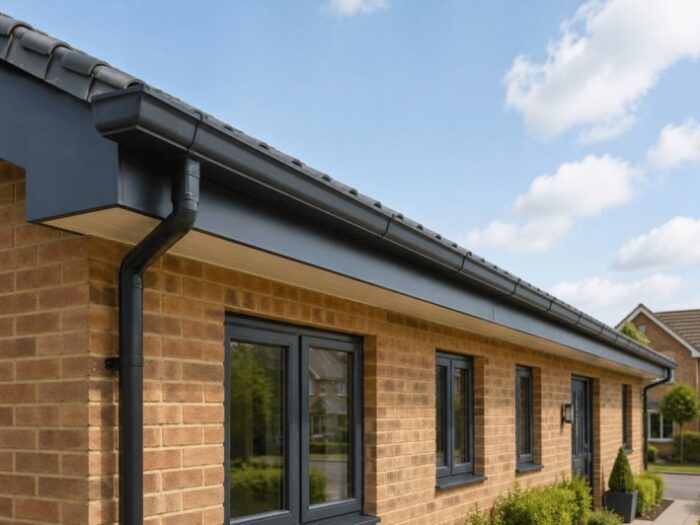
Installation steps: what a good aluminium gutter fit should include
A proper installation is planned and checked as it goes. The best teams measure carefully, set falls correctly, and pay attention to joints and outlet points where most problems start.
Step 1: Survey and roofline measurement
- Measure roof run lengths, angles and elevation changes.
- Check fascia condition and whether any fascia works are required.
- Plan downpipe locations and discharge points, including where splashing could become an issue.
Step 2: Set correct gutter falls
- Falls are the gentle gradient towards the downpipes.
- Correct falls help prevent pooling, overflow and faster debris build-up.
- Levels should be checked while the line is being marked out.
Step 3: Brackets and supports
- Brackets should be fixed securely into a sound fascia structure.
- Spacing should match the gutter size and expected water load.
- Keep the gutter line straight so water flows evenly.
Step 4: Gutters, joints and outlet details
- Plan where joints land so weak points are minimised.
- Outlets and jointing details should be finished neatly to reduce leak risk.
- Fit end details and corners properly for a clean result.
Step 5: Downpipes and discharge control
- Downpipes must align with gutter outlets.
- Elbows and discharge routing should avoid splashing onto walls and paving.
- If you have drainage and soakaway arrangements, routing matters.
Step 6: Testing and final checks
- Check alignment and falls along the full run.
- Where possible, confirm flow during handover.
- Finish tidily because guttering is highly visible on the exterior.
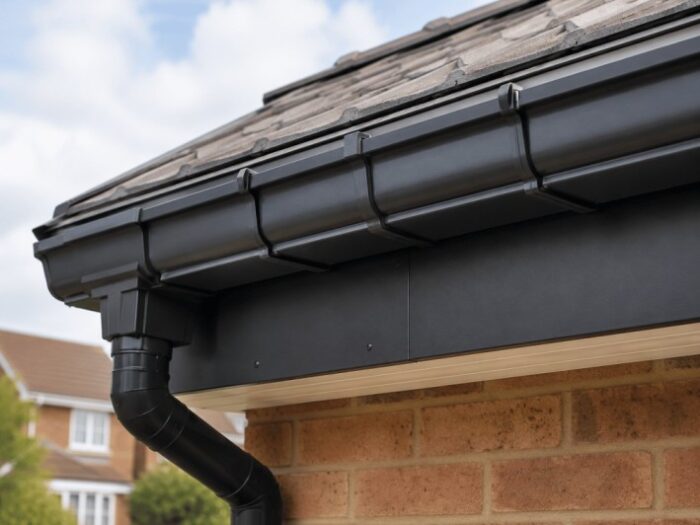
Industrial applications: aluminium guttering on bigger buildings
On commercial and industrial roofs, guttering often handles larger roof areas, longer runs and higher water volumes. That means system planning and coordination become even more important.
Where you will typically see it used
- Warehouses and logistics units: consistent falls and robust bracket support along long elevations.
- Retail frontages: exterior aesthetics and continuity across the street-facing elevation.
- Education and healthcare buildings: dependable drainage supports safer entrances and maintenance planning.
- Office blocks and mixed-use developments: coordination with other architectural roofline elements.
A related guide you may find useful
If your roofline also includes a boxed-in section or flat roof drainage arrangement, you might want to read: roof soakers: complete guide. It’s useful context for how water is managed at key roof junctions.
Benefits of aluminium guttering (what you gain in practice)
Aluminium guttering tends to be chosen for its finish and long-term durability, but the real advantages show up when you stop thinking about repairs every time it rains.
Practical benefits
- Better corrosion resistance: helps reduce the “rust and stain” issues associated with some metals.
- Consistent colour: powder-coated finishes can match or complement your fascia and soffit.
- Good detailing options: outlets, corners and junctions can be finished neatly with the right system components.
- Cleaner roofline appearance: often makes the whole exterior look more “finished”.
Small job, big ripple effect
If guttering is failing, it can accelerate issues around fascia, soffit and render. Fixing the drainage now can protect the rest of the roofline and help you avoid bigger, more expensive repairs later.
Material and product specification: what to include in your quote
When you compare quotes, make sure you are comparing the same scope. A cheaper quote can sometimes mean fewer details, which then causes problems down the road.
Confirm the system details
- Gutter profile (half-round, square, boxed, etc.) and required lengths
- Bracket/support approach and spacing
- Correct falls and how levels are checked
- Outlet type and downpipe size/routing plan
- Jointing method and how corners/end details are finished
Confirm the finish and colour
Powder coating is the usual route for a hard-wearing finish. If you want a coordinated look, ask about RAL colour matching.
- Which finish will be used (and whether it matches other roofline components)
- Whether samples or colour references are available
- How the gutter colour sits alongside the rest of your exterior
Helpful product links (Metal Profiles Ltd)
If you’re looking at downpipe and gutter components, these product pages can help you understand what the system needs:
- aluminium half-round outlet 63mm (outlet detail)
- aluminium box gutter 3m length (if you want a box gutter system)
- aluminium round downpipe 3m length (downpipe runs)
- coloured sealant 300ml (finishing joints)
Common mistakes to avoid
Gutter problems are rarely random. Most come from a few repeat mistakes that you can spot if you know what to ask.
- Incorrect falls: pooling water leads to overflow and faster debris build-up.
- Poor bracket fixing: sagging develops over time and water flow becomes uneven.
- Rushed jointing: outlets and joints are frequent leak points if not detailed properly.
- Downpipes that discharge badly: splashback can still cause damp staining even with “new” gutters.
- Ignoring fascia condition: fixing onto weak or failing fascia can create repeat failures.
- No plan for maintenance: if access is awkward or debris build-up is likely, overflow risk increases.
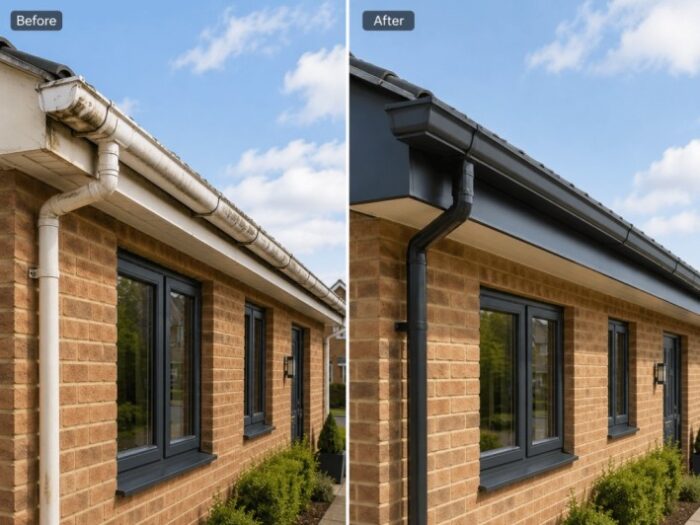
Practical buying and planning advice for Chelmsford (Essex)
If you want the job to go smoothly, a bit of planning saves money and stress. Chelmsford can throw anything at a roofline, so think about access, timing, and how you will handle heavy rain during works.
When to plan the work
- Before exterior decoration: get drainage fixed first so new finishes are protected.
- After repeat overflow: if it keeps happening, treat it as a fault, not just weather.
- During manageable access windows: it makes scaffolding and clear-down easier.
How to compare quotes properly
Ask for clarity on falls, bracket support, joint and outlet detailing, and downpipe discharge routing. If any of those are missing, it is worth asking before you proceed.
Want an instant cost reality check?
For help thinking about pricing and what affects it, have a look at: how much do gutters cost.
Read relevant Blogs
Trusted guidance
FAQs
-
Is aluminium guttering worth it compared with uPVC in Essex?
For a lot of people, yes. Aluminium often suits projects where you want a longer-lasting exterior, a cleaner look, and less worry about corrosion. uPVC can work well too, but aluminium is a popular upgrade when the appearance and long-term performance matter.
-
Will aluminium guttering stop leaks and damp staining?
It should reduce leak risk, provided the system has the correct falls and the joints and outlets are detailed properly. If you already have damp staining, you will also need to tackle the root cause and let the wall dry out before decorating.
-
Can aluminium guttering be powder-coated to match my fascia and soffit?
Yes. Powder-coated finishes are commonly used, and RAL colour matching is often available so the gutter line coordinates with the rest of your roofline.
-
How do I know the installer has set the correct gutter falls?
You can ask how falls are set and how levels are verified during installation. A good team will also check alignment along the run and carry out sensible flow checks before completion.
-
What’s the biggest cause of gutter overflow in heavy rain?
Usually it is a design or install issue, such as incorrect falls, downpipes that are undersized for the roof area, or blocked outlets due to debris and access limitations.
-
Do I need planning permission to replace guttering in Essex?
Often, like-for-like roofline replacements do not need planning permission. If you change the appearance significantly, rules can vary. If you are unsure, it is worth checking with the local authority.
-
Can Metal Profiles Ltd support aluminium guttering for commercial buildings?
Yes. Aluminium guttering is used on commercial properties, and larger projects usually benefit from careful coordination with fascia, soffit, coping and access planning.
Get the right aluminium guttering specification with Metal Profiles Ltd
If you’re planning aluminium guttering in Chelmsford, Essex, Metal Profiles Ltd can help you get the details right. From bespoke aluminium architectural metalwork to powder-coated finishes and RAL colour options, we offer practical, project-specific support to match your roofline and your priorities.
Contact Metal Profiles Ltd for specification help, planning guidance and a sensible approach to upgrading your roofline.
Discover more from Metal Profiles Ltd
Subscribe to get the latest posts sent to your email.