


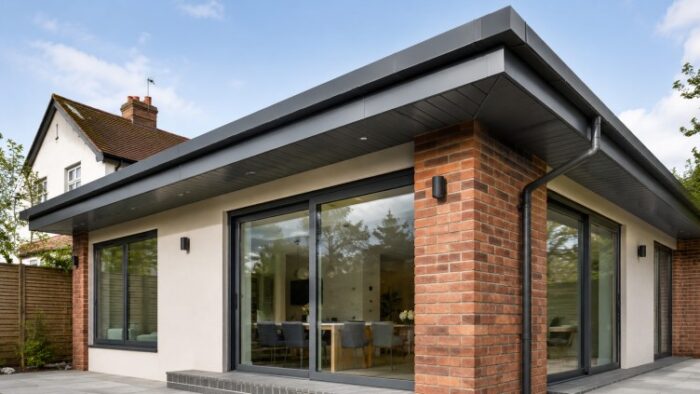
Fascia boards and soffits are some of the most visible parts of a property’s roofline, but many people only notice them when guttering starts to overflow, paint begins to peel, or gaps appear around the eaves. Positioned where the roof meets the external wall, these components help create a finished roof edge and connect the roof covering, guttering, drainage and wall detail.
For homeowners, roofing contractors, architects, developers and specifiers, fascia boards and soffits should be considered as more than a simple finishing trim. They can influence how guttering is positioned, how neat the roofline looks, how ventilation details are coordinated and how different exterior materials meet around the eaves.
This guide explains what fascia boards and soffits are, how they differ, how they work with guttering, when replacement may be considered and what should be reviewed before choosing a new roofline detail. It also covers aluminium fascia boards and soffits, colour coordination, replacement cost factors and project-specific considerations for homes, extensions and commercial buildings.
What Are Fascia Boards and Soffits
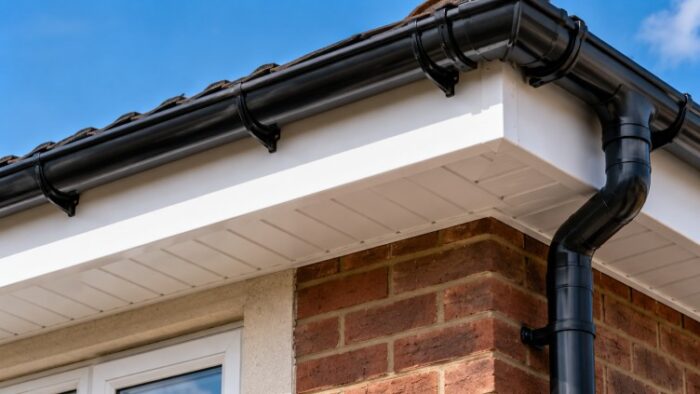
Fascia boards and soffits are finishing components located around the eaves of a building. They sit beneath the roof covering and above the external wall, helping create a defined transition between the roof edge and the rest of the property.
The fascia board is generally positioned along the front edge of the roofline. It is visible from the ground and creates a straight visual line beneath roof tiles, slates or other roof coverings. Depending on the design, the fascia may also provide a location for gutter brackets to be fixed.
The soffit is fitted underneath the fascia area. It closes the underside of the eaves and helps create a continuous finish between the fascia and the wall below. On some roof constructions, soffits may also need to coordinate with ventilation details, but not every soffit contains vents.
Fascia boards and soffits are often described together because they are connected physically and visually. A roofline can look incomplete if one component is replaced without considering the other. For example, replacing a fascia board while leaving uneven or damaged soffits in place can make the roof edge look inconsistent. Similarly, fitting new soffits without reviewing the guttering and fascia detail can leave related drainage issues unresolved.
The roofline is often one of the first external areas to show the effects of weather exposure, blocked gutters, failing coatings or older repair work. A careful review can help establish whether the issue is limited to one component or whether a wider roofline replacement should be considered.
The Difference Between Fascia Boards and Soffits
Although fascia boards and soffits sit next to each other, they perform different functions around the eaves.
The fascia is the front-facing component. It generally runs horizontally along the roof edge and creates the visible line beneath the roof covering. In many roofline systems, gutter brackets are fixed to or through the fascia area. The exact fixing arrangement depends on the roof structure, material choice and guttering system being used.
The soffit is positioned underneath. It covers the underside of the roof overhang and helps form a clean, enclosed eaves detail. Some soffits are solid, while others may include ventilation provisions where the wider roof construction requires them.
The difference is important when planning repairs or replacement work. A problem with the gutter line may relate to the fascia, while gaps beneath the eaves may involve the soffit or a wider roof edge detail. In older properties, both elements may have been painted, repaired or altered several times, making it useful to inspect the whole area before deciding on materials or replacement methods.
The phrases soffits and fascia boards, soffits and fascia, fascias and soffits and soffits and fascias are commonly used by homeowners searching for roofline information. They all refer to connected parts of the eaves detail, but a clear understanding of each component makes product selection and specification easier.
What Are Soffits in Roofline Terms
The word soffit is used in several areas of architecture. It can describe the underside of a stair, balcony, arch, beam or roof overhang. In roofline terms, a soffit refers to the finished underside of the eaves.
A soffit board or panel is used to close the area between the roof edge and the external wall. This creates a neater visual finish and may help limit access to the roof void where the roofline detail is designed to be enclosed.
For a more detailed explanation of what is a soffit, it is useful to look at the roofline as part of the wider eaves arrangement rather than as a single panel beneath the roof.
Not every soffit has the same specification. Some are simple closing panels, while others may be designed to work with roof ventilation components. The correct detail depends on the roof type, insulation arrangement, membrane specification and wider roof build-up.
It is important not to assume that adding or replacing a soffit automatically resolves ventilation concerns. Roof ventilation requirements need to be considered alongside the full roof build-up. A traditional cold roof may need different ventilation detailing from a warm roof or insulated roof conversion.
Soffits can also influence how tidy a building looks from below. A damaged or uneven soffit line can make an otherwise well-maintained property appear tired, especially where the eaves are visible from a driveway, garden, street or terrace.
Why Fascia Boards and Soffits Matter on UK Properties
UK properties are exposed to regular rainfall, wind-driven rain, frost, leaf fall and changing temperatures. The eaves area is one of the main points where water leaves the roof and enters the guttering system.
Fascia boards and soffits form part of the finished detail around this area. When they are in good condition and properly coordinated with the rest of the roofline, they help create a clean roof edge and support the arrangement of related guttering components.
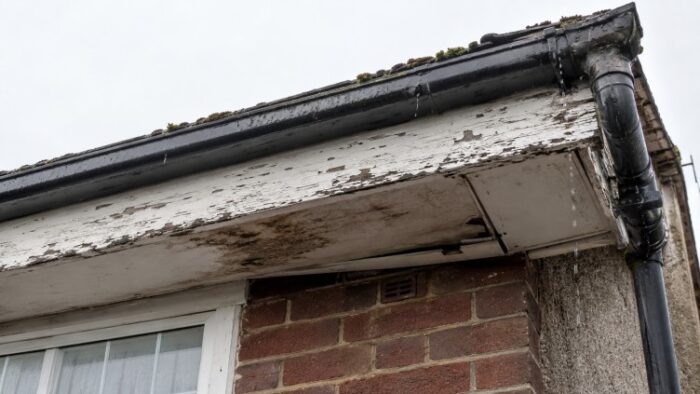
When roofline components begin to deteriorate, visible signs can include flaking coatings, loose gutter brackets, stained walls beneath the eaves, open gaps under the roof edge or uneven gutter runs. These signs do not always mean that every component needs replacing, but they do suggest that the roofline should be reviewed carefully.
On older houses, timber fascia boards and soffits may have been repainted many times. In some cases, this can be part of a practical maintenance routine. In other cases, repeated coatings may hide localised deterioration or previous repairs that should be checked before new materials are fitted.
On extensions, new builds and commercial properties, fascia boards and soffits may need to coordinate with more contemporary materials. These can include powder coated aluminium window surrounds, flashings, gutters, wall capping, cladding trims and roof edge components.
A roofline planned as a complete detail often looks more consistent because the relationship between the fascia, soffit, guttering and roof covering has been considered from the beginning.
How Fascia Soffits and Guttering Work Together
Fascia soffits and guttering are closely linked around the eaves of a building. The roof covering sheds rainwater towards the roof edge. The guttering is positioned to collect this water and guide it towards outlets and downpipes. The fascia may provide a fixing line for gutter brackets, while the soffit completes the underside of the roof edge.
If one part of this arrangement is poorly aligned, it can affect the rest of the system. For example, guttering that sits at the wrong level may allow water to overshoot or run behind the gutter. A fascia detail that is uneven or poorly supported may affect the position of gutter brackets. A soffit with gaps or damaged sections may leave the eaves looking incomplete or expose areas that should be enclosed.
This does not mean every overflowing gutter is caused by the fascia board. Blocked outlets, debris build-up, poor gutter falls, undersized downpipes and damaged gutter sections can all affect drainage. However, because the fascia, soffit and gutter line are located together, they should normally be inspected as one roofline detail.
When planning a replacement, it is useful to review the condition of the existing fascia, soffits, gutter brackets, outlets, downpipes and roof covering. This helps identify whether the project is a simple visual update or whether a broader roofline and rainwater system review may be required.
For larger refurbishments, extensions and commercial projects, fascia boards and soffits should be considered alongside flashings, wall junctions, roof edge components and other related rainwater details.
Why Water Management Matters Around the Eaves
Water management is central to roofline design. Rainwater should be directed from the roof surface into the guttering system and then towards downpipes, drainage points or suitable discharge locations.
At the eaves, a small alignment issue can create a larger visible problem. Water that runs behind a gutter can stain external walls. Water that overflows repeatedly can mark brickwork, render or cladding. Water trapped around poorly maintained roofline details can contribute to localised deterioration of surrounding materials.
Fascia boards and soffits are not solely responsible for managing water, but they sit within the part of the roof where water movement needs to be carefully controlled. The roof covering, felt or membrane arrangement, drip detail, gutter position, outlet location and downpipe capacity can all influence performance.
For this reason, a roofline replacement should not be planned only by measuring the visible fascia board. It is helpful to understand how far the roof covering projects beyond the wall, where the gutter sits, how the brackets are fixed and whether the soffit detail needs to coordinate with ventilation or insulation layers.
This becomes particularly important on properties with bay windows, dormers, wide eaves, roof valleys, flat roof junctions, extensions or changes in roof pitch. These areas may require more careful coordination between fascia boards, soffits, flashing details and rainwater goods.
Fascia Boards and Soffits for Homes, Extensions and Commercial Buildings
Fascia boards and soffits are used on a wide range of building types, from small domestic properties to larger commercial and public-facing developments.
For a house, the main requirement may be replacing tired roofline materials, improving visual consistency or coordinating guttering with new windows, render or roofing. On a bungalow, the roofline may be visible from several sides, making colour and profile choices particularly noticeable.
For extensions, the new fascia and soffit detail may need to blend with the original property while still matching the materials used on the new roof. A modern extension may use darker roofline colours, aluminium cladding, slimline window frames or concealed rainwater details that require a more coordinated approach.
Commercial buildings can have longer roof edges, more demanding drainage arrangements and several elevations that need to look consistent. Offices, retail units, educational buildings and industrial properties may use fascia boards and soffits as part of a larger roofline or architectural metalwork specification.
Aluminium fascia boards and soffits may be considered where the project requires formed profiles, powder coated finishes, a metal roofline appearance or dimensions that do not suit standard products. Suitability will depend on the roof edge condition, intended fixing method, guttering arrangement and wider project requirements.
Before choosing a roofline product, it is useful to assess whether the project needs a like-for-like replacement, a change in material, a different finish, new guttering or a more complete roofline redesign.
Aluminium Fascia Boards and Soffits Compared with Other Materials
Several materials can be used for fascia boards and soffits, including timber, uPVC and aluminium. The right option depends on the building type, roof edge detail, visual style, project budget and level of specification required.
Timber remains a common material on older and traditional properties. It can suit heritage or period-style homes where a painted timber appearance is important. Timber roofline details may be repaired or repainted as part of an ongoing maintenance programme, depending on their condition and exposure.
uPVC roofline products are widely used for domestic replacement projects. They can suit straightforward roofline applications where standard manufactured profiles are appropriate and a consistent factory-finished surface is preferred.
Aluminium offers a different set of possibilities. It can be formed into project-specific profiles and powder coated in selected finishes. This can be useful where fascia boards, soffits, gutters, wall capping, flashings or window surrounds need to coordinate visually.
The practical aluminium fascia and soffit benefits can be particularly relevant for projects where material consistency, colour coordination and fabricated dimensions matter. Aluminium may also be considered for roofline details involving non-standard eaves, returns, curved sections or architectural junctions.
However, there is no single material that suits every property. A straightforward domestic replacement may require a different approach from a bespoke roofline detail on a contemporary extension or a commercial building with multiple elevations.
Black Fascia Boards and Soffits and Colour Coordination
Black fascia boards and soffits are often chosen for modern properties, extensions and contemporary exterior schemes. Dark roofline colours can create a crisp contrast against lighter brickwork, render, stone or cladding.
Black can work particularly well when it is coordinated with dark aluminium window frames, gutters, roof tiles, metal roofing or external doors. In other projects, charcoal, dark grey, bronze or muted green may provide a softer alternative while still creating a defined roof edge.
Colour selection should be considered in the context of the full property. A shade that looks black in low light may appear charcoal in direct daylight. A colour that works with a dark roof may look too strong against pale render. It is useful to consider the roofline alongside windows, guttering, downpipes, wall finishes and other metalwork.
For powder coated aluminium fascia boards and soffits, a wide range of RAL or BS colour options may be available, subject to the selected finish and project requirement. Matt, satin or gloss levels may also influence the final appearance.
A coordinated colour scheme can help the roofline feel integrated with the rest of the building rather than looking like an unrelated replacement component.
Replacing Soffits and Fascia: Signs a Roofline Review May Be Needed
Replacing soffits and fascia may be considered when visible deterioration, drainage issues or roofline damage begins to appear. The decision should be based on the condition of the whole eaves detail rather than only the most noticeable section.
Signs that a roofline review may be helpful include:
- Peeling or flaking paint on existing fascia boards
- Soft, damaged or visibly weathered timber
- Loose or uneven gutter brackets
- Gutters that appear to sag or overflow repeatedly
- Staining beneath the gutter line
- Gaps beneath the eaves
- Loose, warped or damaged soffit sections
- Birds, insects or debris entering open roof edge areas
- Water marks near the upper wall or ceiling line
- Previous repairs that have created uneven materials or awkward junctions
These signs do not always mean full replacement is required. A blocked gutter, damaged roof tile, localised repair issue or failing downpipe can sometimes be the source of the problem. However, they are good reasons to inspect the fascia, soffit, guttering and roof edge together.
When replacing fascia boards and soffits, it is useful to review what sits behind the visible components. Existing rafter ends, roof edge boards, gutter brackets and adjacent materials may all influence the final replacement detail.
What to Check Before Replacing Fascia Boards and Soffits
Before ordering replacement fascia boards and soffits, gather as much project information as possible.
Start by measuring the eaves length on each elevation. Record the visible fascia height and soffit width. Take photographs of corners, gutter outlets, downpipes, wall junctions, bay windows, dormers, valleys and any areas where the roofline changes direction.
Check the guttering system. Identify the gutter profile, bracket positions, outlets and downpipe routes. If the existing guttering is being retained, the new fascia detail must work with its bracket arrangement and level. If the guttering is also being replaced, it may be easier to coordinate the full system together.
Review the underside of the eaves and the roof covering above. Look for missing tiles, damaged felt, uneven boards, water staining, loose sections or visible gaps. Where ventilation is relevant, the roof construction and existing ventilation provision should be considered before a new soffit is selected.
For an extension or new build, drawings can help identify roof pitch, insulation, ventilation, guttering and wall build-up requirements. For older properties without drawings, accurate photographs and measurements become even more useful.
The better the information at the enquiry stage, the easier it is to establish whether standard components, aluminium fascia boards, fabricated soffit panels or a more tailored roofline arrangement may be suitable.
Fixing Fascia and Soffits as Part of a Wider Roofline Detail
Fixing fascia and soffits should be considered as part of the wider roofline detail rather than a simple surface replacement.
The fixing method can vary depending on the existing building structure, roof construction, material choice, guttering system and whether the project is a refurbishment or a new build. Existing timber, rafter ends, roof edge boards and gutter bracket positions should be reviewed before new components are fitted.
It is not always appropriate to cover over older materials without assessing their condition. If the substrate behind the fascia is damaged, uneven or unsuitable for the proposed fixing approach, this should be addressed before the new roofline system is finalised.
The soffit also needs to connect neatly with the fascia, roof edge and wall finish. On some projects, this may be a straightforward closing panel. On others, it may need to work with ventilation components, external insulation, cladding details or render junctions.
A wider roofline review may also include bargeboards, flashings, roof soakers, guttering, downpipes, roof edge trims and wall cappings. These details can affect where fascia boards end, how soffits return around corners and how water is directed away from the building.
For homeowners searching how to install soffits and fascia UK guidance, the key point is that the correct approach depends on the building. Fixing methods, roof ventilation, gutter alignment and roof build-up should all be reviewed as part of the wider eaves detail.
Ventilation, Roof Build-Up and Eaves Details
Ventilation can be relevant around the roof edge, but the correct requirement depends on the roof construction.
Some roofs may use ventilation through the eaves or soffit area. Others may use roof tile vents, ridge ventilation, over-fascia components or another system. The appropriate arrangement depends on factors such as insulation, roof void design, membrane type and wider specification requirements.
When replacing fascia boards and soffits, it is useful to identify whether the existing roof already has a ventilation route and whether the new roofline detail needs to maintain or coordinate with it. This can be particularly important for loft conversions, re-roofing work, insulated roofs and extensions.
The soffit should not be selected only because it looks neat. If ventilation is required, the location and method should be considered with the roof build-up. If no ventilation is required through the soffit, a solid soffit detail may be more appropriate.
A contractor, architect or roof designer can help review these requirements for the specific property. The final fascia and soffit arrangement should complement the roof construction rather than being added as an afterthought.
Fascia Soffits and Guttering Cost Factors
Fascia soffits and guttering cost can vary significantly because every building has different roof dimensions, access arrangements, material requirements and detail complexity.
The total eaves length is one of the main factors. A small single-storey garage will usually require less material and access work than a larger detached house, apartment block or commercial building with several roof elevations.
Access can also influence cost. A ground-level roofline may be more straightforward to reach than a three-storey property, a building with restricted access, a terrace above a public area or a project that requires scaffolding.
Material choice can make a difference too. Standard roofline products may suit straightforward domestic details. Fabricated aluminium fascia boards and soffits may be considered where a project needs a particular profile, finish, dimension or coordinated metal roofline system.
Other factors that can influence fascia soffits and guttering cost include:
- Existing roofline condition
- Removal of older materials
- Guttering and downpipe replacement
- Number of corners, bays and returns
- Roof pitch and access restrictions
- Powder coated finish requirements
- Ventilation coordination
- Flashing and roof edge junction details
- Whether bespoke fabrication is needed
For this reason, the cost to replace soffits and fascia should be assessed through a project-specific review rather than by relying on a simple price-per-metre figure.
Why the Cheapest Roofline Option May Not Always Suit the Project
The cheapest roofline option may not always include everything required for the property. A low initial quote may cover only visible fascia and soffit sections while leaving guttering, roof edge condition, ventilation needs or awkward junctions unresolved.
This does not mean that the most expensive option is automatically the right one. It means that quotations should be compared based on what is included. The scope should cover materials, removal work, guttering, access requirements, corner details, roof edge preparation and any project-specific fabrication.
For a straightforward property, a simple replacement may be appropriate. For a larger refurbishment, extension or commercial project, a more coordinated system may be more suitable because it can address the relationship between fascia, soffit, guttering, roof edge finishes and other exterior components.
A clear project brief helps avoid comparing unlike-for-like options. It should include property size, roofline dimensions, existing condition, required finish, guttering requirements, colour choice, access limitations and any known roof edge concerns.
How to Choose Fascia Boards and Soffits for Your Property
Choosing fascia boards and soffits starts with the building itself. Consider the roof pitch, eaves depth, gutter position, wall finish, existing roofline material and overall design style.
Traditional homes may need roofline details that work with existing tiles, brickwork, render or timber features. Modern extensions may require sharper aluminium profiles, darker colour choices or coordinated roofline metalwork. Commercial buildings may need longer continuous runs, repeatable profiles and finishes that align with a wider exterior specification.
The available soffits and fascia products should be considered by more than just material. Look at profile shape, finish, corners, returns, fixing approach and how the fascia connects with guttering and roof edge details.
Aluminium fascia boards and soffits may be particularly useful where project-specific profiles, powder coated finishes or fabricated dimensions are required. For simpler projects, a standard roofline arrangement may be suitable. For unusual eaves, deep overhangs, angled returns or complex junctions, bespoke fabrication can help create a more considered result.
The most effective roofline choice balances appearance with function. The fascia and soffit should suit the building, coordinate with guttering and work with the wider roof edge detail.

Fascia Boards and Soffits Near Me in Chelmsford, Essex and Across the UK
Searches for fascia boards and soffits near me are often made when a property owner notices failing paint, loose guttering, damaged soffits or signs of water overflow around the eaves.
For projects in Chelmsford, Essex and the surrounding area, Metal Profiles Ltd is based at Highlands Farm, Southend Road, Rettendon Common, Chelmsford, CM3 8EB. The company supplies and fabricates aluminium roofline, coping, capping, fascia, soffit, guttering, downpipe, flashing, window surround and architectural metalwork products.
For local homeowners, contractors and building professionals, it can be useful to work with a supplier that understands aluminium fabrication and project-specific roofline details. For wider UK projects, clear drawings, photographs, measurements and finish requirements help establish what type of fascia board and soffit arrangement may be suitable.
Whether the enquiry relates to fascia boards and soffits Chelmsford, a wider Essex refurbishment or a project elsewhere in the UK, the same preparation helps. Record the eaves length, guttering arrangement, roof type, colour preference, existing condition and any relevant roofline details.
Common Mistakes to Avoid
Roofline replacement can become more complicated when important details are overlooked early in the project.
One common mistake is replacing only the visible fascia board without checking the condition of the support behind it. Another is selecting a soffit only for appearance without considering whether the roof construction requires ventilation coordination.
Other mistakes include:
- Retaining damaged or uneven guttering alongside a new fascia detail
- Choosing a colour only from a screen without considering the property in daylight
- Ignoring corners, returns and changes in roof level
- Assuming every soffit is ventilated
- Treating the fascia and soffit as separate from roof tiles, flashings and drainage
- Ordering materials before measuring the full eaves length and gutter locations
- Comparing quotations without checking what work and materials are included
- Selecting the cheapest option without reviewing the wider roofline requirement
A better approach is to assess the whole eaves detail before making decisions about materials, colours or replacement work.
When to Request an Estimate from Metal Profiles Ltd
It is useful to request an estimate once you have gathered the main project information. This may include photographs of the existing roofline, approximate eaves dimensions, guttering details, colour preferences, property type, drawings and notes about any roof edge issues.
For more complex projects, information about roof ventilation, existing materials, corners, bay windows, roof junctions and related aluminium components can also be useful.
Metal Profiles Ltd can help discuss fascia boards and soffits as part of a broader aluminium roofline requirement. Clear project information helps identify whether standard roofline components, fabricated aluminium profiles or a more tailored approach may be suitable.
FAQ
-
What are fascia boards and soffits?
Fascia boards and soffits are roofline components located around the eaves. The fascia is usually positioned along the front edge of the roofline, while the soffit is fitted beneath it to close the underside of the eaves.
-
What are soffits used for?
Soffits create a finished underside to the eaves. Depending on the roof construction, they may also coordinate with ventilation requirements, but not every soffit contains a ventilation detail.
-
What is the difference between fascia boards and soffits?
The fascia is generally the front-facing roof edge component and may provide a fixing line for gutter brackets depending on the roofline design. The soffit is fitted underneath to close the eaves area and complete the roofline finish.
-
Do fascia boards support guttering?
In many roofline designs, gutter brackets are fixed to or through the fascia area. The exact support method depends on the roofline structure, fascia material and guttering system.
-
Are aluminium fascia boards and soffits suitable for UK properties?
Aluminium fascia boards and soffits may be considered for UK projects where a formed metal roofline finish, colour coordination or project-specific fabrication is required. Suitability depends on the building, roof edge detail and wider specification.
-
What should I check before replacing soffits and fascia?
Check the condition of the existing roof edge, guttering, downpipes, visible timber, soffits, roof covering, ventilation details, corners and wall junctions. Measurements, photographs and drawings can also help define the replacement requirement.
-
Can fascia boards and soffits be supplied in black or other colours?
A wide range of RAL or BS colour options may be available, subject to the selected finish and project requirement. Black fascia boards and soffits can suit projects where darker roofline elements are intended to coordinate with windows, cladding or guttering.
-
What affects fascia soffits and guttering cost?
Cost can depend on property size, eaves length, access, existing roofline condition, material choice, guttering requirements, finish, colour, corners, ventilation coordination and whether bespoke fabrication is required.
-
How do I request an estimate for fascia boards and soffits?
Provide property details, approximate measurements, photographs, drawings, colour preferences and information about the guttering or existing roofline condition. This helps establish the type of fascia board and soffit detail that may be suitable.
Conclusion
Choose aluminium wall coping as part of the full roof edge detail, not as an afterthought Aluminium wall coping plays an important role in protecting exposed wall tops, parapet walls, flat roof edges and external wall details from UK weather. When it is specified properly, it helps direct rainwater away from the wall surface, supports a cleaner roof edge finish and makes the wider building exterior look more consistent.
If you are planning a wall coping, parapet coping or roof edge project and need help with aluminium coping profiles, sloping copings, flat copings, corner details, powder coated finishes or RAL colour options, Metal Profiles Ltd can support with project-specific aluminium architectural metalwork for UK building projects.
Discover more from Metal Profiles Ltd
Subscribe to get the latest posts sent to your email.