



Choosing Large Metal Planters for Your Project
The first step is to understand the role the planter needs to play in the space. A planter may be doing more than holding plants. It may define a boundary, soften hard landscaping, create privacy, guide movement or help a new exterior feel complete. That means the right choice is not based on appearance alone. It should also reflect the intended planting, the amount of available space, the access route to the final position and the surface the planter will sit on.
For many buyers, the most useful questions are straightforward. How large does the planter need to be? Will it sit in a residential garden, a public facing entrance or a commercial courtyard? Does the setting call for a weathered finish, a painted colour or a more discreet visual tone? Will it need to work as a feature in its own right, or sit quietly alongside paving, timber, brick or aluminium framing?
It also helps to think about plant maturity and planting depth. Some projects need tall architectural planting. Others need a broader, lower form that can carry shrubs, grasses or seasonal planting in a controlled layout. If the planter is part of a larger scheme, the choice should sit comfortably within the overall material palette and circulation routes, rather than standing apart from them.
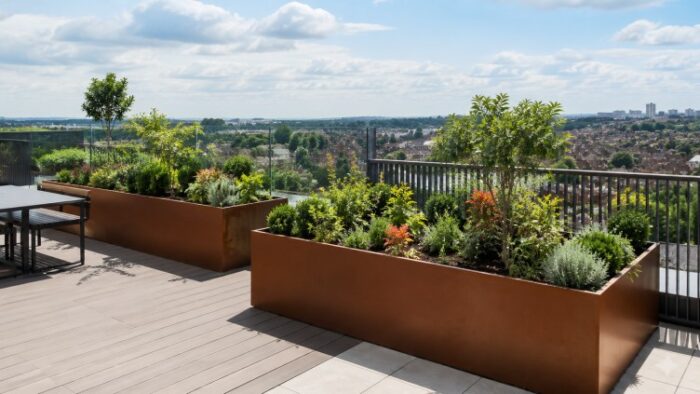
Metal Planter Materials Available in This Category
This category brings together three main material options, each suitable for different project requirements. The right selection depends on the look you want, the exterior conditions, the style of planting and the level of colour coordination required. For some schemes, a natural weathered finish is the main objective. For others, a clean painted appearance or a powder coated colour may be more suitable.
The main material options are corten steel, PPC mild steel and PPC aluminium. Each one has a different character, which is why a useful selection process begins with the finish and performance expectations of the wider scheme.
Corten Steel Planters for a Weathered Finish
Corten steel is often chosen where a more natural, earthy appearance is wanted. The material develops a rusted patina outdoors, which creates a distinctive weathered look that can suit brick, timber, gravel, meadow planting and more contemporary hard landscaping alike. This can work well where the planter is meant to settle into the landscape rather than appear overly polished.
For buyers comparing finishes, it can help to view the planter as part of the architectural palette. Corten can sit comfortably beside dark cladding, pale paving or more traditional garden materials when the design calls for warmth and texture. If this is the direction you are considering, the 3mm Corten Steel Planters page is the clearest place to review the material option in more detail.
Because the appearance changes over time outdoors, corten is often selected for projects where visual character matters as much as format. It is still important to confirm that the final setting, surrounding surfaces and project needs all suit this type of finish before ordering.
PPC Mild Steel Planters for Colour Coordination
PPC mild steel planters are a practical option where the project needs a painted finish that can work with the surrounding architecture. PPC means polyester powder coated, which gives the planter a finished appearance that can be coordinated with doors, window frames, railings, cladding, boundary features or landscape furniture.
This is often a useful choice for hospitality entrances, residential front gardens, office exteriors and developments where a consistent colour language matters. A planter does not need to dominate the scheme, but it should support it. That is where colour-led specification can be helpful, especially when the exterior design already has a strong material palette.
The 3mm PPC Mild Steel Planters range is suitable to review if you are looking for painted steel planters with a more controlled visual finish. A wide range of RAL or BS colour options may be available, subject to the selected finish and project requirement. That makes this material worth considering for projects where colour matching or visual consistency matters.
PPC Aluminium Planters for Project-Specific Requirements
Aluminium is often considered where a lighter material is preferred for the project requirement and the visual finish needs to be carefully coordinated. With a polyester powder coated finish, PPC aluminium can suit schemes that need a clean, defined look without the more rustic appearance associated with weathered steel.
This can be relevant for modern gardens, terraces, offices, commercial frontages and specification-led exterior projects where the planter needs to work alongside other architectural finishes. It is also a sensible material to review when the brief focuses on colour consistency, cleaner edge definition or a more contemporary appearance. For buyers comparing material options, the 4mm PPC Aluminium Planters page is a helpful starting point, and the aluminium planter buying guide may support broader material selection.
As with any project-led product, the detail matters. Finish, dimensions and intended use should all be considered together so the planter is aligned with the setting rather than selected as a standalone item.
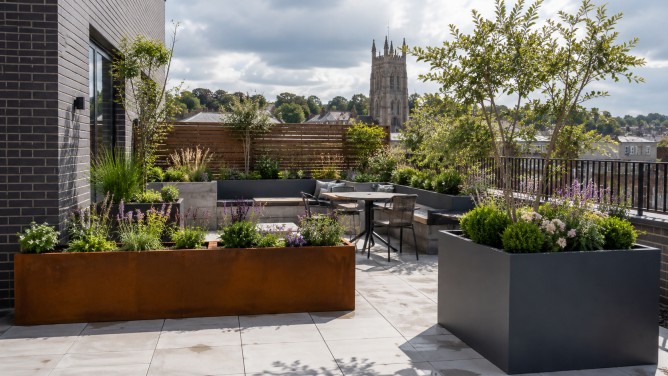
Where Large Metal Planters Can Be Used
Large planters are used in a wide range of domestic and commercial exterior spaces, but the right application depends on the setting and the practical demands of the site. In a home garden, they may help define a patio edge, frame a seating area or give structure to an open plot. In courtyards and terraces, they can create a stronger sense of order where planting needs to work within fixed boundaries or paved surfaces.
For hospitality frontages, planters are often used to create a more welcoming arrival space, soften hard edges or support seasonal planting displays. Offices, commercial entrances and reception areas may use them to guide movement and improve first impressions without needing more permanent landscape changes. Development projects and wider commercial landscaping schemes may also use them to help shape entrance zones, communal areas or transition spaces.
They can be considered for many exterior environments, but not every planter suits every site. Loading, access, drainage and wider project requirements should be checked where relevant, especially if the planter is intended for a raised platform, a tight access route or a high-visibility entrance.
Trough Planters, Raised Planters and Tall Planter Considerations
Shape has a major effect on how a planter performs in the space. Depending on the chosen dimensions and configuration, trough planters can be useful where the aim is to define boundaries, direct movement or create planting zones along a wall, terrace edge or seating area. Their longer form can work well in linear schemes where a more continuous planting line is needed.
Raised planter and tall planter selection tends to suit projects where height helps the layout. A taller form can create more visual presence, assist screening or bring planting up to a more noticeable level in a paved or hard-landscaped setting. That can be useful in frontages, courtyards and contemporary gardens where the planter needs to do more than sit low to the ground.
For suitable project requirements, these forms can also help create clearer spatial divisions without using heavy permanent construction. Where a planter form is available or fabricated for the project, it should be considered alongside the planting intent, surrounding circulation and the finished arrangement of the space. In other words, the shape should support the layout, not compete with it.
Colour, Powder Coating and Exterior Coordination
Colour selection matters more than many buyers expect. A planter can either blend into the surroundings or become a deliberate visual feature. For many projects, the strongest results come from matching or complementing the surrounding architecture rather than choosing a finish in isolation. That means looking at paving tones, cladding, brickwork, timber, window frames, doors, railings and nearby landscape materials together.
Powder coated finishes are particularly useful where a controlled appearance is needed across multiple planters or across a wider commercial scheme. They can help the planters sit more neatly within the setting, especially where the design language is already defined by black metalwork, muted greys, warm neutrals or darker contemporary tones. A wide range of RAL or BS colour options may be available, subject to the selected finish and project requirement.
If you are weighing up a painted material against other aluminium-led options, the aluminium planter buying guide can be a useful reference point before finalising a specification. The key is to treat colour as part of the whole scheme, not as an afterthought.
Drainage, Base Preparation and Final Position
Before any planter is filled, the final placement should be considered properly. A level base, drainage, access, planting load and final position should all be reviewed in advance so the planter can be set into the space without avoidable problems. This is especially important for larger items, where weight and movement become more relevant once the planter is in place.
It is sensible to check the selected product specification rather than assume every planter will be supplied in the same way. Drainage requirements can vary depending on the product and the project requirement, so confirm drainage requirements before ordering. The planter should also be considered in relation to the finished surface and the broader setting, particularly where standing water, overspill or access for maintenance may need to be managed.
The final installed position should be reviewed before filling, because once planting medium is added, later movement becomes far more difficult. That is why buyers, designers and contractors often look at the planter, base and surrounding layout together at the specification stage, rather than treating them as separate decisions.
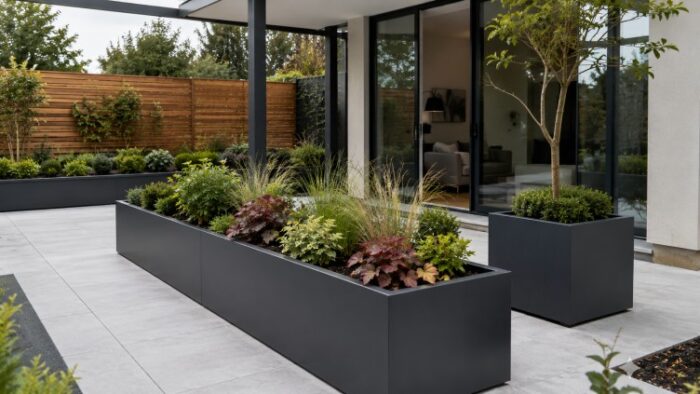
Standard Sizes and Bespoke Metal Planters
Standard sizes can be suitable for many common exterior projects, especially where the space is straightforward and the planting scheme is already defined. They can offer a more direct route to ordering when the dimensions match the layout closely enough. However, not every project works that neatly. In those cases, bespoke dimensions may be available for suitable project requirements.
This is where the enquiry details become important. The more accurately the project is described, the easier it is to assess whether a standard option or a custom made metal planter approach is more appropriate. Useful information includes the length, width, height, material choice, finish, RAL or BS colour preference, quantity, site access, required delivery area, drainage requirement, project drawings and planting intent.
It should also be remembered that not every bespoke request can be manufactured, and suitability will depend on the selected product and project requirement. If the planter is being specified for a development, hospitality frontage or managed commercial site, the specification should be clear enough to support the wider programme and the expected use of the space.
What to Check Before Ordering Large Metal Planters
Before placing an order, it helps to slow the process down and confirm the practical details that affect the final result. A well-prepared brief reduces back and forth and makes it easier to match the planter to the intended use. The product policy is a useful place to review made-to-order considerations and project-specific expectations before confirming any requirement.
Check the following before ordering:
- Intended location
- Exact dimensions
- Access route to site
- Base condition
- Drainage requirement
- Material choice
- Colour or finish
- Quantity required
- Project timescale
- Whether drawings are available
It is also worth checking how the planter will be handled on arrival, whether the final position is already prepared and whether any surrounding works need to happen first. These details may seem minor, but they often determine whether the planter fits smoothly into the wider project or becomes a source of delay.
Delivery Planning and Project Timings
Delivery planning should be considered alongside the size of the planter and the access available at the destination. Larger items may need more thought about unloading space, vehicle access, path widths, gates, steps or final positioning near a building frontage or paved area. The more constrained the site, the more important it is to confirm those details early.
The delivery address and the intended placement area should be clear before the order is progressed. It also helps to align the product choice with the project schedule so the planter arrives when the site is ready to receive it. That may be especially important where other works are taking place around paving, cladding, access routes or planting preparation.
If you need to confirm the practical side of delivery, the shipping information page should be reviewed before ordering. Exact lead times are not stated here, so it remains important to check the current shipping position for the selected product and project requirement.
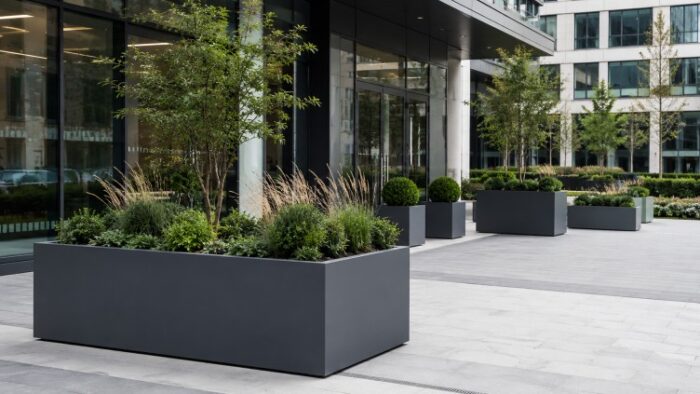
When to Request an Estimate
An estimate is especially useful when the project needs more than a straightforward off-the-shelf choice. If dimensions, finishes or site conditions are still being refined, the estimate process can help clarify whether the requirement is suitable and how it should be approached. Drawings, photographs, planting layouts, dimensions and finish preferences all help make the enquiry more useful.
This is often the right route for commercial buyers, designers, contractors and homeowners with a more specific exterior brief. If you are comparing materials, matching a colour scheme or planning planters for a larger setting, it is worth giving the detail early rather than leaving it until after the space has been fixed.
Metal Profiles Ltd can help with project-specific enquiries for suitable requirements, especially where the planter needs to align with a wider specification. If you are ready to move forward, use the request an estimate page and include as much project information as you have available. For company information, you can also refer to Metal Profiles Ltd.
FAQ
-
What are large metal planters used for?
They are used to add structure, planting capacity and visual definition to gardens, terraces, courtyards and commercial entrances. In practice, they help separate spaces, frame views and support planting where a more robust planter format is needed.
-
Which material is suitable for outdoor metal planters?
It depends on the project. Corten suits a weathered look, PPC mild steel suits colour-led schemes, and PPC aluminium suits selected project requirements where a powder coated finish is needed. Site conditions and appearance should guide the choice.
-
What is the difference between corten steel, PPC mild steel and PPC aluminium planters?
Corten steel develops a rusted patina outdoors, PPC mild steel has a polyester powder coated finish, and PPC aluminium combines aluminium with powder coating. The main difference is the visual finish and how each option fits the project brief.
-
Can large metal planters be made to bespoke dimensions?
Yes, bespoke dimensions may be available for suitable project requirements. The best starting point is to share drawings, measurements, quantity and finish preferences so the product can be assessed against the actual brief.
-
What should I prepare before ordering a planter?
Have the dimensions, material choice, colour preference, quantity, access route and intended location ready. It also helps to know whether drawings or photographs are available, especially if the project needs a more accurate estimate.
-
What should I consider for drainage and base preparation?
Confirm the drainage requirement for the selected product, make sure the base is level and review the final position before filling. That helps the planter sit correctly and reduces issues once planting medium is added.
-
Can metal planters be supplied in different colours?
Yes, a wide range of RAL or BS colour options may be available, subject to the selected finish and project requirement. This is especially useful where the planter needs to coordinate with cladding, railings, doors or paving.
-
How do I request an estimate for large metal planters?
Provide measurements, finish preferences, quantity and any drawings or site photographs. That gives a clearer project brief and helps the team assess suitability before pricing and specification are discussed.
Plan Your Metal Planter Requirement
Choosing large metal planters works best when the material, dimensions, finish, drainage, access and planting use are all considered together. That approach helps the planter support the wider garden or commercial setting instead of feeling like a separate add-on. Whether the requirement points towards corten, powder coated mild steel or powder coated aluminium, the most useful choice is the one that fits the project properly.
If you have measurements, drawings, photographs, colour preferences or a preferred material, Metal Profiles can help with suitable project-specific enquiries. Use the details you have to request an estimate and start shaping the right planter specification for your space.
Contact Metal Profiles Ltd for aluminium copings, fascia and soffits, rainwater goods, flashings, bespoke aluminium architectural metalwork, powder coated finishes, RAL colour options, and project-specific support.
Discover more from Metal Profiles Ltd
Subscribe to get the latest posts sent to your email.