



What is Aluminium Wall Coping?
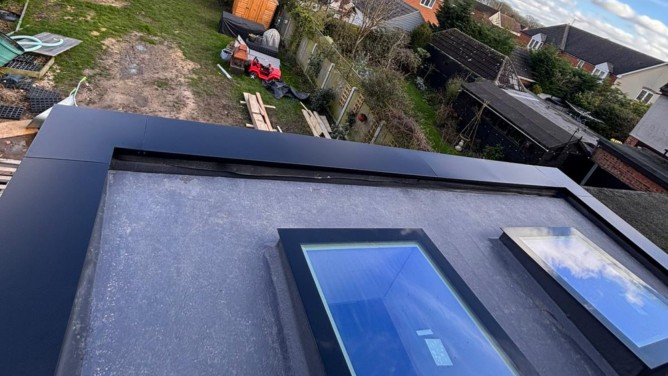
Aluminium wall coping refers to a formed metal profile fitted over the top of a brick, block or concrete parapet wall. Its primary job is to protect the wall from rainwater while directing water clear of the face of the building. Unlike traditional stone or concrete coping, aluminium versions are lighter, easier to handle on site, and can be manufactured to exact requirements.
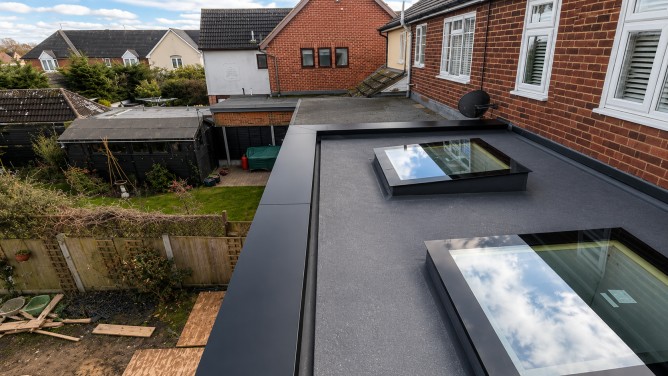
The term aluminium coping is often used interchangeably with parapet wall aluminium coping, aluminium roof coping or simply coping aluminium. In practice, most systems consist of a top sheet with formed edges, internal supports or brackets, and discreet fixings. On flat roof aluminium coping the profile usually sits over the upstand and provides a clean termination for the roof membrane.
For more technical background on parapet design and weathering details, see our parapet wall coping UK guide.
Why Aluminium Wall Coping Matters for UK Buildings
The UK climate is unforgiving on exposed masonry. Driving rain, repeated freeze-thaw cycles and wind-driven moisture can cause spalling, efflorescence and damp penetration if the top of a parapet or boundary wall is not adequately protected.
Aluminium coping addresses these issues effectively. The material does not absorb water, expands and contracts predictably, and when correctly detailed directs water away from vulnerable joints. Because it is lightweight, it reduces loading on older structures, which is particularly useful on refurbishment projects in London, Kent, Surrey and Essex.
Architects and specifiers also value the clean lines and colour options. A well-chosen powder coated aluminium coping can complement brickwork, render, or composite cladding without the heavy visual weight of stone.
Common Applications Across UK Projects
You will see aluminium wall coping used in several typical situations:
- Parapet walls on flat roof commercial and residential buildings
- Extension roofs where the new wall meets an existing building
- Boundary and garden walls requiring a smart, maintenance-free finish
- Balcony and terrace perimeters
- Roof plant screens and lift overrun enclosures
In Essex and the surrounding counties we regularly fabricate coping for new housing developments, school and hospital extensions, warehouse refurbishments, and private homes in Chelmsford, Colchester, Brentwood and Basildon. The same systems are used on projects further afield in Sussex, Suffolk and across London.
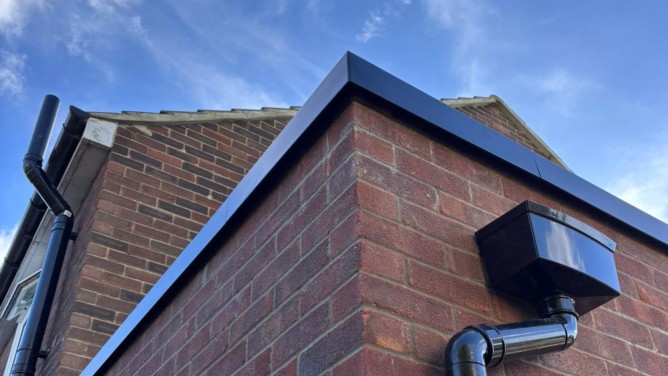
Sloping aluminium coping is particularly popular on exposed sites because the slope encourages rapid water runoff. Black aluminium coping has become a go-to choice for contemporary extensions where a dark, understated finish is required.
Flat vs Sloping Aluminium Coping
Flat copings are often chosen where the visual appearance of a level top is important or where the coping also acts as a walking surface (with appropriate safety measures). However, they require careful detailing of the drip edges to prevent water tracking underneath.
Sloping copings (typically 5–15 degrees) are generally the better technical choice in most UK locations. The slope throws water clear of the wall face. Our sloping copings range includes standard 1m and 2m lengths as well as made-to-measure options.
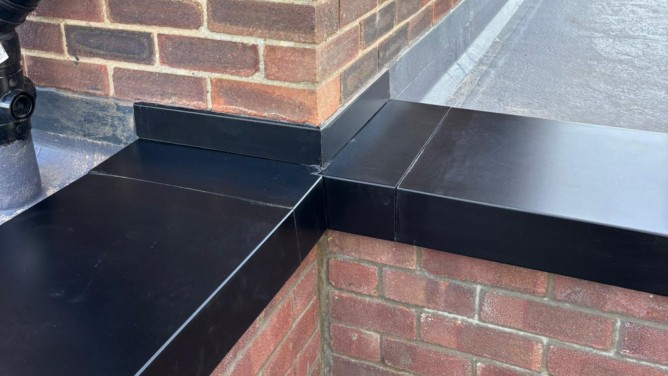
We also manufacture aluminium sloping coping with 90° and 135° internal and external corners, which can be found here:
Aluminium Coping Detail – Key Specification Points
A successful aluminium coping detail considers several factors:
- Wall thickness and construction (brick, block, cavity, solid)
- Required overhang (usually 25–50mm each side)
- Drip edge or throating to throw water clear
- Upstand height where it meets a flat roof membrane
- Fixing method (usually concealed brackets or secret fix)
- Thermal movement (aluminium expands approximately 23mm per 10 metres per 50°C temperature change)
- Junctions with adjacent materials (flashings, membranes, cladding)
For architects and specifiers, we recommend including a clear section drawing showing the coping profile, support brackets, fixing centres and relationship to the roof build-up. Our aluminium capping guide provides further detail on typical weathering profiles.
Material and Finish Options
We fabricate from marine-grade or architectural aluminium alloy, usually 2–3mm thick depending on span and loading requirements. This gives excellent resistance to UK coastal and inland weather without the need for regular painting.
The most common finish is polyester powder coating (PPC). This offers:
- Excellent colour retention
- Wide choice of RAL and BS colours
- Matt, satin or gloss levels
- Corrosion protection suitable for most inland and light coastal environments
Popular colours include RAL 7016 (Anthracite Grey), RAL 9005 (Jet Black), and heritage shades that match existing metalwork. Mill finish is available but less common on visible applications because it will weather naturally over time.
Powder coated aluminium coping remains the practical choice for most specifiers in Essex, London, Kent and Surrey.
Standard vs Bespoke Aluminium Coping
Many manufacturers offer standard widths (typically 300mm, 400mm, 500mm). While these can work on simple projects, most real UK buildings have variations in wall thickness, awkward angles or curved sections.
At Metal Profiles Ltd we specialise in bespoke aluminium coping Essex. We can manufacture non-standard widths, variable slopes, curved radii, and complex corner conditions. This is particularly useful on refurbishment projects or when matching existing details on period properties.
If you are searching for aluminium coping near me or aluminium coping suppliers Chelmsford, having a local fabricator who can visit site, take dimensions and produce accurate shop drawings saves time and reduces risk of errors.
What Affects Aluminium Coping Prices?
Aluminium coping prices vary according to:
- Profile complexity (flat, single slope, double slope, curved)
- Width of the coping
- Length of individual pieces (longer lengths reduce joint frequency but increase transport cost)
- Choice of colour and finish
- Quantity of corners, stop ends, mitres and special fabrications
- Support bracket requirements
- Delivery distance
As a rough guide, expect to pay from around £35 per linear metre for simple powder-coated flat coping up to £85+ per metre for wide, complex sloping aluminium coping with multiple bespoke corners. These are supply-only figures final installed cost depends on the contractor.
We do not publish fixed price lists because every project is different. The most accurate way to understand cost is to send us a brief description, wall thicknesses, overall lengths and any drawings.
Aluminium Coping Installation Considerations
While we fabricate and supply the coping, actual aluminium coping installation is usually carried out by experienced roofing or cladding contractors. Key points they consider include:
- Ensuring the substrate is level and structurally sound
- Correct bracket spacing (typically 600–900mm centres)
- Allowing for thermal movement at joints
- Sealing penetrations where fixings are used
- Integrating with roof membranes, flashings and adjacent cladding
On flat roof aluminium coping, close coordination with the roofing contractor is essential to achieve a watertight detail at the upstand.
We are happy to provide fabrication drawings and installation guidance notes to the appointed contractor. We do not offer installation ourselves but work with many approved aluminium coping installers across Essex, London, Kent, Surrey and Sussex.
Maintenance and Long-Term Performance
One of the main advantages of aluminium wall coping is low maintenance. Once installed and correctly sealed, it should perform for decades with only occasional inspection.
Routine checks should include:
- Ensuring fixings remain secure
- Checking that sealant at joints remains intact
- Removing any debris that might trap water
- Inspecting powder coating for any damage (rare but possible from impact)
Compared with concrete or stone, there is no need for regular repointing or sealing.
How Aluminium Coping Connects with Other Exterior Systems
Aluminium wall coping rarely exists in isolation. It often forms part of a wider roofline and facade package that includes:
- Aluminium fascia and soffits
- Rainwater gutters and downpipes
- Flashings and window surrounds
- Door canopies
Specifying all elements from the same fabricator helps ensure colour match, consistent detailing and single-source responsibility. Our Aluminium Copings category shows the full flat and sloping ranges.
For projects requiring both coping and capping elements, see our aluminium capping guide.
When to Request an Estimate
The best time to contact a fabricator is once you have:
- Confirmed wall thicknesses at multiple points
- Decided on flat or sloping profile
- Noted any changes in direction or height
- Prepared a simple sketch or marked-up drawing
- Decided on colour (if known)
Even if you are still at early design stage, we can provide budget pricing and typical details that help with specification.
If you are based in Essex, Chelmsford, or searching for aluminium wall coping Essex, bespoke aluminium coping Essex or aluminium coping near me, we are well placed to help. Our workshop is at Highlands Farm, Southend Road, Rettendon Common, Chelmsford, CM3 8EB.
FAQ
-
What is aluminium wall coping used for?
It protects the top of parapet walls and flat roof edges from weather, sheds rainwater clear of the building, and provides a clean architectural finish.
-
Is aluminium suitable for UK weather?
Yes. When fabricated from architectural-grade alloy and properly detailed, it performs very well in rain, wind, and freeze-thaw conditions found across the UK.
-
Can aluminium coping be made bespoke?
Absolutely. We regularly manufacture non-standard widths, slopes, curves and complex corner details to suit individual projects.
-
What affects the price of aluminium coping?
Width, profile type (flat or sloping), colour, number of corners and special fabrications, and overall quantity are the main factors.
-
What measurements do I need to provide?
Wall thickness at several points, overall lengths between corners, corner angles, any changes in height or direction, and preferred overhang.
-
Do you supply aluminium coping across the UK?
Yes. While we are based in Chelmsford, Essex, we fabricate and deliver aluminium coping systems to projects throughout London, Kent, Surrey, Sussex and further afield.
-
What finish options are available?
The majority of projects use polyester powder coating in any RAL or BS colour. Matt, satin and gloss levels are possible. Mill finish is available but less common on visible work.
-
Can the same system be used on residential and commercial projects?
Yes. The material and fabrication approach works equally well on private homes, schools, offices, warehouses and public buildings.
Conclusion
choose aluminium wall coping as part of the full roof edge detail, not as an afterthought Aluminium wall coping plays an important role in protecting exposed wall tops, parapet walls, flat roof edges and external wall details from UK weather. When it is specified properly, it helps direct rainwater away from the wall surface, supports a cleaner roof edge finish and makes the wider building exterior look more consistent.
If you are planning a wall coping, parapet coping or roof edge project and need help with aluminium coping profiles, sloping copings, flat copings, corner details, powder coated finishes or RAL colour options, Metal Profiles Ltd can support with project-specific aluminium architectural metalwork for UK building projects.
Discover more from Metal Profiles Ltd
Subscribe to get the latest posts sent to your email.