


What Is a Soffit? Everything UK Homeowners and Builders Need to Know

Most people walk past their house every single day without giving the soffit a second thought. It sits up there quietly doing its job, keeping rain and rot and squirrels out of your roof space, and it only tends to get noticed when something goes wrong.
If your loft is damp, if you have noticed birds nesting under the eaves, or if the paint is peeling away from what looks like the flat board under your gutters, you have a soffit problem. And it is worth sorting, properly and sooner rather than later.
This guide covers everything: what a soffit actually is, what it does, how it differs from fascia, which materials are worth using, how ventilation works, and what you should be looking for if your roofline is overdue an inspection. We supply and work with aluminium roofline products across Essex and the wider UK, so a fair bit of this comes from firsthand experience rather than just reading off a spec sheet.
What Is a Soffit? The Simple Answer
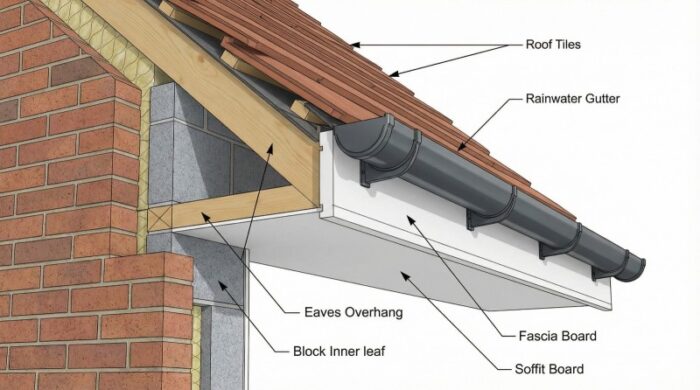
A soffit is the flat board that covers the underside of your roof overhang. If you stand on the pavement and look up towards where your gutters are, the horizontal surface you can see between the fascia (the vertical board the guttering attaches to) and the exterior wall of the house, that is the soffit.
The word itself comes from the French and Italian, meaning roughly ‘fastened below’. That fairly literal description is actually quite useful. The soffit is fixed beneath the roof edge, sealing off the gap between the rafters and the outside world.
It does not take long to understand once you know where to look. Stand outside, look up at the eaves. The vertical face at the roof edge is the fascia. The flat ceiling-like surface running from the fascia back to the wall is the soffit. Simple.
| Not sure of the difference between a soffit and a fascia? Our dedicated post covers both in detail. |
Read: Soffit or Fascia? Understanding the Difference
What Does a Soffit Actually Do?
This is where soffits get a bit more interesting than they first appear. They are not just there to look tidy. They do several genuinely important jobs at once.
It protects the rafter ends from weather
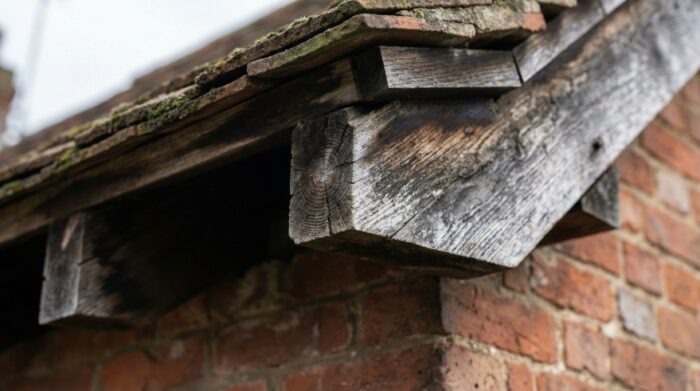
Your roof rafters project out past the wall to create the eaves overhang. Without a soffit covering the underside of that overhang, rain, frost, and humidity would work directly on the cut ends of the timber. Rafter ends are one of the most vulnerable parts of a timber roof because they are end grain, which absorbs moisture far more readily than the face of a board.
Left exposed, rafter ends will rot. That rot will eventually spread inward along the rafter. Catching it early is inexpensive. Catching it late is a structural repair job that nobody wants.
It stops pests getting into your roof space
Without a soffit, there is an open gap running the entire perimeter of your eaves. That gap is an open invitation for birds, squirrels, bats, and all manner of insects to move in and set up home. Once they are in the roof space, the damage they can do to insulation, wiring, and timbers is considerable.
A well-fitted soffit, properly sealed at the edges, closes that gap. Combined with a bargeboard at the gable ends, it effectively seals the entire roofline.
It ventilates the roof space
This is the function most people do not know about, and it matters a great deal in the UK climate.
Warm, moist air from inside the house rises into the roof space. In a cold loft, that air meets cold surfaces and condenses. Over time, that condensation causes mould, rot in the timbers, and damage to insulation. A poorly ventilated loft can lose a significant chunk of its insulation performance without you realising it.
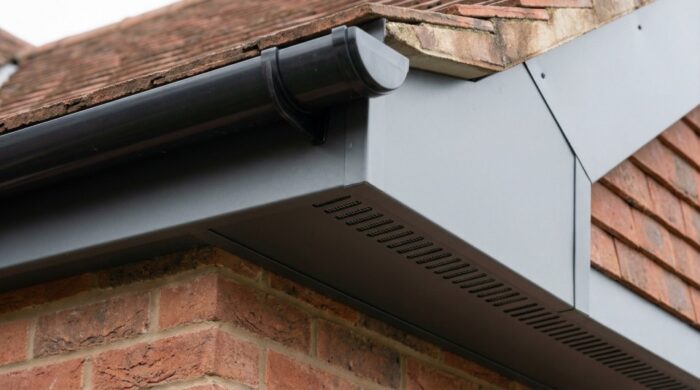
Vented soffits or soffit panels with built-in vent inserts allow fresh air in at eaves level. That air then circulates through the roof void and exits at high level, typically at the ridge. This eaves-to-ridge airflow is what Building Regulations Part F and the guidance in BS 5250 are designed to ensure. It keeps the roof space dry, protects the structure, and means your insulation keeps working as it should.
For the most current guidance, the UK Building Regulations Approved Documents are the definitive reference.
It gives the roofline a finished appearance
An open eaves looks unfinished and slightly chaotic. A properly fitted soffit gives the roofline a clean, intentional look. It is the difference between a tidy, well-maintained house and one that looks like it has been cobbled together.
From a property value perspective, kerb appeal matters. A good roofline, properly finished with soffit, fascia, and guttering that all work together visually, makes a measurable difference to first impressions.
It conceals services and structure
On commercial buildings particularly, soffits are often used to conceal pipework, drainage routes, and electrical conduit running along the underside of a structure. This explains why soffits are specified on a much wider range of construction projects than just house eaves.
Soffit vs Fascia: What Is the Difference?
People mix these two up constantly. Here is the clear distinction:
| Feature | Soffit | Fascia |
| Position | Horizontal, underneath the eaves overhang | Vertical, at the front edge of the roof |
| What you see | The flat ceiling-like surface under the gutters when looking up | The board the guttering clips or brackets onto |
| Primary job | Seal the eaves, ventilate the roof void, protect rafter undersides | Support the guttering, close the roof edge, face the weather |
| Faces | Downward / outward at an angle | Outward, parallel to the wall below |
| Ventilation | Can be vented or solid | Not typically vented |
| Installed | First (soffit goes in before fascia) | After the soffit is in place |
They are designed to work together, and on a full roofline replacement you would typically replace both at the same time. Fitting new soffit into old, degraded fascia (or vice versa) is false economy.
For more depth on how the two components relate structurally, see our post on why aluminium fascia and copings are essential.
Types of Soffit: Solid, Vented, and Continuous Strip
Not all soffits are the same, and which type you need depends on the ventilation requirements of your roof.
Solid soffit boards
These are plain boards with no ventilation holes. They are appropriate on properties where adequate ventilation is already achieved through other means, such as over-fascia vents, tile vents, or where the roof construction does not create a cold void that needs cross-ventilation.
Vented soffit boards
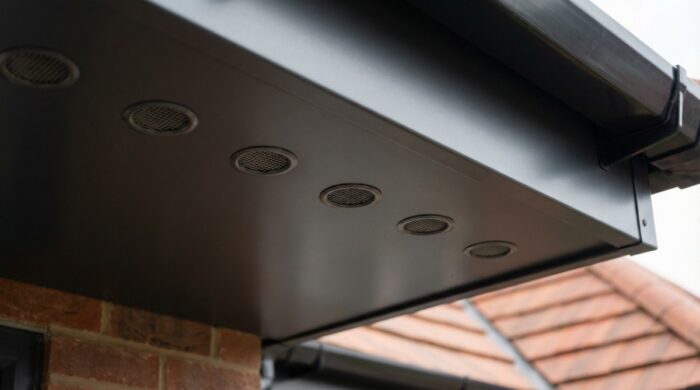
These are by far the most common for standard residential pitched roofs in the UK. Vented boards have either pre-formed slots or circular holes fitted with fine mesh inserts. The mesh keeps insects and birds out while still allowing airflow.
For most cold-roof pitched lofts in the UK, you need ventilation equivalent to a continuous 25mm open gap along the eaves. Getting that right means using a continuous vented soffit or using a solid board with vent inserts at appropriate intervals.
The mesh gauge matters. BS 5250 recommends a maximum mesh size of 4mm to prevent insect entry. Cheaper vent inserts sometimes use larger mesh, so it is worth checking before you buy.
Continuous soffit strip vents
Rather than using boards with inserts, some installations use a continuous aluminium strip vent running the full length of the eaves. This gives a consistent, uninterrupted airflow path and eliminates the need to calculate and space individual inserts.
This approach is common on commercial projects and on residential buildings where achieving the required free area through insert vents alone would mean spacing them very closely together.
Soffit Materials: Timber, uPVC, or Aluminium?
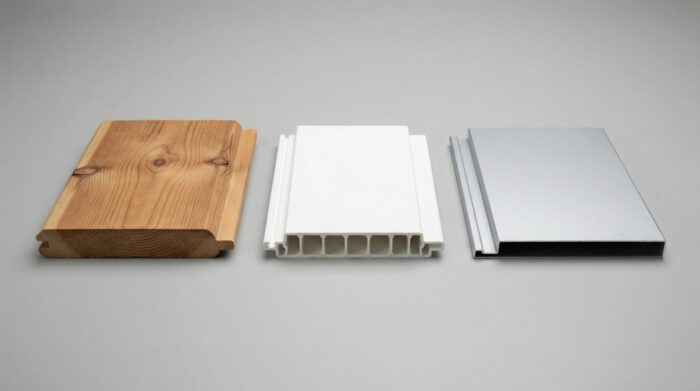
Each material has genuine pros and cons, and the right choice depends on the type of property, the local climate, and what you want to spend over the lifetime of the installation.
Timber soffit
Wood was the default for decades. It looks natural, it can be painted any colour, and on traditional properties it fits the aesthetic well. The problem is the upkeep.
Timber soffits exposed to British weather need repainting every three to five years to stay in good condition. The underside of the eaves is not easy to reach safely, so maintenance that gets put off tends to stay put off. When wood is allowed to get wet and stay wet, it rots. Rot at the eaves can travel inward along the rafter quite quickly.
Lifespan without proper maintenance: 10 to 15 years. With diligent maintenance: longer, but at real and recurring cost.
uPVC soffit
uPVC became the standard material for residential rooflines through the 1990s and 2000s. It does not rot, does not need painting, and is widely available from every builder’s merchant in the country. For most standard residential applications it is a sound, practical choice.
The limitations are that it can become brittle after prolonged UV exposure, it is not available in as wide a colour range as powder-coated aluminium, and it cannot be repainted if you want to change colour later.
Typical lifespan: 20 to 25 years. Low maintenance if fitted correctly.
Aluminium soffit
Aluminium is the choice for longevity, colour range, and performance in demanding environments. The boards are powder-coated, which means the colour is baked into the finish rather than sitting on the surface. That finish does not peel, does not fade, and it can be ordered in any RAL colour.
Aluminium does not rot. It does not crack in frost. It does not warp. It is significantly lighter than you might expect, which makes installation easier and puts less load on the structure.
Typical lifespan: 40 to 50-plus years. Virtually maintenance-free once fitted.
We supply a range of aluminium soffit profiles including our 2mm Type 3 aluminium soffit (3m length) and 2mm Type 2 aluminium soffit (3m length), along with matching soffit union joints, internal joiners, and 90-degree corner pieces.
A note on fixings: Aluminium reacts with steel through galvanic corrosion. Always use stainless steel or aluminium fixings when fitting aluminium soffit boards. Steel nails will corrode at the contact point and stain the board face over time. Easy to avoid, costly to ignore.
Where Is a Soffit Used? Residential and Commercial Applications
Standard house eaves
This is the most familiar application: the board under the gutters on a residential property. Most UK houses built after around 1950 have some form of soffit at the eaves, though condition and material vary enormously depending on when it was last replaced.
Flat roof edges
On a flat-roof extension or outbuilding, the fascia at the roof edge often incorporates a soffit element underneath to close off the roof buildup. The soffit here tends to be shallower than on a pitched eaves detail, and ventilation requirements differ depending on whether it is a warm or cold flat roof construction.
Garage soffits and canopies
Garages, particularly detached garages with overhanging roofs, need exactly the same soffit protection as the main house. Garage soffits are often the first to be neglected, which is why they are frequently in worse shape than the house roofline when a full survey is done.
We also supply aluminium door canopies where a clean, matching soffit finish underneath is part of the design brief.
Commercial and industrial buildings

On commercial buildings, soffits take on an additional role as a finished architectural surface. The underside of a canopy, a projecting floor, a covered walkway, or the eaves of a large industrial unit all require a soffit that can handle greater spans and sometimes fire performance specifications that residential products do not need to meet.
Aluminium is the dominant material for commercial soffit applications in the UK for these reasons. It can span further without deflecting, be anodised or powder-coated to precise colour specifications, and can meet fire performance requirements that uPVC cannot.
Architectural soffits: bridges, car parks, and balconies
The underside of a bridge deck, the ceiling of a covered car park level, or the soffit of a concrete balcony all fall under the same broad definition: the horizontal or near-horizontal surface on the underside of a structural element. In these settings, cladding the soffit in aluminium sheeting is the standard approach for both appearance and durability.
How to Know If Your Soffit Needs Replacing

A soffit inspection does not require specialist knowledge. You need a clear day, a safe position to look up, and a reasonably critical eye. Here is what to look for:
Visible rot, sagging, or cracks
If your soffit is timber and the paint is peeling or boards are sagging, there is moisture in the wood. Soft, spongy areas when pressed (from inside the loft if you can access the rafter ends) confirm rot. Any board that has cracked through is providing no protection and needs replacing.
Discolouration or staining
Rust staining on a soffit or fascia usually means the fixings have corroded, which is common on older steel-nailed installations. Black streaks can indicate the guttering is overflowing and running down behind the board, which means water is sitting where it should not be.
Pest activity
Birds regularly entering the eaves, or squirrel or bat activity in the loft space, is a strong indicator the soffit is not providing a complete seal. Even a gap of 10mm or less is enough for many species.
Condensation or damp in the loft
If you go into your loft and find moisture on the underside of the felt, black mould on the timbers, or insulation that feels damp, poor ventilation is the likely culprit. This often points to blocked or absent soffit ventilation rather than a leaking roof.
Gaps at the junction between soffit and wall or fascia
Over time, soffit boards can pull away from the wall or fascia as timber backing shrinks or rots. Any visible gap is a problem, for weather and for pests. If you can see daylight from inside the eaves, something needs fixing.
When in doubt, get a proper roofline inspection. A specialist can identify problems before they become structural, and it is a much cheaper conversation to have early.
Replacing a Soffit: What to Expect
Whether you are doing this as a DIY job or bringing in a professional, here is a general overview of the replacement process.
Step 1: Remove the guttering
The guttering almost always needs to come down to give access to the soffit and fascia. If you are replacing it alongside the soffit and fascia, see our guide to durable aluminium guttering if you are looking at upgrading at the same time.
Step 2: Remove the old fascia and soffit
The fascia usually comes off first, which gives access to the top of the soffit and the fixing points on the rafter ends. Check the rafter ends carefully once the old boards are off. Any rot needs treating or cutting back before new materials go on.
Step 3: Install new soffit boards
Measure each section individually, as widths can vary across a run. Cut boards to width with a fine-toothed blade and leave a small gap at each joint for expansion. Fix from the middle of each run outward at 400mm centres using the correct fixings for your material.
Step 4: Fit ventilation if required
If fitting a solid soffit where ventilation is needed, install vent inserts at calculated intervals. If using a continuous vent strip, this typically runs along the inner edge of the soffit near the fascia.
Step 5: Install the new fascia and refit guttering
The fascia goes on after the soffit. Check for level, allow the correct expansion gap at joints. Refit the guttering once the fascia is secured. For guttering cost guidance, see our post on how much gutters cost in the UK.
Safety note: Working at height is the most significant risk in any roofline job. The HSE recommends a scaffold tower rather than a ladder wherever possible. Full guidance at hse.gov.uk/work-at-height
How Much Does Soffit Replacement Cost in the UK?
These are rough 2026 figures for England. Costs vary based on property size, material choice, and whether you are doing just the soffit or the full roofline together.
| Scenario | Timber | uPVC | Aluminium |
| Soffit per metre (supply only) | £4 to £8/m | £5 to £10/m | £9 to £16/m |
| 3-bed semi soffit only (DIY materials) | £120 to £240 | £150 to £300 | £270 to £480 |
| Full roofline: semi (professional) | £1,400 to £2,200 | £1,600 to £2,800 | £2,200 to £4,000 |
| Full roofline: detached (professional) | £2,000 to £3,400 | £2,400 to £4,200 | £3,200 to £6,000 |
| Expected lifespan | 10 to 20 years | 20 to 25 years | 40 to 50+ years |
The real cost comparison is over lifetime, not just at point of installation. Timber needs ongoing maintenance. uPVC may need replacing after 25 years. Aluminium, fitted correctly, should see you out.
Soffit and Winter: What Cold Weather Does to Your Roofline
The British winter puts more stress on roofline components than any other time of year. Freeze-thaw cycles attack timber and any material that has absorbed moisture. Rain in October can sit behind a poorly sealed soffit and freeze in December, expanding and forcing the board away from its fixing.
Aluminium copes better than timber in these conditions because it does not absorb water. It expands and contracts with temperature changes predictably, and when fitted with the correct expansion allowances at joints, this is not a problem.
Our post on aluminium copings for winter protection covers related ground on how aluminium roofline products perform in cold conditions.
Frequently Asked Questions
-
What is a soffit in simple terms?
A soffit is the flat board fixed underneath your roof overhang, between the gutters and the exterior wall of your house. It seals the underside of the eaves, stops pests getting in, protects the rafter ends from weather, and on vented versions allows fresh air into the roof space to prevent condensation.
-
What is the difference between a soffit and a fascia?
The fascia is the vertical board at the front of the roof edge that the guttering attaches to. The soffit is the horizontal board that runs underneath the eaves between the fascia and the wall. They work together as a system, but they sit at different angles and do slightly different jobs. The soffit goes in first, the fascia second.
-
Does a soffit need to be vented?
On most standard cold-pitched roofs in the UK, yes. Building Regulations require adequate ventilation of the roof void to prevent condensation and moisture damage. A vented soffit at eaves level is the most common way to achieve this. On warm roofs where insulation follows the pitch, the requirement is different. If you are unsure, check UK Building Regulations Approved Document F or ask a qualified roofer.
-
How long do soffits last?
It depends on material. Timber soffits that are well maintained can last 20 years but need repainting every few years. uPVC soffits typically last 20 to 25 years. Aluminium soffits, properly installed, can last 40 to 50 years with very little maintenance beyond an occasional clean.
-
How do I know if my soffit needs replacing?
Look for peeling or flaking paint, visible rot or soft spots, sagging sections, gaps at the junction with the wall or fascia, rust staining from old fixings, birds or pests entering the eaves, or damp and mould in the loft space. Any of these is a sign the soffit needs attention.
-
Can I replace just the soffit without replacing the fascia?
Technically yes, but it is rarely the most economical choice. If the soffit has failed, the fascia is often in similar condition. Doing both at the same time means scaffolding or access equipment happens once rather than twice, and the finished result will match properly.
-
What is the best material for a soffit in the UK?
For long-term performance with minimum maintenance, aluminium is the strongest choice. uPVC is the most affordable and widely used option. Timber is a traditional choice but requires regular upkeep and is vulnerable to rot in our climate. If you want to replace once and not revisit the job in 20 years, aluminium is worth the upfront cost.
-
Is a soffit the same as a boxed eaves?
A boxed eaves is a construction detail where the rafter ends are enclosed to form a box shape, with a soffit forming the bottom of that box. So the soffit is a component within a boxed eaves, but not every soffit is part of a boxed eave detail.
Wrapping Up
The soffit is one of those parts of a house that nobody thinks about until it stops working. When it does, it tends to cause problems that get progressively more expensive to ignore: damp in the loft, rotten rafters, pests in the roof space, and a roofline that starts looking distinctly tired from the street.
Getting it right is not complicated. The right material, the right ventilation, correct fixings, and the job is sorted for decades. That is a much better use of money than repainting timber boards every four years or calling someone out to deal with a squirrel infestation.
We supply aluminium soffit boards, fascia, guttering, copings, and all the associated trims and fixings from Chelmsford. If you want to discuss a specific project or need help specifying the right profiles, visit our contact page or browse the full range in our online shop.
You might also find these useful:
- Soffit or Fascia: Understanding the Difference
- Why Aluminium Fascia and Copings Are Essential
- How to Install Aluminium Coping
- Durable Aluminium Guttering Guide
- How Much Do Gutters Cost in the UK?
Discover more from Metal Profiles Ltd
Subscribe to get the latest posts sent to your email.